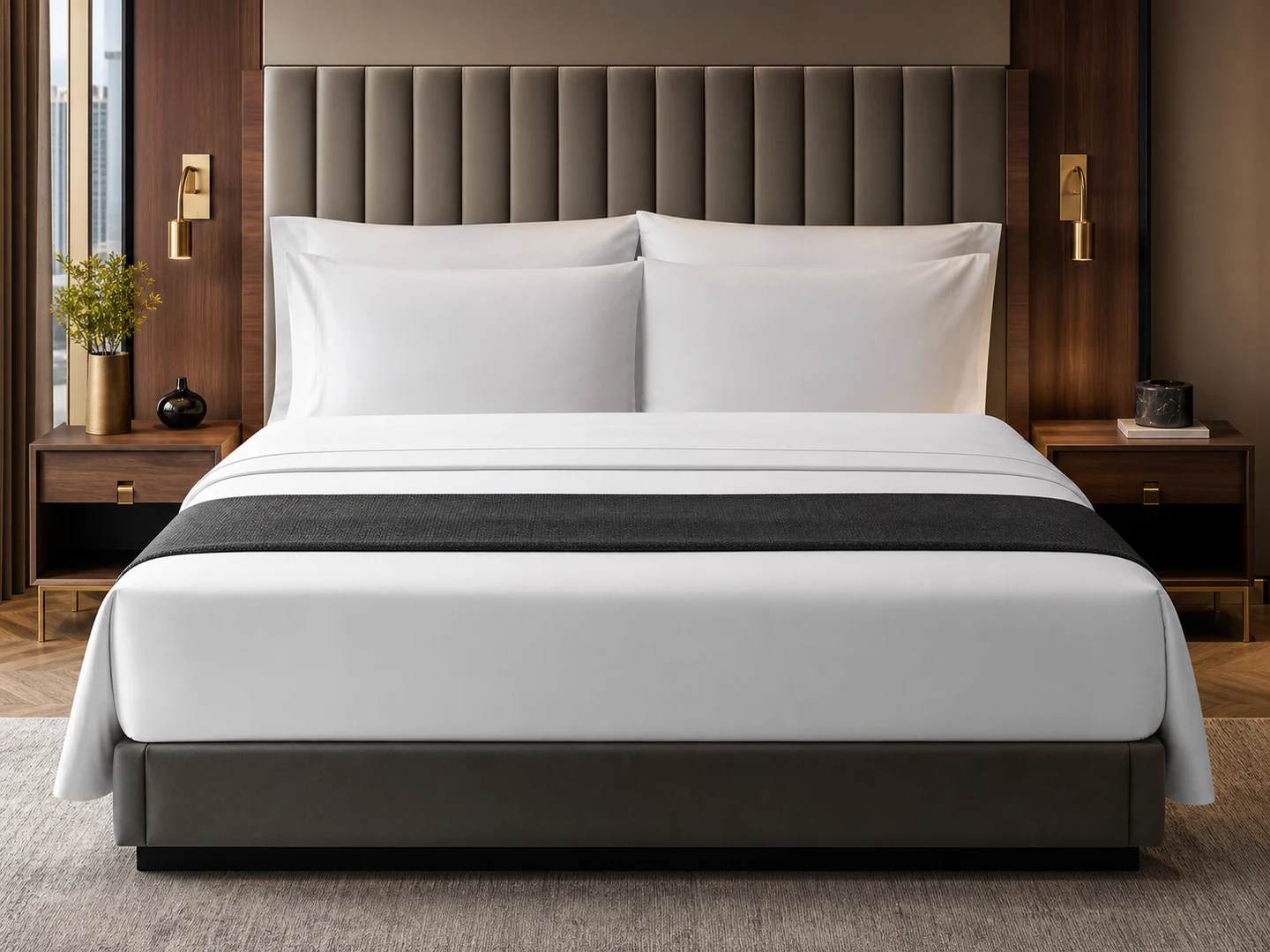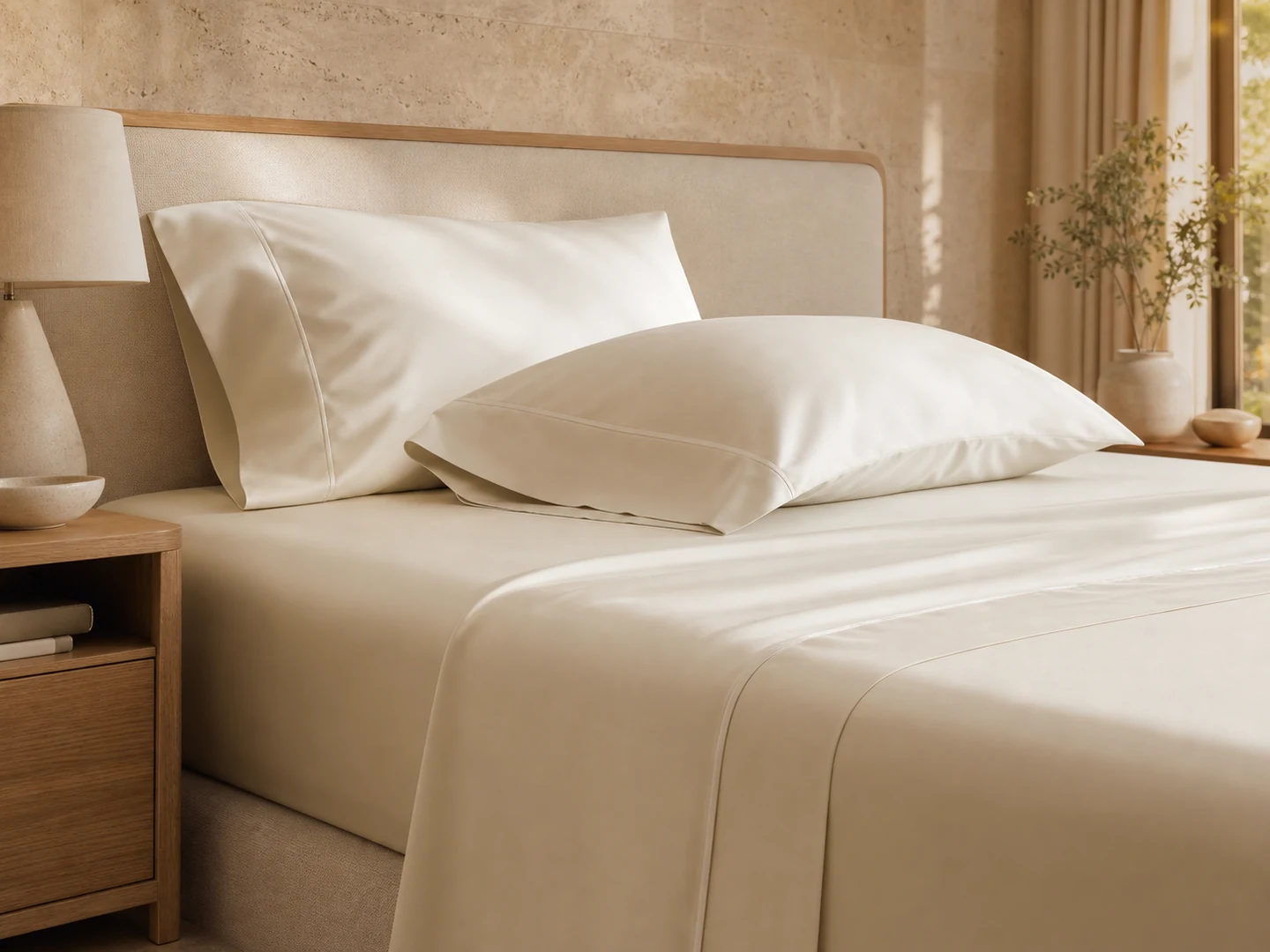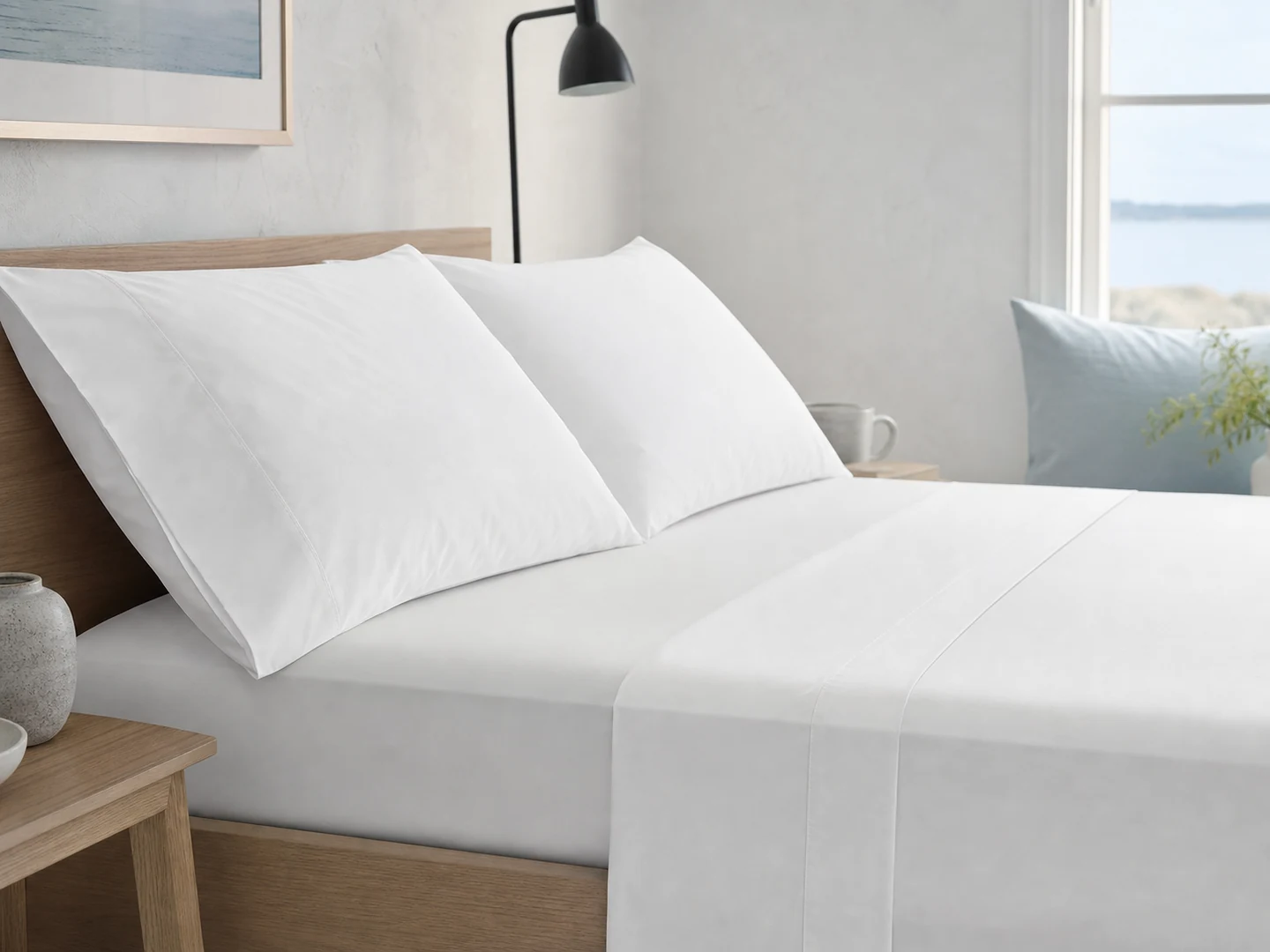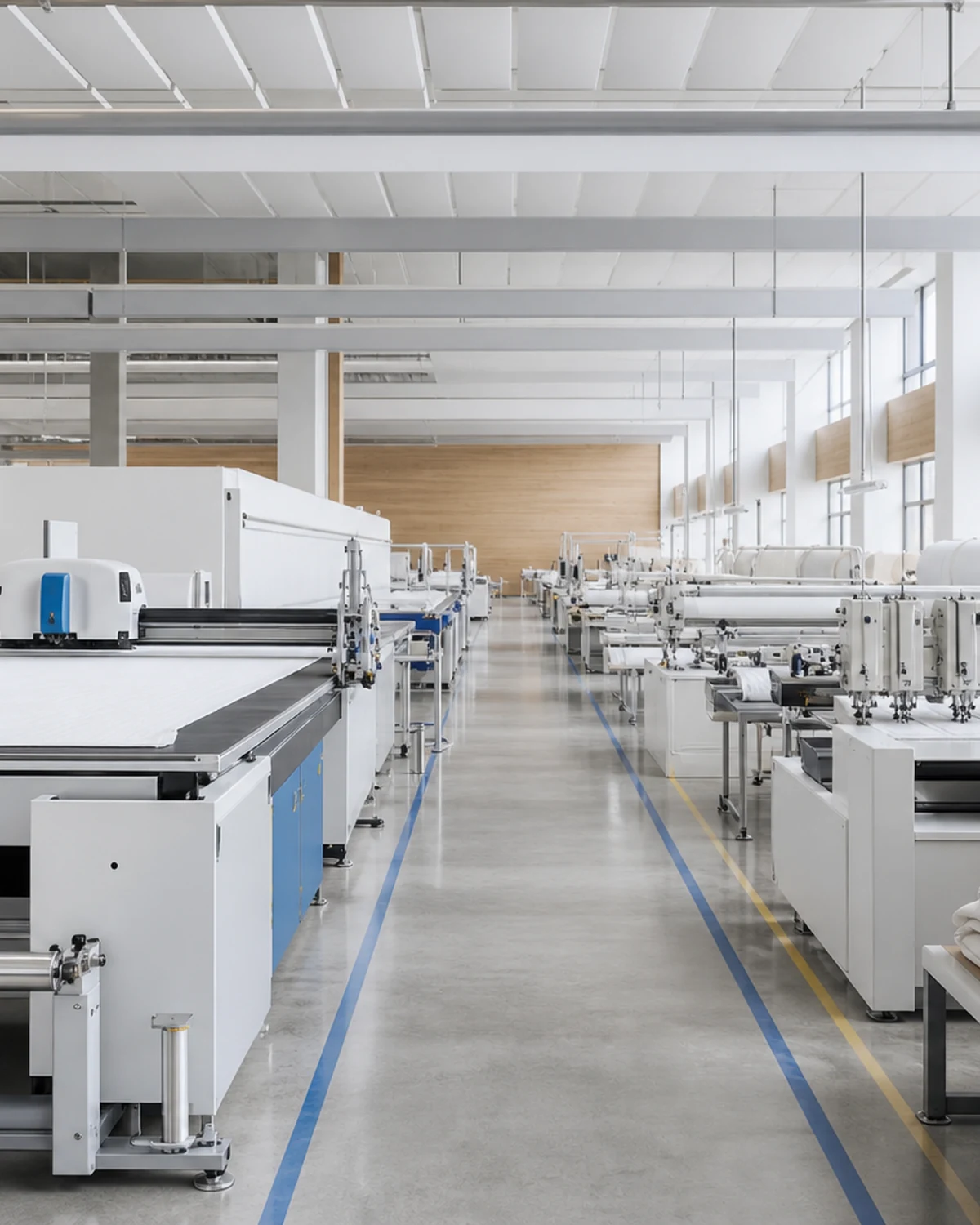
The useful 2026 trend is not a single color or fiber. It is the move toward clearer sleep choices, climate-aware comfort, tactile simplicity and product stories that buyers can support with specifications and evidence.
Sleep choice becomes structured
Hotels are using pillow firmness, topper direction and blackout performance to create a more deliberate sleep offer. Each option still needs a repeatable product code, construction and replacement plan.
Climate comfort informs construction
Breathable weaves, moisture management and fill weight are being selected more deliberately by climate and season. Performance language should be tied to the final fabric or filling and verified when it becomes a claim.
Evidence-led materials
Buyers are asking more questions about organic, recycled, biobased and traceable materials. The commercial opportunity comes with a responsibility to match every statement to the exact product and current document.
Texture replaces visual clutter
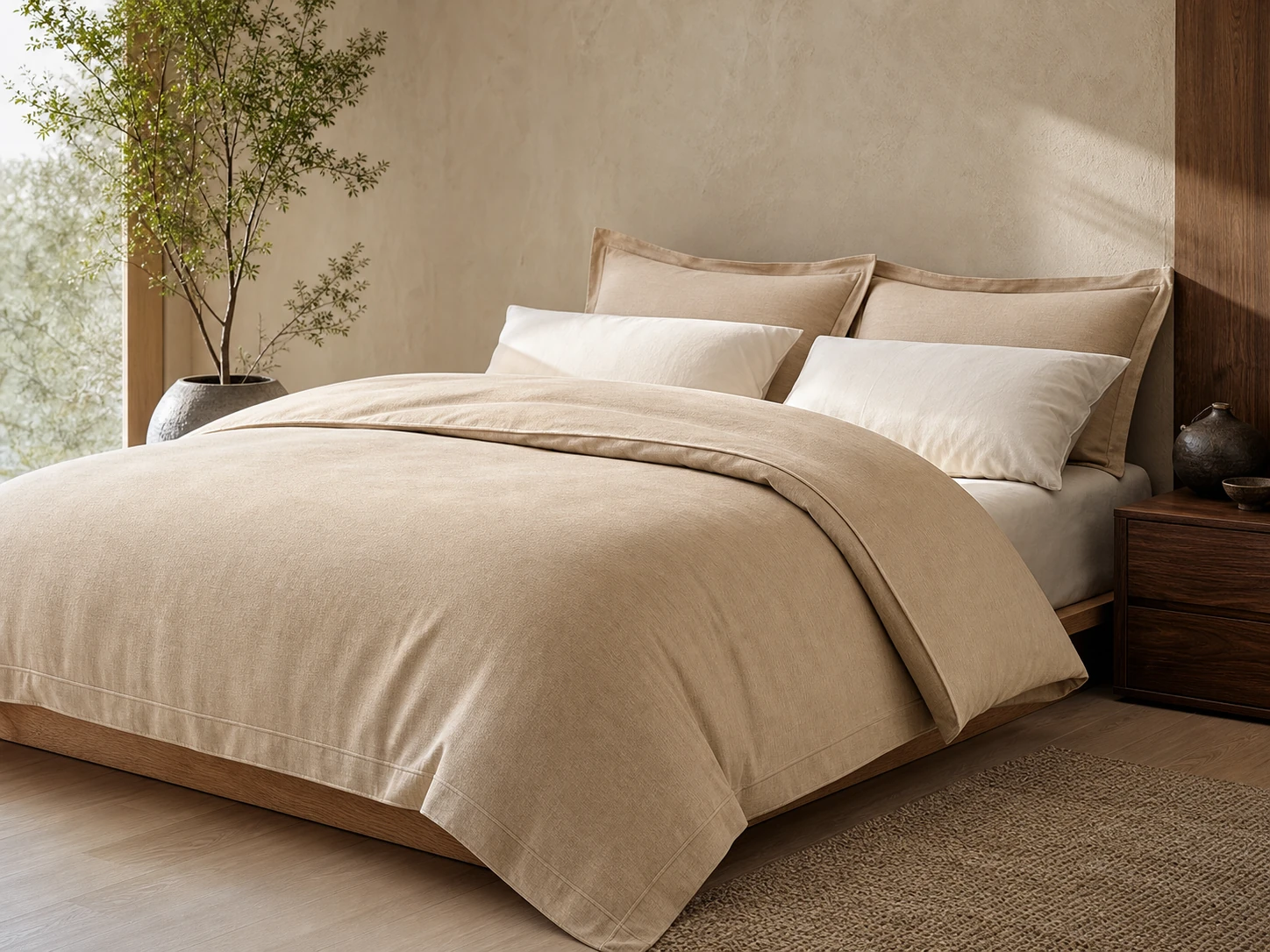
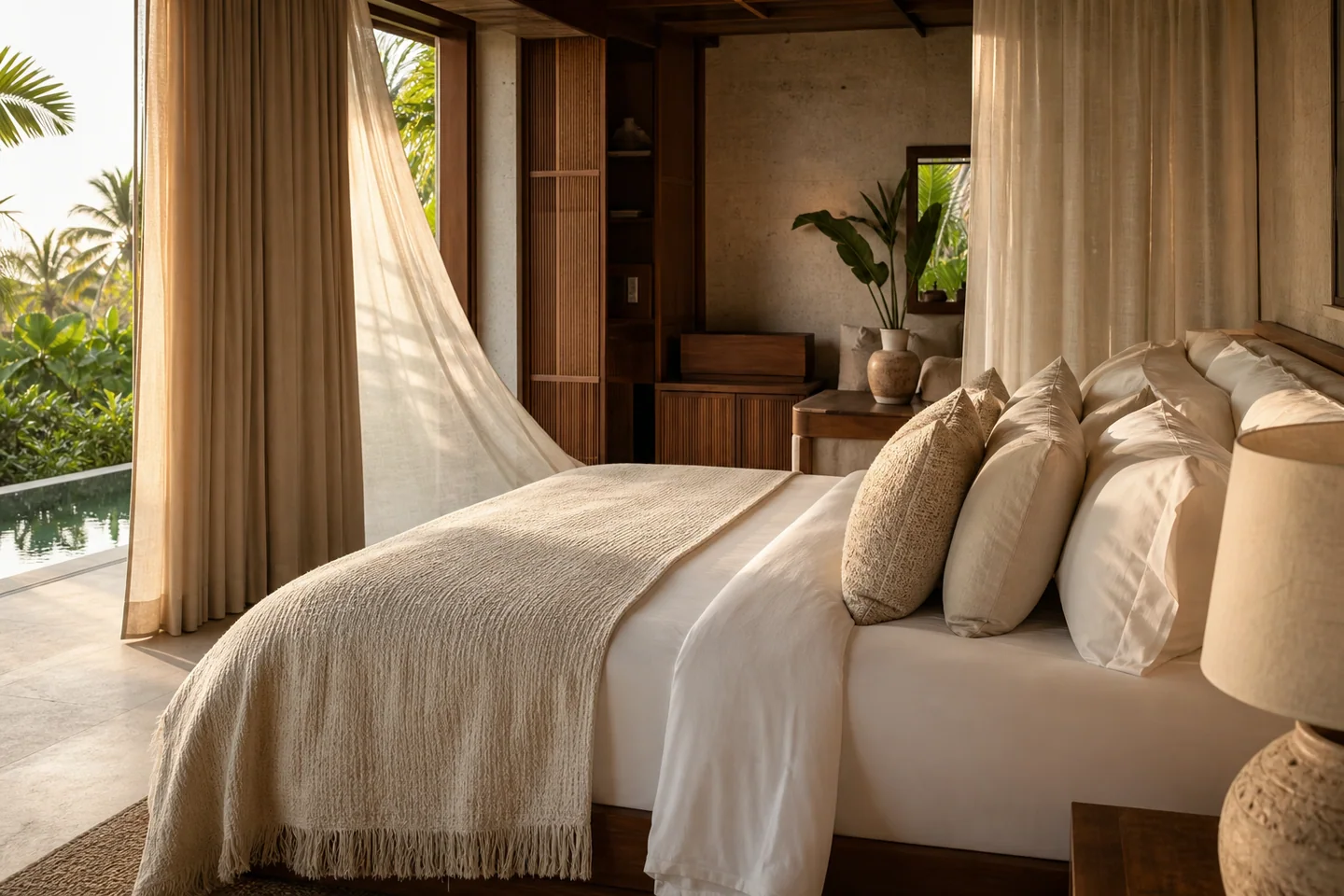
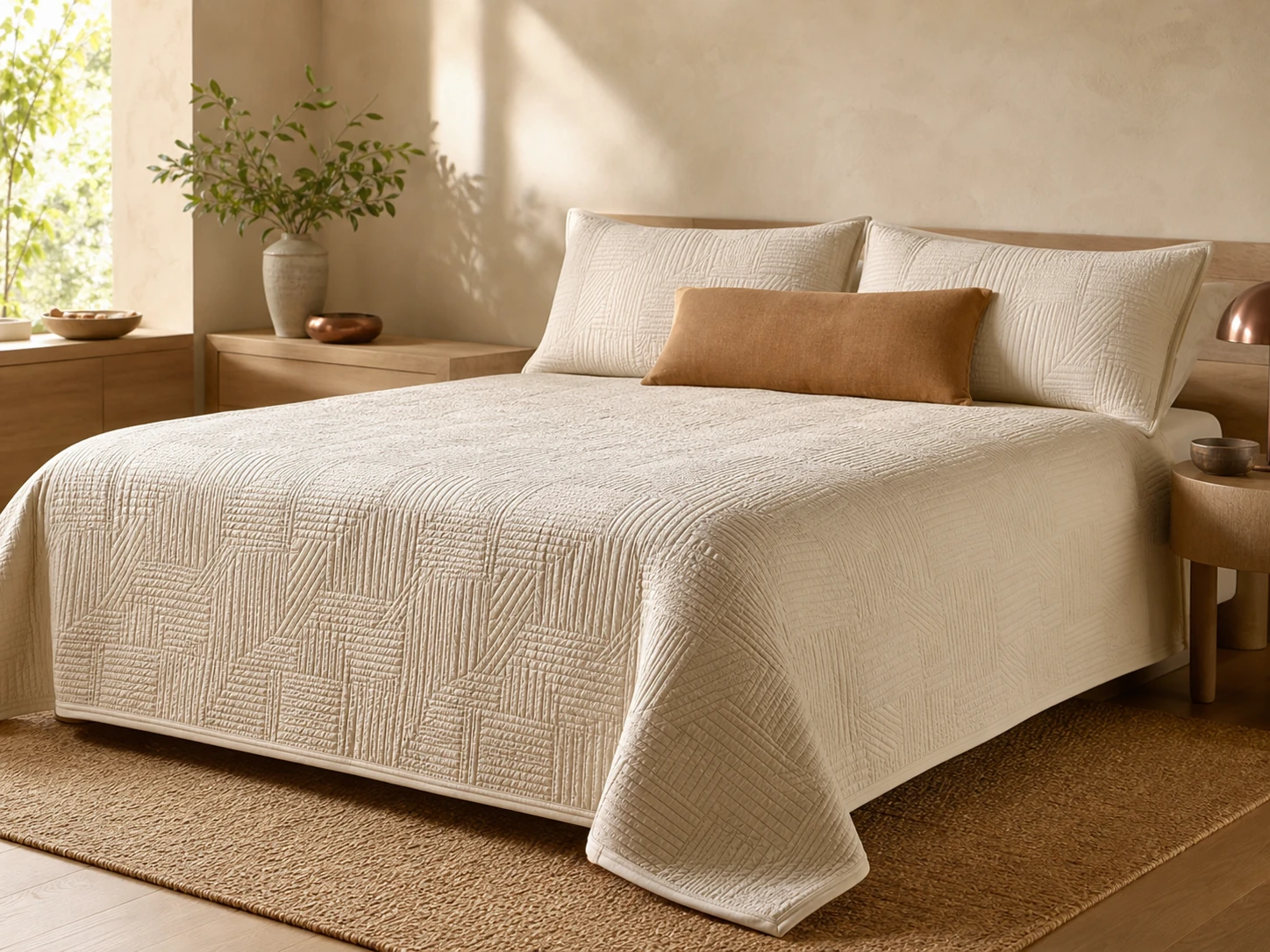
Subtle jacquards, matelassé, coverlets, restrained stripes and layered neutrals add depth while keeping the room calm. Construction, wash behavior and replenishment consistency matter as much as the initial image.
Retail-ready presentation
Some properties extend guest-room products into retail. That requires labels, packaging, barcodes, consumer care information and brand approvals that may not be needed for back-of-house hotel supply.
Continue the buyer workflow
Move from general guidance to the relevant product, evidence and project-planning pages.