Commercial linen care should be built around the product’s care label, facility equipment, water, chemistry, hygiene protocol and finish expectation. A universal temperature or chemical recipe is not appropriate for every property.
Record the incoming product
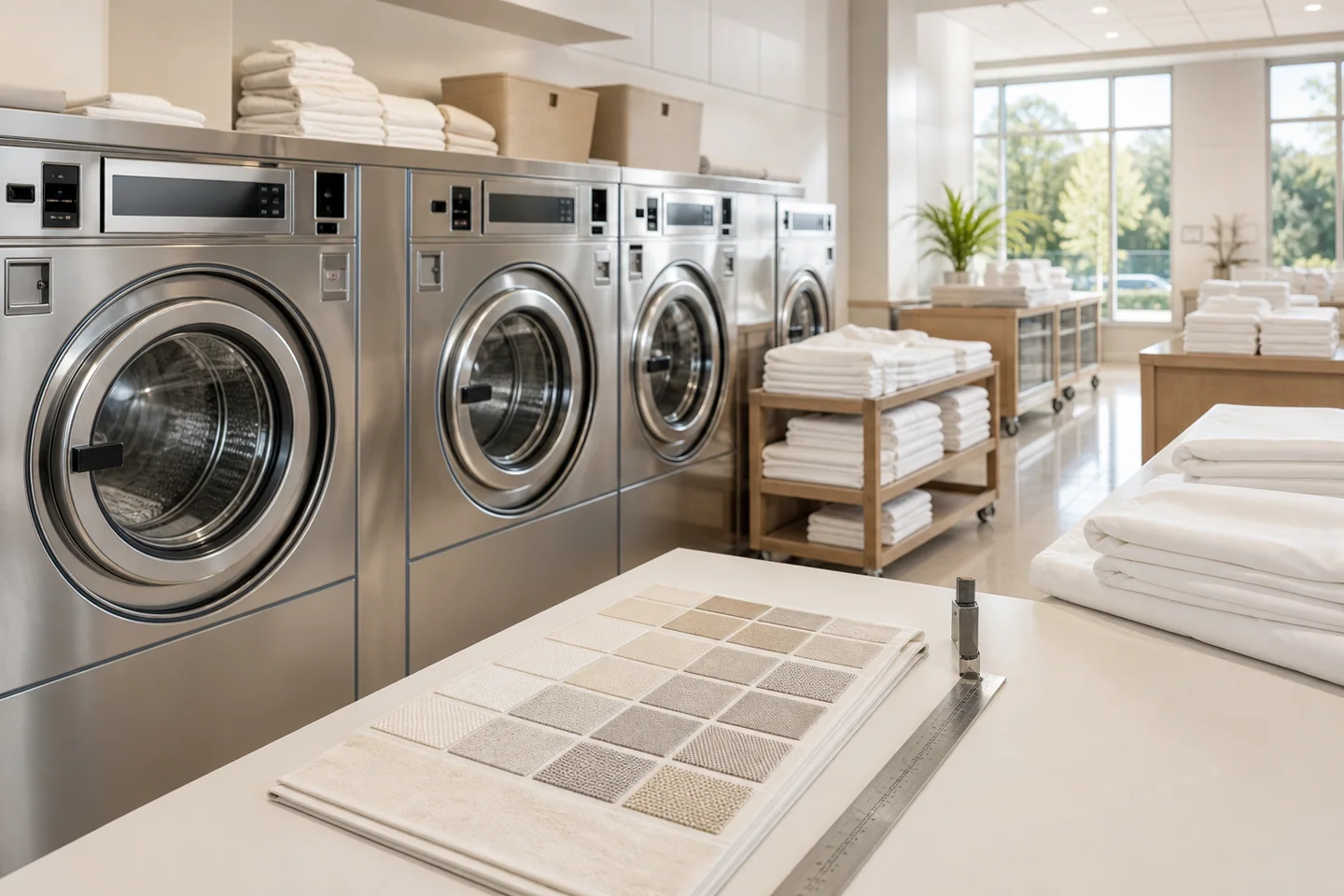
Keep the approved construction, dimensions, color and baseline appearance. Measure representative items before the first wash trial so dimensional change and visual wear can be evaluated objectively.
Validate the wash formula
Work with the laundry chemical and equipment specialists to set sorting, temperature, chemistry, wash time and rinse. Avoid transferring a formula between products without confirming fiber, color, finish and soil type.
Control loading and drying
Overloading reduces mechanical action and rinsing, while aggressive drying can increase shrinkage and wear. Use equipment guidance, product care instructions and measured trial results to set the operating window.
Build a stain and rejection process
Classify common stains, define safe pre-treatment and record items that should be removed from service. Uncontrolled spot treatment can create discoloration or localized damage.
Use replacement data
Track failure reason, wash count where practical, property or laundry source and reorder timing. This separates product issues from process issues and improves the next specification.
Continue the buyer workflow
Move from general guidance to the relevant product, evidence and project-planning pages.