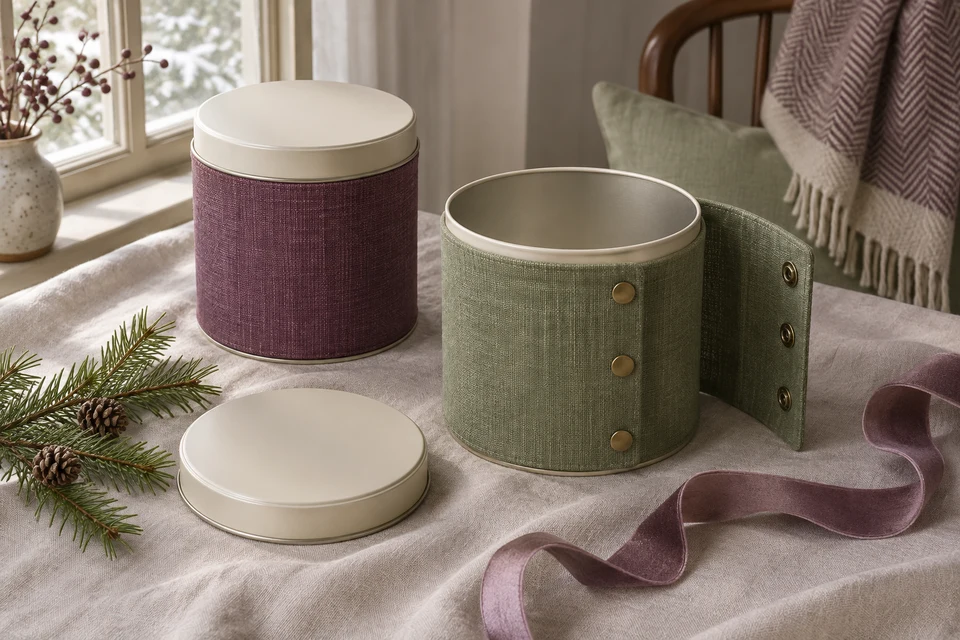
A decorative textile wrap can give a biscuit tin a seasonal identity while leaving the metal container usable after the gift is opened. The practical challenge is the junction between the sleeve and the lid: fabric, binding or a closure placed too high can obstruct opening even when the front view looks tidy. Retail and private-label buyers should develop the wrap around a named container sample. This guide concerns a removable exterior decoration for a closed tin, not a food-contact liner, an insulated carrier or evidence that any packaging combination meets a particular market requirement.
Identify the container that controls the fit
Do not buy against nominal volume alone
Provide the supplier with the intended tin, its lid and any outer film used during gift assembly. Record the exterior dimensions at the top, middle and lower edge of the sidewall. A container described by capacity may have a rolled lip, taper or projecting base that changes the sleeve pattern. If the buyer expects to substitute tins later, include each proposed version in the fit review instead of treating their stated volume as proof of interchangeability.
Mark the part of the lid that overlaps the sidewall when fully closed. This is the working boundary for the wrap, not simply a styling line. Check whether the lid is removed vertically, lifted from one edge or released by another action. That movement determines where clearance is needed. Keep the original container reference with the approved sample so a future reorder can be compared with the same physical geometry.
Choose a removal route for the wrap
A seam and an opening serve different purposes
Compare a continuous sleeve with an opening wrap only after defining how the gift pack will be assembled. A continuous sleeve may need to pass over a wider lip, while an opening version can be fastened around the sidewall. Ask the supplier to show the construction at the closure, including the thickness of overlapping layers. The closure should not be hidden from the approval review simply because it sits at the back of the merchandising photograph.
Trial removal without forcing the container or stretching the fabric beyond its intended condition. Decide whether the consumer is expected to remove the wrap before washing the tin. If that is the proposed use, the opening should be understandable and accessible. Do not assume a decorative closure is suitable for repeated operation without appropriate evaluation. Capture the chosen opening route in the specification and distinguish it from any permanent seam in the wrap body.
Check the lid with the final textile build
Binding can consume the planned gap
Fit the finished wrap rather than an unfinished strip of fabric. Turned hems, lining and decorative trims add local thickness, especially near a closure. Close and reopen the lid using ordinary care while watching the full circumference. Record the lowest edge of the lid and the highest point of the textile. If the required gap varies around the tin, identify whether the cause is sleeve alignment, the closure overlap or the container itself.
Inspect the wrap after the trial for a rolled upper edge or a crease caused by the lid. Repeatedly pushing the textile downward is not an acceptable substitute for a workable pattern. The buyer can choose a shorter wrap, revise the trim or change the closure location. Each option alters the visible seasonal design, so approve the corrected appearance alongside the functional fit instead of making a technical revision after photography has been frozen.
Separate the decoration from packaging evidence
Keep the product description accurate
Confirm which party supplies and fills the tin, which party attaches the wrap and which party assembles the final gift pack. The textile supplier's sample does not establish the suitability of the metal container, the contents or the complete food packaging system. Obtain any required evidence from the responsible parties for the actual materials and intended market. Avoid adding food-safe, protective or insulating language to the wrap's description without a separately supported basis.
For the textile itself, agree the relevant material, colour-transfer and care evaluations with the supplier. Consider the surfaces the wrap actually touches during assembly and use. A decorative fabric may contact a printed outer label or a coated metal finish even when it does not contact food. Record any label area that must remain visible and ensure the wrap does not cover essential container information. Keep these constraints explicit in the artwork placement brief.
Approve the gift-assembly sequence
Review an opened pack as well as a closed one
Build a complete mock-up with the planned ribbon, sleeve and retail packaging. Observe the order in which an assembler must add each component. A ribbon that looks elegant over the lid may conceal the textile opening or require the consumer to dismantle the whole presentation before accessing the tin. Decide whether that sequence is acceptable for the programme and make it clear in the packing instructions. Do not let the final photograph silently redefine the product's intended opening method.
Before ordering, request the approved container identifier, finished wrap dimensions, closure detail and assembly photographs. Specify the quantities by artwork and tin size, and obtain confirmation of sampling costs, minimum quantities and timing for the actual project. Send FY Bedding the tin dimensions and gift-pack concept to discuss textile development. The buying decision is a coordinated container-and-wrap approval, not a general promise that one elastic or adjustable sleeve will fit every biscuit tin.
Release the wrap only after the finished lid opens normally, the decoration can be removed as intended and the final pack leaves required container information accessible.