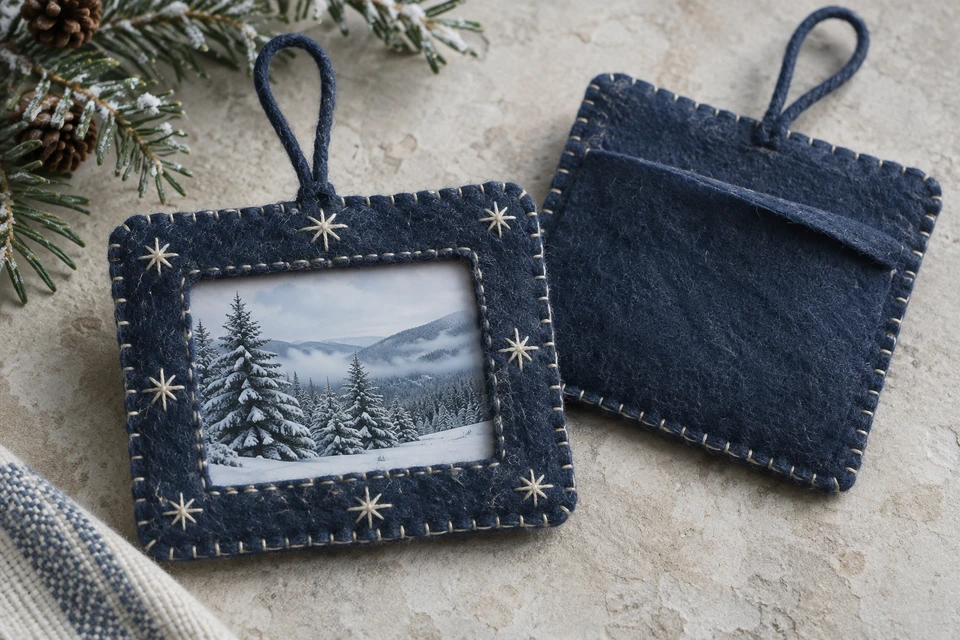
A fabric frame can fit a photograph yet hide the part the customer wants to see. For Christmas photo-frame ornaments, the purchasing brief needs three separate rectangles: the photograph, the visible window and the pocket that holds it.
Start with the photograph the customer will insert
Separate insert size from visible size
Choose the intended photo format before asking for an ornament quotation. Record its width, height and orientation, then identify whether the buyer supplies a printed photograph, a blank insert or no insert at all. A decorative landscape shown in a sales image should not silently become part of the supplied product. Likewise, an empty frame should not be described as a personalised photo service unless that service has actually been agreed.
Draw the opening over a full-size example image. Check faces or important objects near each edge, not just an image with empty space around its subject. The frame needs overlap to retain the photograph, but that overlap reduces what remains visible. A practical brief names the accepted visible area and the hidden border independently. If several photo formats are offered, keep them as separate fit proposals rather than assuming a common nominal ornament size covers every format.
Open the rear pocket before approving the front
A usable insertion route must remain after sewing
Ask for a sample that can be opened and handled, not only a front photograph. Insert the intended photo without sharply bending it, and remove it again without pulling on the hanging loop. Check whether a seam, decorative stitch or lining fold obstructs a corner inside the pocket. A pocket may measure correctly while flat but become awkward once the two faces are joined. The complete sewn sample is the relevant approval object.
Agree how the access opening closes: an overlap, flap or another confirmed construction. If a closure component is proposed, request its identity and the appropriate performance review for the intended market and use. Do not substitute a decorative appearance check for that review. Note whether the rear must also look presentable on a freely hanging display, because an ornament can rotate even when its sales photograph shows only the front.
Keep the aperture stable around its corners
Judge the window with the insert inside
Compare the empty frame with the loaded frame. Observe whether the opening becomes a trapezoid, whether rounded corners obscure more of the image than the drawing suggests, and whether the textile edge sits flat against the photograph. Record the accepted corner treatment with a close image and a physical sample. The requirement should describe a visible result, not a promise that every textile behaves like a rigid manufactured frame.
Ask the supplier to identify the face material, backing and any internal support. Felt-like appearance alone does not establish fibre content or stiffness. Where a transparent cover is offered, assess reflection, wrinkling and the ease of cleaning it using the proposed care instructions. Quote that option separately from an uncovered opening. Different constructions can create similar front views but require different sampling, component purchasing and disposal information.
Run a hanging and handling sequence
Retention is different from a close-fitting pocket
Load the agreed insert, suspend the ornament in the approved display arrangement and observe the position of the photo. Then take it down, turn it over and handle it as someone changing a photograph would. Record any movement relative to the aperture. The buyer and technical owner should agree the relevant handling sequence and acceptance criteria; there is no universal number of shakes or hanging hours that proves every construction suitable.
Review the relationship between the loop attachment and the loaded frame. A photograph slipping sideways is a pocket problem; the entire frame tilting may instead reflect loop position or unequal construction. Keep those observations separate in the revision notes. This is an adult-managed decorative article brief, not a toy or an assessment of child-accessible installation. Required safety evidence must be defined for the actual destination and display use before the product is released.
Decide what belongs in each retail pack
Avoid a photograph that creates an accidental promise
List the frame, insert, hanging component and instructions included in the selling unit. If a styled photograph is used on packaging, make the supply scope unmistakable. Trial the proposed pack with the frame in its intended position, reopen it and check whether the viewing edge has developed a crease or the loop has pressed into the visible face. Photograph the reopened sample rather than approving only the newly packed appearance.
For a multi-design Christmas assortment, confirm quantities by frame design and photo orientation. Ask whether colours, aperture shapes or embroidery variants have separate material or setup minima. A shared backing does not automatically make every front design commercially interchangeable. Request a realistic sampling and production schedule after the insert format and construction are settled; do not assume an unconfirmed delivery date will precede the holiday selling window.
Send a brief that a sampler can actually use
Close the remaining decisions before ordering
Provide FY Bedding with the proposed photo dimensions, visible-window drawing, front and rear appearance references, intended sales channel and quantity by variant. Use the seasonal collection to communicate the visual direction, while keeping the new frame's material and construction as matters for confirmation. Include a real example insert or an accurately sized printable file so the sampler does not have to infer fit from an image on a phone.
The approval record should retain a loaded sample, a rear-access view and the pack scope beside the drawing revision. Identify any sample substitutions and what still needs approval on production materials. Only release the order when the photo fits, remains in its agreed position and can be replaced through the actual sewn opening. A beautiful front is useful merchandising; those three observations make it a more complete purchasing decision.
Check the insert, aperture and pocket as three separate dimensions. Approve a loaded hanging sample and the rear insertion route, then confirm whether the retail pack includes a photograph.