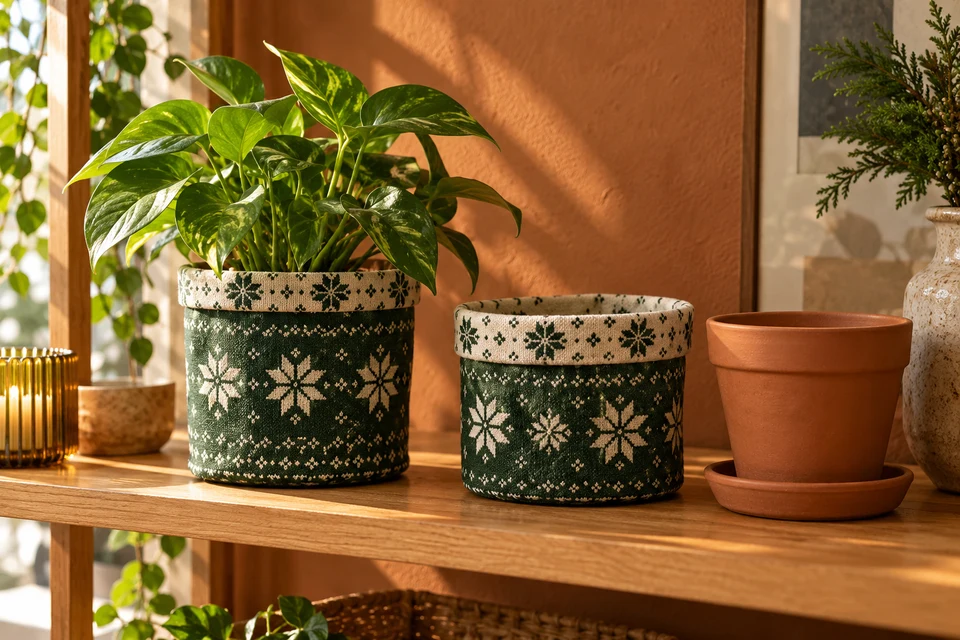
A patterned textile sleeve can give a plain plant pot a Christmas presentation without changing the plant container. The distinction matters: the fabric outer is not automatically a waterproof liner, a drainage solution or a load-bearing planter. Buyers should approve how the real inner pot enters, sits and comes out, while keeping watering and saucer arrangements clearly separate. The empty decorative sleeve is only one part of the display review.
Define the nested components
The plant container and decorative sleeve are different items
List the rigid pot, saucer and textile sleeve as separate components, identifying which are included in supply. Record the outside profile of the actual pot, including taper, rim and protruding features. Show the proposed installed position of the saucer rather than assuming it fits inside the textile. A photograph of a plant in fabric does not explain the underlying arrangement.
The bill of materials framework helps prevent a textile-only offer from being compared with a complete planter gift. Keep the intended dry decorative use explicit. If the project requires a moisture barrier or another functional layer, treat it as a separately specified and evidenced component, not a benefit inferred from the Christmas fabric.
- Identify every nested component and its inclusion status.
- Use the real pot profile rather than a nominal plant size.
Trial insertion and removal before adjusting the rim
Easy installation should not depend on pulling the plant
Fit the sleeve around the reference pot without using foliage or stems as handles. Observe how the fabric moves past the widest part of the rim and whether a seam or lining catches. Remove the pot using the intended safe handling method and check that the textile can be separated for care or storage. Any handles on the decorative sleeve need their own defined purpose and evidence.
Use the finished-size sample process for each materially different pot profile. Do not approve a larger sleeve merely because it accepts the pot if the excess fabric collapses into an unintended shape. Record whether the top is folded, gathered or simply finished, and make that arrangement repeatable without hidden clips.
- Check both fitting and removal with the complete pot.
- Do not imply that decorative handles can carry a planted container.
Choose the visible pattern around a tapered shape
A flat rectangle is not the display view
Decide which Christmas motif should face the customer and where the vertical seam may sit. A large snowflake can bend or disappear around a tapered pot, while a small repeat may be more forgiving. Review the actual filled form from front and side, including the amount of plain inner pot visible above the sleeve. Make the intended rim reveal a recorded design choice.
The pattern placement guide supports the artwork discussion. Compare samples on the same pot so differences are not caused by different containers. If a folded rim exposes the reverse fabric, specify that reverse as a visible surface rather than leaving it to the supplier's usual lining choice.
- Mark the customer-facing motif and intended seam position.
- Approve any reverse fabric exposed by a folded rim.
Keep water management outside unsupported claims
Write care and display instructions for the actual construction
Discuss how the responsible plant-care team will remove or protect the decorative textile during watering. A wet sleeve may look different from the dry approved sample, and that condition should not be hidden in the brief. Do not call the textile leakproof, mold-resistant or suitable for standing water without appropriate evidence for the exact material and construction.
Use the claim substantiation matrix to separate appearance from performance. Ask for care information based on the proposed components and review the sample after the agreed process. If the product is intended only for dry indoor display, state that limited scope plainly rather than allowing the retail image to imply broader outdoor or wet-use suitability.
- Clarify the dry-use and plant-care arrangement before approval.
- Request evidence before adding moisture-related performance language.
Pack the sleeve without promising a supplied plant
Use item identification that survives seasonal assortment changes
Ask whether the sleeve ships flat, nested or lightly formed and inspect a sample after opening the proposed pack. Look at rim folds, seam shape and the ability to reproduce the approved display. Keep plant, pot and saucer exclusions visible in the sales scope. A stylized photograph should not be the only record of what the customer is purchasing.
The packaging approval checklist can organize size and motif identification. Confirm minimums by textile construction and artwork, then agree the sample and production sequence. If a supplier proposes another fabric or lining to meet a seasonal schedule, repeat the relevant fit and appearance review before accepting the change.
- Open the real proposed pack before approving presentation.
- State whether the offer includes only the decorative textile.
Send FY Bedding the pot and saucer references, intended rim reveal and Christmas artwork. Request a defined decorative-sleeve proposal and a removal trial, then approve the dry installed appearance and packing scope without assuming waterproof or carrying performance.