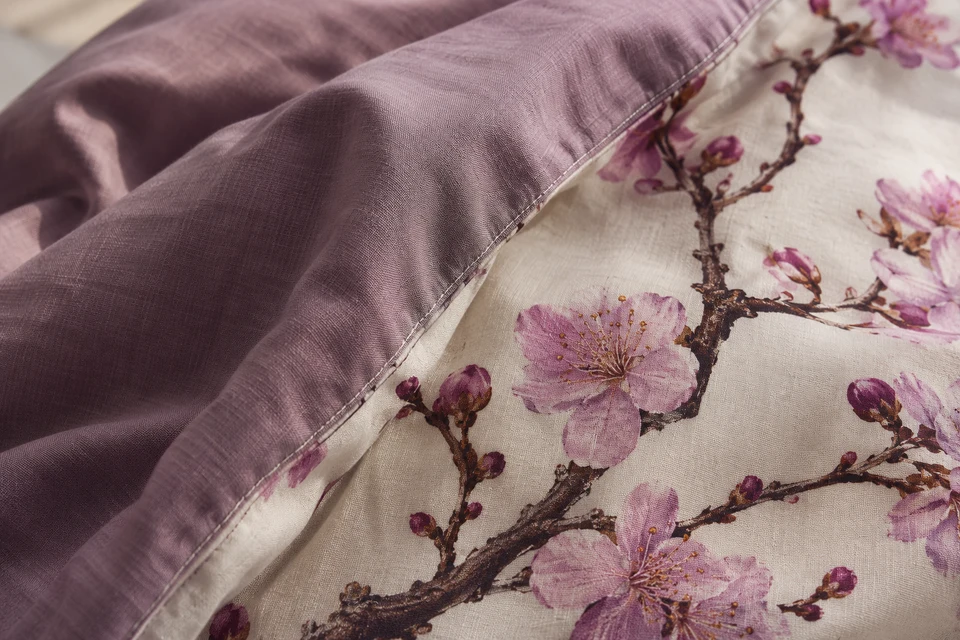
A small square of plain fabric can appear to match a petal perfectly and look surprisingly heavy when folded across the width of a bed. The stitching may be fine and the dye correct. What changed was the area of solid color next to the print. Buy the foldback as a visible part of the bedroom scheme, not as an invisible lining selected by clicking a pixel in a product photograph. Start by defining which part of the floral the reverse is supposed to support.
Name the relationship before matching the hue
Ground, petal or stem
Put three candidate solids beside the physical face fabric. One can echo the print's background, one a flower color and one a quieter leaf or stem. Describe the desired effect in plain language. Matching the ground may make the reverse nearly disappear. Repeating a petal can pull that flower forward. A darker stem color can frame the pillows but may dominate a pale face. None of these is inherently the correct companion; the choice depends on how much reverse the retailer intends to show.
When briefing from Soft Garden Roses reference FR-01, record its collection identifier and obtain an actual project face sample before approving the solid. The same online image can look different on two displays and does not establish the dye recipe, fabric composition or surface finish. Give the sample room the physical pair or a controlled reference each party can identify. If the printed face is still provisional, mark the reverse decision provisional too; a revised ground color can undo a match to an otherwise unchanged solid.
Make the fold as wide as the display requires
Change the area, not just the lamp
Start with identical folds of each candidate next to the same portion of print. Then open the reverse to the width planned for the bed photograph or store display. Compare from the doorway and from the bedside. A narrow strip of dark color may give a crisp edge; the same dark in a deep turnback can divide the bed into two competing areas. Record the width and what is visible above it, including any shams or additional sheets.
Use a stitched corner where possible rather than a loose solid simply placed on top. Differences in weight and bend can change where the reverse sits and whether the seam rolls forward. Lift the corner, let it fall naturally and check it again. If the color works but the fold will not settle, do not start by changing the color. Ask the supplier to identify the construction variable and return another sewn sample with that variable isolated.
Review the pair under the intended lights
Separate appearance from a colorfastness claim
Take the same pair from daylight to the lamp used in the target room or showroom. Record which light was used and whether the relative ranking of the solids changes. An apparent match in one location is not a guarantee across every lamp. If the buyer uses an agreed color-evaluation protocol, identify the viewing conditions and acceptance owner. Do not describe an informal bedside comparison as a laboratory result or substitute it for project-specific testing.
For a dark solid paired with a light printed ground, request separate evidence for the proposed care route and color transfer concern. Ask which face and reverse lots were involved and how the evidence maps to the sewn components under discussion. A satisfactory comparison of hues before laundering tells the buyer little about behavior in use. Keep the two decisions on different lines of the approval sheet so a stylist's signature does not inadvertently release technical requirements.
Order a pair that can be repeated
Control substitutions on both sides
List the face artwork revision, the reverse reference, the finished construction and the intended use on the same purchase record. If one solid is shared across several floral colorways, review each pairing rather than approving the solid once against the easiest print. Ask how minimums and future repeats are treated when several face fabrics share one plain backing. Common purchasing may simplify the line, but it does not make mismatched pairs visually interchangeable.
For a custom proposal from FY Bedding, send the floral reference, target room palette and photographs of the intended foldback depth along with physical control samples when available. Ask for the selected pairing and one clearly identified alternative. Store the accepted sewn corner with a loose piece of each fabric so a replacement lot can be checked both alone and as it appears on the bed.
Record the accepted solid, the face revision, actual foldback width and viewing conditions. A reverse that is approved for one display depth need not suit a deeper fold.