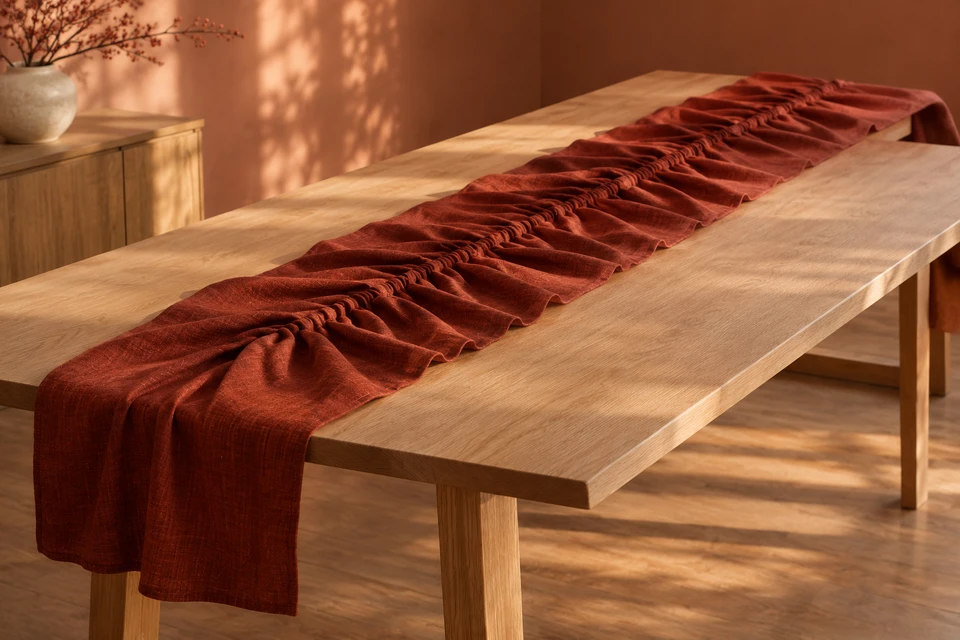
A long fabric strip and a finished ruched runner are not interchangeable quotation units. Gathering takes up length, changes the height of the surface and can alter how the ends fall over a table. A Christmas display programme therefore needs a finished-state brief: how the runner should look when placed without tension, whether its fullness is adjustable and how it is restored after unpacking. Begin with those decisions before comparing fabric consumption or minimum quantities. The objective is a repeatable presentation, not a universal ratio between flat and gathered lengths.
Choose the gathering system
Fixed fullness and adjustable fullness need different instructions
A fixed ruched runner should arrive with the intended fullness already established. An adjustable version requires someone to set the length and distribute the folds. Ask the supplier to describe which construction is being offered, where any gathering channel or securing line sits, and how the ends are finished. A sample pulled into shape for a photograph may conceal an unfinished adjustment system. View the runner from beneath as well as above, with any loose ends shown in their normal storage position.
For an adjustable proposal, decide who will perform the reset: a retail customer, a stylist or a trained venue team. Request a simple demonstration using the actual sample and record the sequence. Avoid accepting an arrangement that depends on hidden pins or undocumented temporary knots. If the supplier suggests elastic rather than a fixed gathering thread, treat it as a different construction requiring its own review. The selected method should appear on the specification and quotation rather than remaining an assumption attached to the word ruched.
Measure the runner in a defined state
Separate the decorative body from the raw material allowance
Lay the finished sample on the intended table without pulling it lengthwise. Record overall relaxed length, visible width, gathered depth and the length of any ungathered end sections. Photograph the measurement setup so another person can reproduce it. Where adjustment is permitted, identify a preferred setting and the agreed usable range instead of reporting only a maximum stretched length. Table dimensions and the desired end treatment provide the context for those numbers; they do not replace measurements of the actual textile.
Ask for the flat fabric consumption separately when it affects the quote, yield or minimum order. Do not use that value as the delivered finished length. Different cloths and gathering arrangements can produce different fullness from similar starting strips. SINGER's shirring guidance illustrates why a fabric trial and before-and-after measurement matter, but a particular sewing demonstration is not a specification for this runner. Let the technical team propose the construction, then compare the resulting product under the agreed relaxed measurement method.
Place the fullness where the setting allows it
Keep functional surfaces distinct from raised decoration
Make a table mock-up that shows the runner in relation to place settings and the intended display objects. Mark areas that must remain flat and areas where raised folds are acceptable. A visually dramatic central gather may conflict with an object that needs a stable base. Do not place hot items, candles or unstable vessels on a raised sample for a styling photograph. The arrangement should be evaluated as part of the venue or retailer's own use and safety review, not assumed suitable from appearance alone.
Review each end from the standing viewer's position. If fullness accumulates at the edge, the drop may twist or expose the reverse. Decide whether the design needs a flat end zone, a different gather distribution or a shorter finished body. Record the chosen presentation with the table dimensions. This is distinct from checking that two conventional flat runner drops have equal length: here the buyer is deciding where the surface volume belongs and which part of the cloth can reasonably support a functional setting.
Reopen the actual selling pack
Establish an achievable reset rather than a studio-only finish
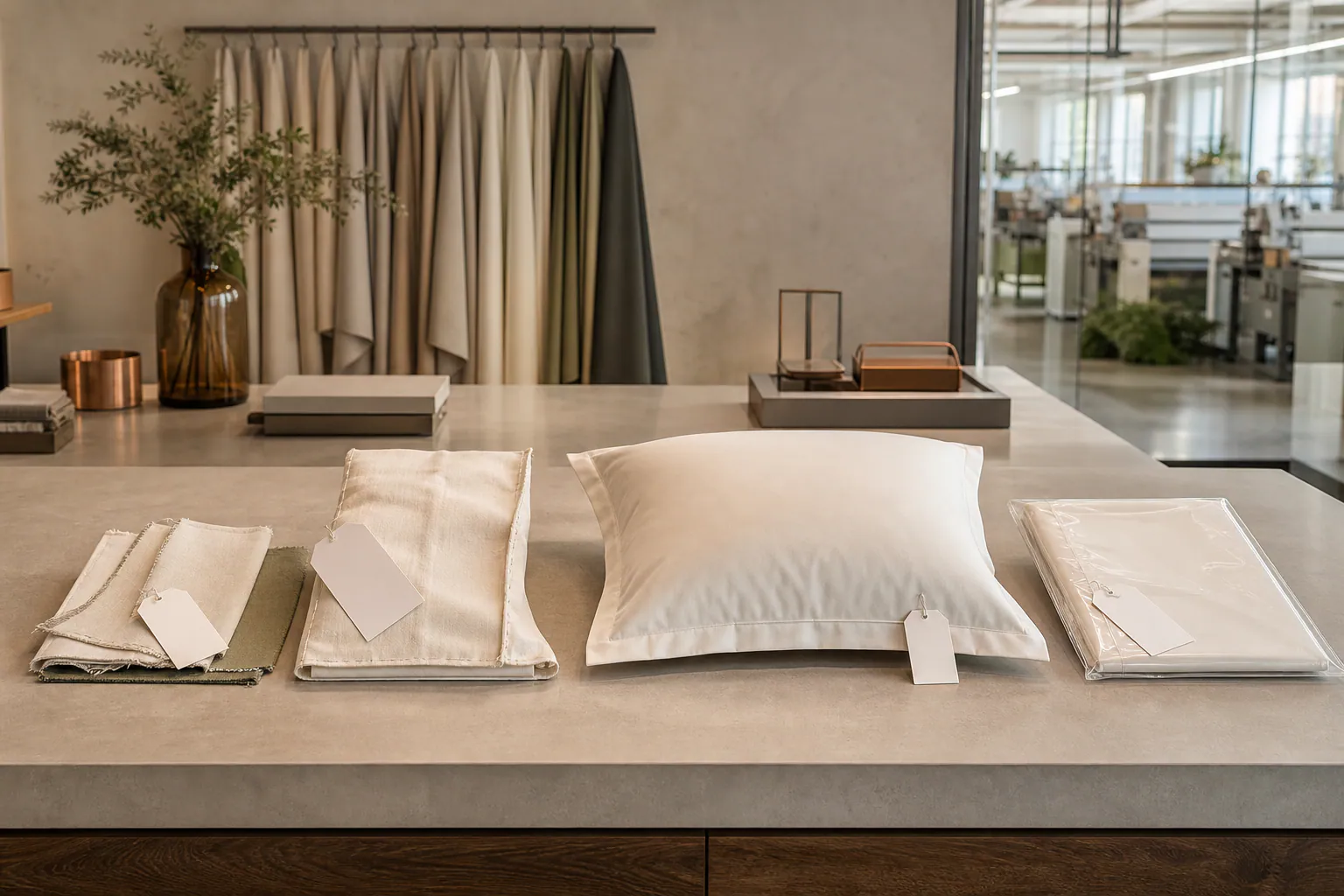
Pack the runner using the proposed fold or roll, closure and quantity. Reopen it after the agreed handling period and place it on the table before restyling. Note flattened gathers, hard fold lines, displaced fullness or loose adjustment ends. If a recovery step is required, document it and check that it is consistent with the approved care instructions. Do not promise effortless recovery or a wrinkle-free finish without evidence from the actual material and packaging combination.
Compare the packed volume of fixed and adjustable options if both remain under consideration. A flatter pack may transfer more work to the recipient, while a fuller pack may need a different carton allocation. Ask for those differences in the quotation rather than choosing solely on unit appearance. For a retail programme, have someone unfamiliar with the sample follow the proposed reset instructions. Their observations can identify missing steps that an experienced stylist might overlook, without turning the exercise into an unsupported consumer-performance claim.
Order the reviewed state, not an attractive description
Freeze dimensions and the change process
The final brief should connect the fabric, gathering system, finished relaxed dimensions, approved table view and pack format. State where fullness is fixed and where it may move. Include an inspection photograph with unacceptable bunching or exposed adjustment ends identified. Keep the original flat-strip allowance as a production input, not as a substitute for finished acceptance criteria. If the fabric or securing method changes, ask which sample checks must be repeated and who will approve the revised state.
For an FY Bedding enquiry, provide table dimensions, desired visual fullness, quantity by colour and the intended customer or venue reset process. Request confirmation of feasible construction, material availability, minimum quantities and sample timing. Christmas positioning does not establish seasonal stock or a guaranteed arrival date. Agree the release sequence only after the supplier has reviewed the proposed sample scope and the buyer has chosen between a ready-shaped product and one that requires adjustment at its destination.
Record relaxed gathered length, table placement and the unpacking reset as one approval; keep raw strip length in a separate quotation field.
Method references: SINGER: Shirring with a sewing machine.