An instruction booklet is a physical packaging component as well as a piece of approved copy. Its binding, folded spine, corners and position can interact with the textile or consumer pack during packing and unpacking. Buyers should therefore review a production-intent booklet inside the complete bedding pack before release. This guide concerns assembly and contact observations. It does not approve the booklet's claims, translations, consumer instructions or legal content; those remain separate decisions for the brand owner and its qualified reviewers.
Specify the booklet as a component
Identify the finished object rather than only its artwork
Record the closed dimensions, page count, paper specification, fold arrangement and proposed binding method. Identify any staples, adhesive or other construction elements through the printer's specification instead of guessing from an electronic proof. Connect the physical version to the artwork revision record. A correct PDF can still produce a different assembled object if the printer changes the paper, page arrangement or binding without the packaging team reviewing the resulting physical sample.
State which product and pack configuration should contain the booklet. Distinguish one booklet per selling unit from any document supplied at carton level. Use the SKU record to connect the component to the correct version of the bedding set. Where several languages or market versions share a cover design, identify each physical variant clearly. Similar appearance should not allow an incorrect booklet to pass simply because its dimensions match the approved packaging space.
- Record finished dimensions and page count.
- Identify paper and binding specifications.
- Link the physical proof to artwork revision.
- Define the correct pack and inclusion quantity.
Inspect the binding and edges
Use the printer's approved review method
Ask the printer or packaging specialist to define how the finished binding will be inspected. Record visible irregularities such as loose pages, displaced components or an uneven spine without improvising destructive tests at the packing table. Where metal components are proposed, have the responsible specialist assess their suitability for the intended package. The component specification should name the accepted construction and review method rather than describing all booklets with the same vague instruction to bind securely.
Examine the booklet in both its closed and normally opened states. Confirm that the sample used for approval represents the production-intent page count and materials, not a lighter dummy that omits internal sheets. Keep any blank structural prototype clearly distinguished from the final printed proof. A prototype may support a preliminary fit discussion, but the release should identify which characteristics were actually reviewed and which still depend on the printer delivering the complete finished object for the final packaging trial.
- Agree the binding inspection method.
- Review production-intent materials and pages.
- Distinguish prototypes from final proofs.
- Record unresolved construction characteristics.
Place the booklet in the actual pack
Observe the contact surface and orientation
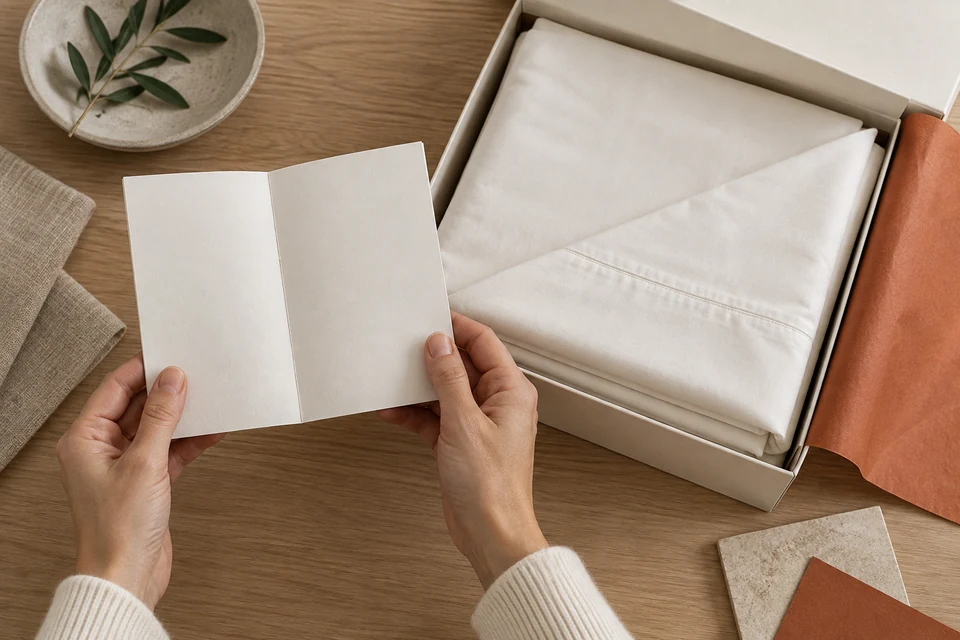
Assemble the proposed bedding pack with its intended fold, wrapping and other inserts. Record where the booklet's spine and corners sit relative to the textile and consumer packaging. The packaging approval checklist should include this placement as an instruction, not leave it to the preference of each packer. A booklet that fits loosely in an empty box may occupy a different position once the full textile quantity and all other components are present.
Observe the pack before and after the agreed handling sequence under the specialist's approved procedure. Identify any visible impressions, scuffing, displacement or interference with closures. Do not infer long-term resistance or transport suitability from one hand-held demonstration. If a different position or protective arrangement is proposed, give it a controlled revision and repeat the relevant observations. The decision should describe the accepted assembled configuration, including the booklet orientation, rather than merely approving a paper sample that never touched the actual product.
- Use the complete intended selling unit.
- Record spine and corner orientation.
- Inspect relevant contact surfaces.
- Reassess revised placement or protection.
Check removal and access to instructions
Keep opening practical and evidence-based
Ask the brand team to review how the customer is expected to find and remove the booklet through the normal approved unpacking route. Record whether the component is visible, trapped beneath another part or likely to be confused with disposable packing material. Keep this review separate from deciding whether the instructions themselves are adequate. The copy approval workflow addresses the written information; the physical review confirms how the accepted document is presented within this specific pack.
Use a final assembled sample to check that opening the booklet does not require a packing-table workaround or an unexplained extra step. If the brand selects an enclosure, band or pocket, identify its specification and relationship to the booklet. Avoid changing those details after approval simply because a different material is available during packing. Preserve the normal removal sequence in the project record so an attractive closed-pack photograph does not conceal an awkward customer interaction discovered only after the product reaches retail.
- Review the normal document discovery route.
- Separate access from copy adequacy.
- Identify pockets, bands or enclosures.
- Preserve the accepted removal sequence.
Release binding and placement together
Control later printing and packing changes
The final approval should identify the printed revision, physical construction, pack configuration, inclusion quantity and placement. Attach useful photographs and the relevant inspection observations to the pre-production sample record. Keep rejected binding or placement options available for comparison where the project requires them. A later printer should be able to understand the accepted object without recreating the approval from an artwork thumbnail or an email that refers only to the brochure.
When page count, paper or binding changes, ask the responsible owner to assess whether fit and contact need another trial. A copy correction can sometimes change pagination or the folded thickness even when the outer design looks familiar. Make that review visible before the revised component reaches the packing line. Share the actual booklet and pack requirements when requesting supplier proposals, so pricing and sampling discussions concern a defined physical component rather than an unspecified printed extra added at the end of production.
- Release artwork and construction identities together.
- Preserve accepted placement photographs.
- Review physical effects of copy revisions.
- Recheck changed paper, pages or binding.
Approve the finished booklet in its complete intended pack, with binding, contact orientation and removal route documented separately from the brand's content approval.