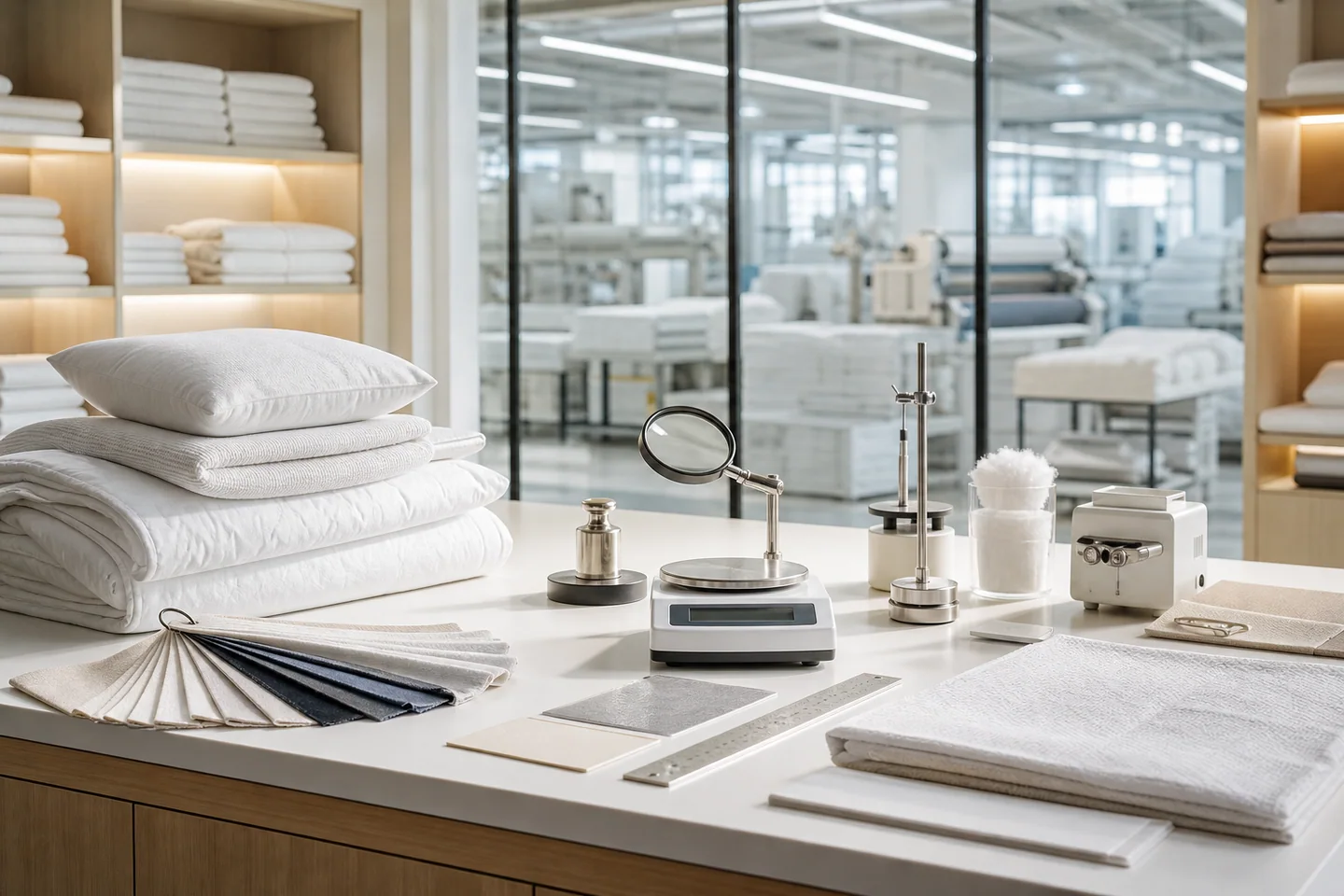
Testing should answer a defined product risk or requirement. A long list of unrelated tests can waste time while missing the one method needed for the intended claim, market or wash process.
1. Collect requirements before choosing methods
Identify product type, materials, destination market, buyer protocol, labeling claims, end use and laundry conditions. Ask whether a retailer, hotel group or regulator specifies a laboratory, sampling method or report format.
2. Map tests to product risks
| Product area | Possible review areas |
|---|---|
| Sheets and covers | Composition, dimensions, colorfastness, pilling, seam performance |
| Pillows and quilts | Composition, fill weight, dimensions, workmanship, applicable safety or claim tests |
| Towels | Composition, finished weight, absorbency direction, colorfastness, dimensions |
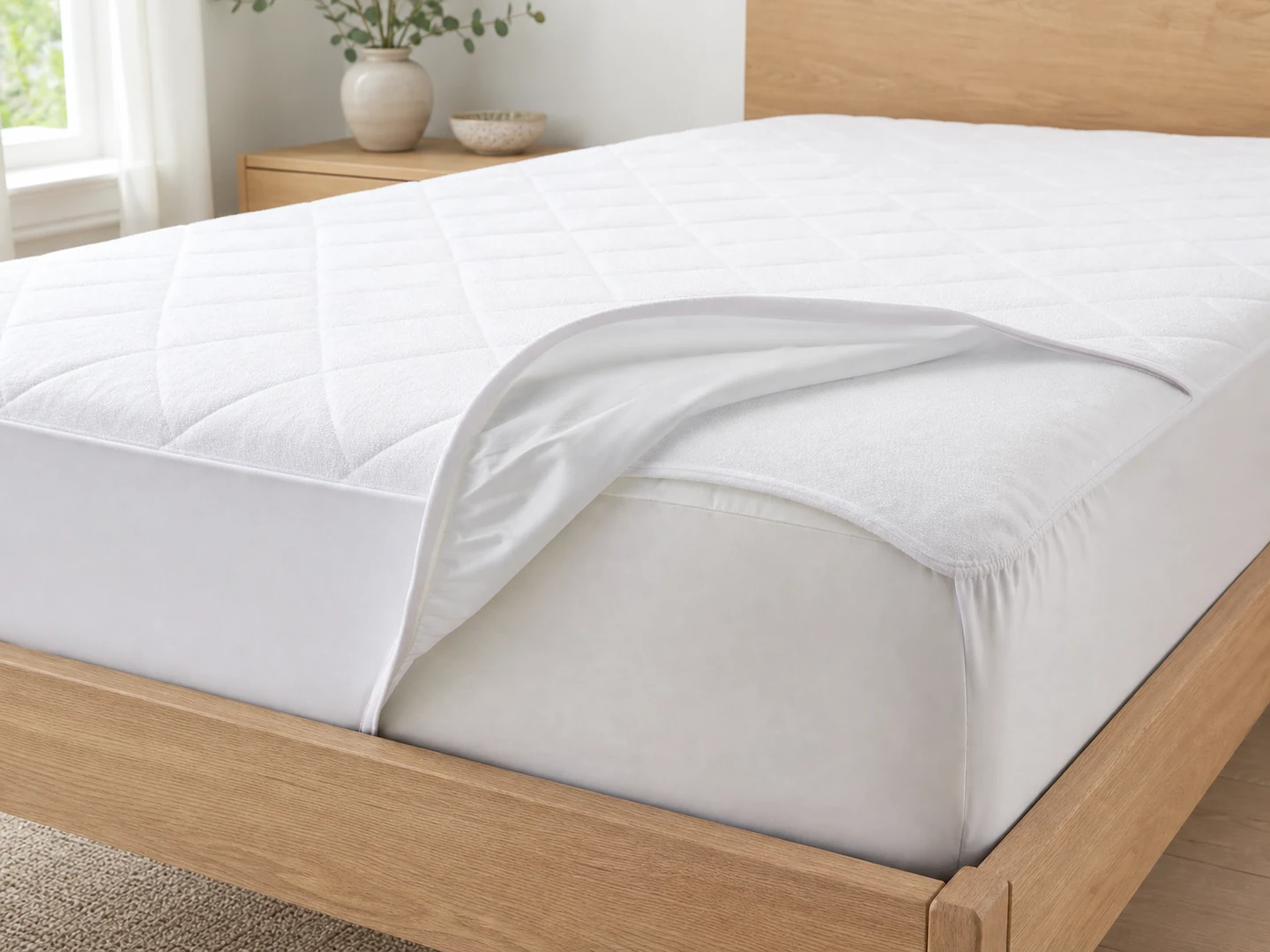
| Protectors | Composition, fit after laundering, barrier performance and seam construction |
The exact methods depend on the project; this table is a planning prompt, not a universal test protocol.
3. Test at the stage that can still change
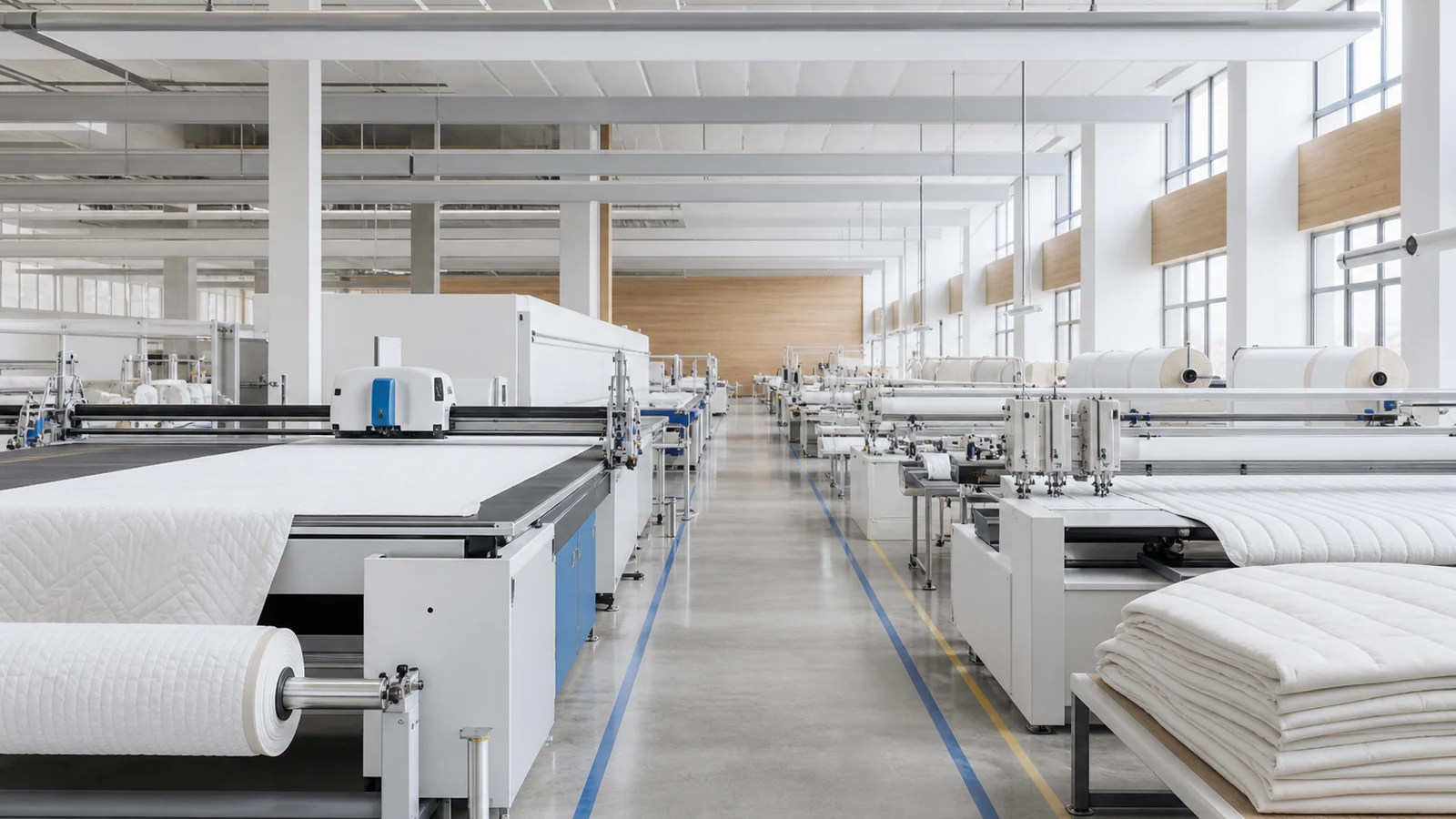
Material screening can happen before sample approval. Prototype testing can reveal construction issues. Pre-production confirmation can validate the approved formula. Finished-product or shipment testing should use a clearly identified sample and agreed sampling rule, then connect the result to the final inspection plan.
4. Review sample identity and report scope
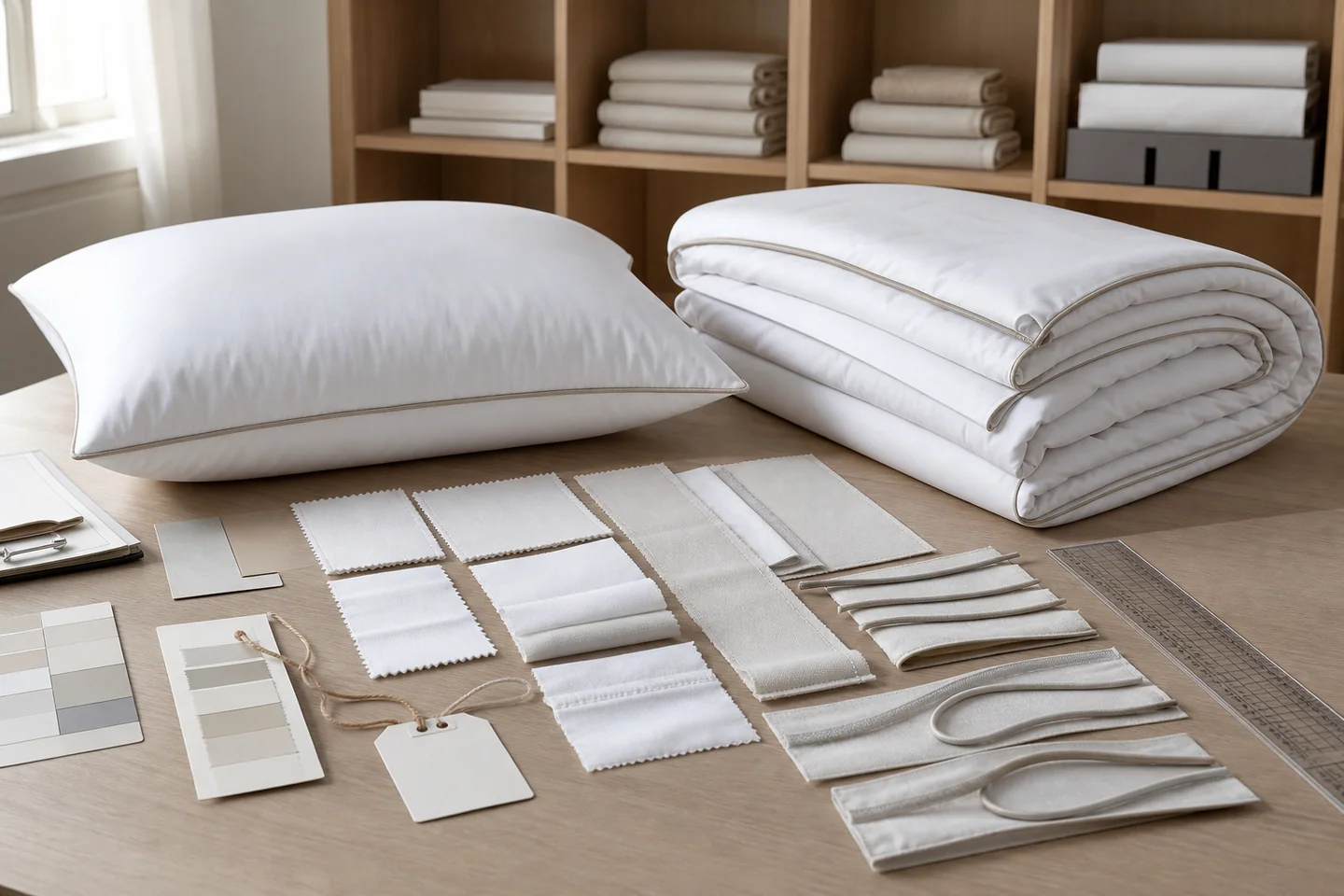
Match the report to the submitted sample description, color, size, composition, manufacturing site and method. Check result units, requirement limits, deviations and pages. Use the document scope guide before relying on prior reports.
5. Define retest triggers
Changes to material supplier, formula, dye, finish, construction, production site or claim may affect prior evidence. Record who decides whether a change requires confirmation or retesting, and keep the decision with the product revision.
Choose every test because it addresses a product requirement, claim, risk or buyer protocol—and identify the exact sample before it enters the laboratory.