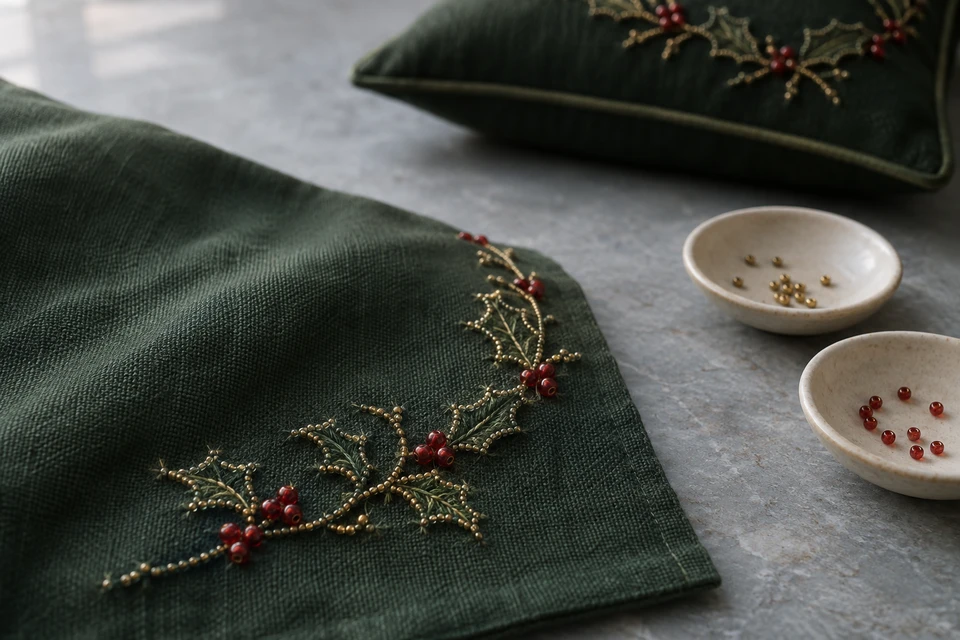
A Christmas cushion illustration can show where the holly leaves belong without explaining how their beads will be selected, counted or attached. The attractive motif and the working sewing map serve different purposes. A buyer needs both before comparing a heavily embellished panel with a simpler interpretation. This guide concerns decorative cushion development; it does not establish toy suitability, attachment strength or a general safety approval.
- 1. Separate three records before requesting a price
- 2. Locate the motif on the finished cushion face
- 3. Ask the maker to explain the attachment proposal
- 4. Review the whole panel under ordinary handling
- 5. Set a receiving comparison that does not require artistic interpretation
- 6. Quote the embellished cover and pack together
Separate three records before requesting a price
Artwork, component key and placement map
Keep a clean appearance drawing that explains the intended motif at the actual finished scale. Alongside it, prepare a component key identifying the proposed bead types and a placement map connecting those types to named areas of the design. The artwork may show a gold leaf, but the component key must say whether that leaf uses round beads, elongated beads, stitching or a combination proposed by the maker.
Do not make the supplier infer the bill of materials from a shaded illustration. Ask for each proposed component's reference, size description, colour and finish, with a physical example where practical. Where counts vary with the way a curve is filled, identify the maker's proposed method and approval basis rather than inventing a universal number. Keep any acceptable alternatives visible in the quotation so a less embellished option is not mistaken for the same construction at a lower price.
Locate the motif on the finished cushion face
A flat panel is only one viewing state
Mark the cushion centre, seam line, closure and the visible field available after assembly. State which part of the holly arrangement is meant to remain visible on an inserted cushion. A cluster close to the panel edge may fall around the side when the cover is filled. Review that relationship with the intended insert dimensions and fullness rather than approving only the flat artwork on a cutting table.
Decide whether the motif is confined to the front or continues onto another face. Show where beads must stop before a seam, piping line or closure. Keep those exclusions on the placement map instead of relying on a general note to avoid the edge. If the cover size changes, review the motif position again: keeping the same distance from one edge can alter the balance of the whole cushion, while enlarging every bead is not a practical substitute for a revised arrangement.
Ask the maker to explain the attachment proposal
A visible thread is not a complete method
Request a production-intent sample that shows the front, reverse and any supporting layer before it is concealed by final assembly. Ask how the maker proposes to secure different bead shapes and manage the sequence between adjacent motif areas. Procurement should document the accepted method and finishing result, not prescribe improvised needlework from an enlarged photograph. The responsible technical team should identify the appropriate evaluation for the intended product and market.
Distinguish deliberate connecting stitches from loose working threads and identify which connections should remain visible. Examine whether the proposed sequence draws the base cloth into local folds or changes the spacing between beads. A neatly pressed display sample can help discuss appearance, but it cannot substitute for relevant attachment or post-care evidence. Record those requirements separately so an attractive first sample does not silently approve every later performance claim.
Review the whole panel under ordinary handling
The use context limits the buying brief
Place the sample on the intended cushion and observe it from normal seating and display distances. Check whether the motif reads clearly and whether the raised components are appropriate to the use that the buyer intends to describe. A cushion reserved for decorative display is a different brief from one promoted for regular leaning or sleeping. Do not rely on an attractive lifestyle image to make that distinction for the customer.
Identify likely contact areas and ask the maker to address the actual assembly and care route. Keep tactile observations factual: where a reviewer notices a hard projection, an exposed thread end or contact with another textile, record the location and sample identity. Do not convert one person's impression into a universal comfort or safety statement. If a changed bead or attachment method is proposed, repeat the affected review on a completed cover rather than only on a loose component.
Set a receiving comparison that does not require artistic interpretation
Named motif areas make findings traceable
Divide the motif into observable areas, such as the main branch, two large leaves and the berry groups. Compare bead type, intended colour relationship and placement against the retained reference in each area. Check the reverse where it remains accessible in the finished product. Keep missing components, unintended substitutions and shifted placement as separate findings; they do not necessarily have the same cause or corrective action.
The inspection record should identify when the reviewer must hold the item for clarification instead of repairing it. An inspector should not add an available red bead simply because a gap looks unfinished. Compare the finding with the current placement revision and ask the responsible team whether the pattern or workmanship differs. If a planned variation is accepted, update the controlled reference before it becomes an undocumented exception across the assortment.
Quote the embellished cover and pack together
Extra components need an explicit role
Confirm whether the offer is for a loose decorated panel, a finished cover or a complete cushion with insert. Ask how the proposed pack separates raised beadwork from neighbouring surfaces and what the unpacked article looks like. If spare beads or thread are included, define their purpose and the information supplied with them; do not imply that customers can safely repair every construction themselves.
For an FY Bedding enquiry, send authorised Christmas artwork, the finished cover dimensions, intended use and desired level of embellishment. Request a component proposal, placement map and assembled sample before approving quantities or minimums. Confirm actual sampling and delivery planning separately. The final buying decision should connect the festive image to an identifiable construction and a realistic evidence plan, not treat the artwork alone as permission to make or market any beaded version.
Release the motif drawing, bead key and placement map together, then approve the actual assembled cover, attachment evidence scope and protective pack.