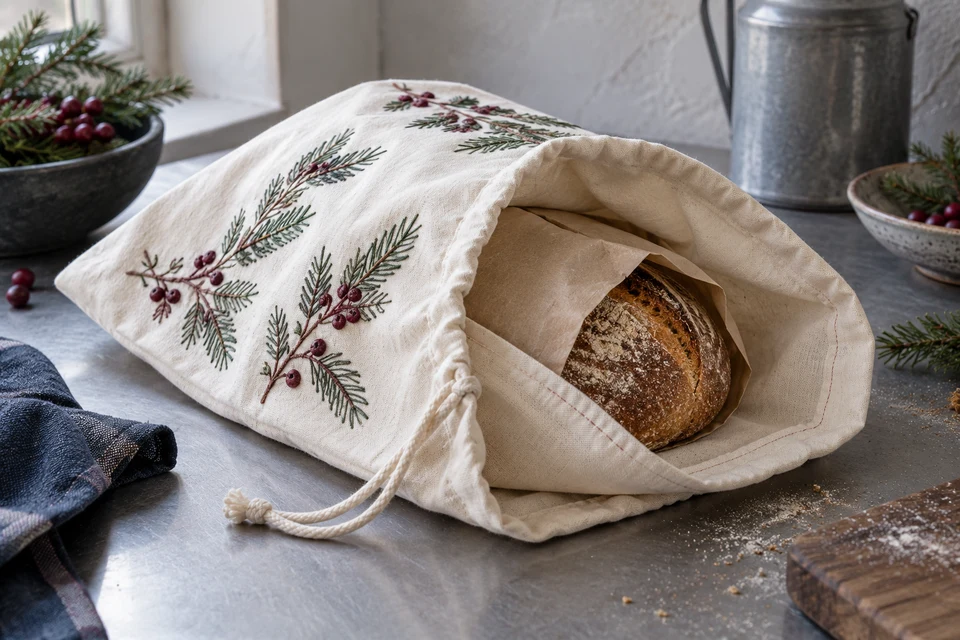
A Christmas fabric bread bag may be a decorative outer gift pack, a reusable bag intended to touch bread, or a combination with a removable liner. Those are different buying briefs. A seasonal motif does not resolve the contact question, and a generous-looking photograph does not prove that the intended loaf can pass through the opening. Define the actual use before comparing materials or quotations.
Write the contact scenario first
Separate wrapped gifts from direct contact
Describe exactly what will be placed inside: a wrapped loaf, an unwrapped loaf, a separately supplied inner bag or another packaged bakery gift. State which layer is intended to touch the contents. Include the expected condition of the contents and the proposed care and reuse instructions. Do not infer suitability for warm food, prolonged storage or repeated washing from a fabric name or a supplier's general statement.
For the intended destination and use, ask the responsible compliance reviewer which documents and assessments are needed. This article does not establish a food-contact approval. The certificate scope matrix helps keep a material document separate from evidence covering the actual finished bag. If that evidence is unresolved, retain the item as a development proposal rather than publishing an unsupported safety claim.
- Identify every layer intended to contact the contents.
- Record whether the offer includes the inner packaging.
Measure the loaf as a three-dimensional object
Leave room for loading and closure
Record the target loaf's length, width and height together with its wrapper, if used. A flat bag width does not directly describe the volume available around a rounded loaf. Ask for a finished sample and try the agreed dummy or actual intended packaged product. Record whether loading requires excessive squeezing and whether the bag can be removed without dragging the closure over the contents.
Distinguish the body volume from the usable opening. A roomy gusset cannot compensate for a narrow drawcord channel. A long decorative top may photograph well but leave insufficient fabric for the intended tie. Include the loaded and closed dimensions in the size-set approval record, adapting the measurement points to the bag rather than copying a flat bedding measurement sheet.
- Check loading, closing and unloading in sequence.
- Approve each loaf shape in a multi-size range.
Make the liner a specified component
Trace the layer behind the embroidery
Specify whether the liner is sewn in, removable or not supplied. Show the attachment points, top-edge finish and seam allowances. If embroidery appears on the outer shell, inspect the interior for exposed backing, loose threads and bulky seams. Do not assume a liner isolates every component; the opening, seam construction and intended handling determine which surfaces may contact the contents.
Record shell, liner, thread, cord, print and decoration in the bill of materials. Evidence requests should identify the proposed construction and colour, not an unrelated plain fabric. A change to coating, finish or print can require renewed review. Ask for document identity and scope using the test report sample-identity checklist; do not describe a general textile report as complete food-contact evidence.
Decide what reuse means in this project
Avoid an invented freshness promise
If the bag will be sold as reusable, define how the customer is expected to empty, clean, dry and store it. Evaluate the complete sample under the proposed care instructions, including a removable liner if supplied. Record dimensional changes, appearance of seams and decoration, closure operation and how the liner fits back into the shell. A clean-looking outer face does not show the condition of a concealed inner seam.
Keep any claim about freshness, moisture management or storage duration outside the sales copy unless supported for the actual product and use. A fabric bag should not inherit performance claims from another supplier's packaging. The care-label artwork checklist can organise the approved instructions and warnings; the responsible reviewer must still assess the food-related use and destination requirements.
- Check the shell and liner both separately and assembled.
- Keep unsupported storage-duration claims off the label.
Approve the gift presentation and commercial scope
Keep packaging separate from the food offer
A Christmas loaf bag can be quoted empty while styled photographs show bread, ribbon and gift tags. List what is actually included in the sales unit and make the retail description match it. Confirm whether embroidered motifs face outward when the bag is closed and whether the drawcord obscures important artwork. Ask for a packed sample with the same fold and insert proposed for the shipment.
Separate material minimums from finished quantities by design and size. Record sampling charges, evidence work, packaging and delivery assumptions as distinct items, with milestones confirmed by the participating suppliers. There is no automatic promise of holiday delivery. Send FY Bedding the intended loaf dimensions, contact scenario, destination and desired pack contents to establish whether the proposed development scope can be supported before placing the order.
- Retain the loaded sample photographs with the empty-pack specification.
- Do not release unresolved contact claims to retail artwork.
Approve fit, contact scope, component identity and care instructions together. An attractive embroidered shell alone is not a finished-product evidence package.