A care label is a small component with a large approval burden. It connects product composition, care communication, brand identity, market requirements and production traceability. The factory can support layout and construction, but the buyer should confirm the required content for the destination market and provide one controlled artwork source.
1. Assign ownership of label content
Before artwork begins, identify who approves fiber claims, care instructions, country-of-origin wording, responsible-party or brand fields, translations and any market-specific statements. Requirements vary by product and market, so avoid copying a label from an unrelated item.
Keep claims consistent with the bill of materials and the evidence held for that product. The document library explains why a company certificate, a material certificate and a finished-product test report should not be treated as interchangeable proof.
2. Build a complete artwork checklist
| Field | Buyer decision | Production check |
|---|---|---|
| Product identity | Style, size or SKU mapping | Correct artwork assigned to each variant |
| Fiber content | Approved wording and percentages | Matches the controlled bill of materials |
| Care | Symbols, text, language and sequence | Legible at finished label size |
| Origin and party | Market-reviewed wording and details | Exact approved text reproduced |
| Traceability | PO, lot, date or code policy if used | Variable-data method confirmed |
| Brand layout | Logo, color, typography and spacing | Approved file and print method |
3. Specify the physical label
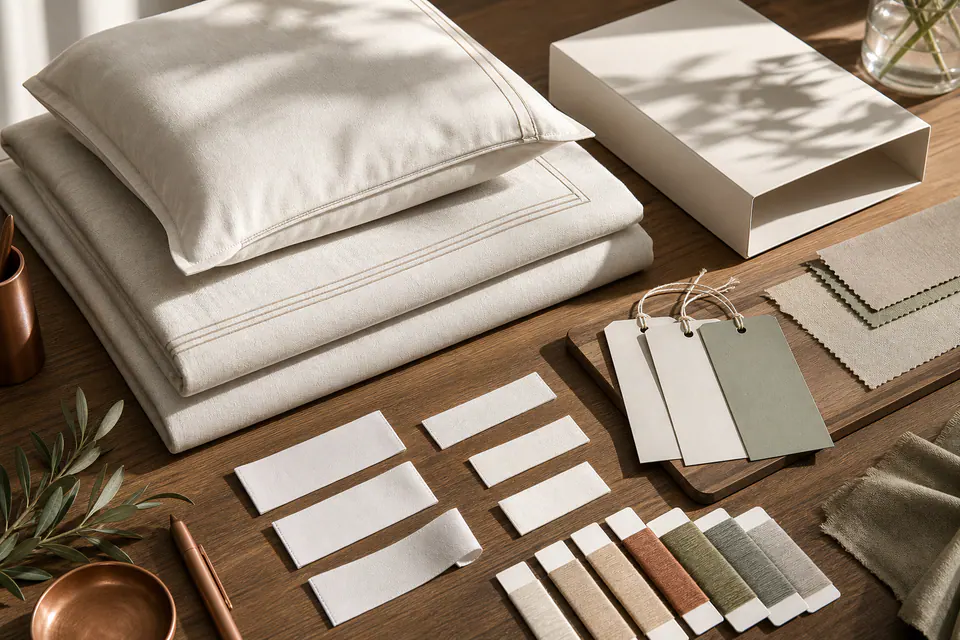
Define label material, finished size, fold type, cut edge, print method, color, seam allowance and attachment method. Confirm whether the label sits in a side seam, hem, pocket or dedicated label position. Placement should not create discomfort, distort the product or disappear inside an inaccessible construction.
Review readability at actual size, not only on a large artboard. Fine reverse text, crowded multilingual content and low contrast can look acceptable on screen but fail after printing, folding or laundering.
4. Control artwork versions and approvals
Give every artwork a style/SKU reference, revision, date and approval status. The purchase order and technical pack should point to that exact version. If one edit changes several sizes or languages, reissue the affected set rather than relying on an informal message.
- Review digital content and layout.
- Approve a full-size artwork proof.
- Review a printed or woven strike-off where relevant.
- Approve placement on the pre-production sample.
- Keep the approved file available for final inspection.
5. Coordinate labels with retail packaging
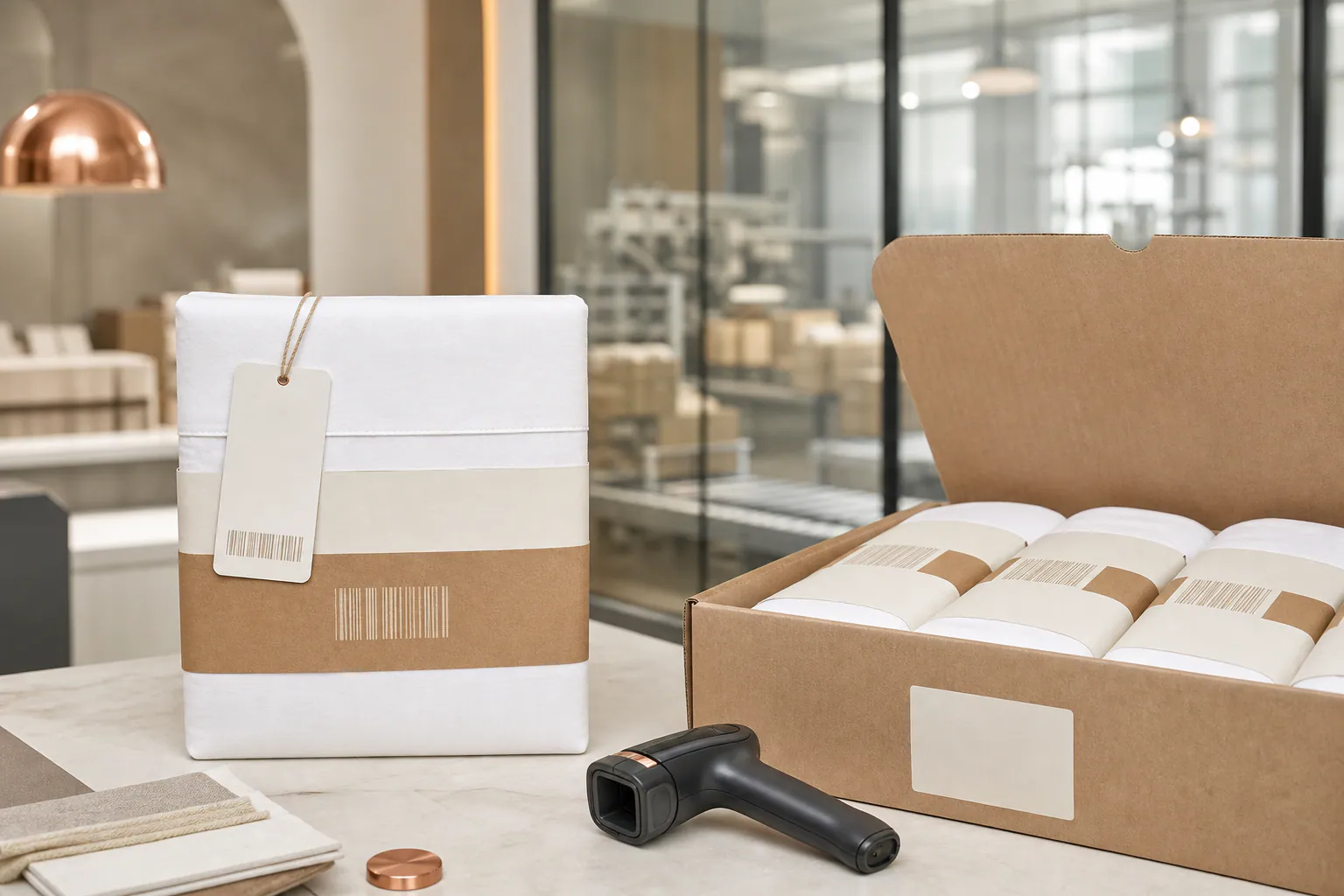
Fiber, size, color, care and origin information should remain consistent across the sewn label, hangtag, insert, polybag sticker, barcode label and carton mark. Use the private-label packaging checklist to review the complete information system.
During final inspection, sample across SKUs and scan representative barcodes. The correct label printed well but attached to the wrong size is still a product-control failure.
Release one approved artwork source per SKU or controlled artwork family. The destination-market owner should approve required content; the factory should reproduce, position and verify that approved version.