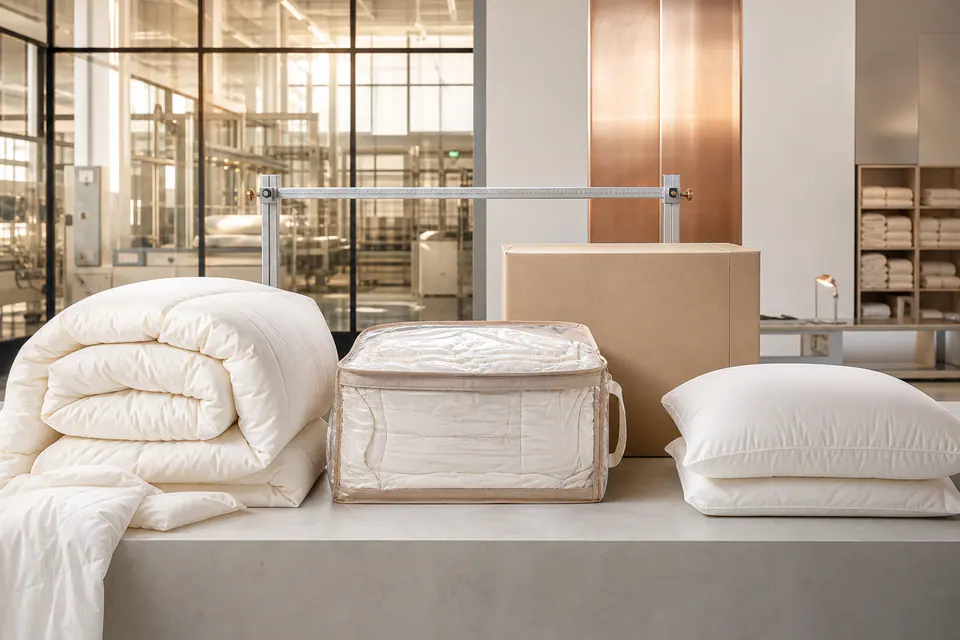
Compression can reduce the shipping volume of pillows, duvets, comforters and toppers, but the smallest pack is not automatically the best pack. Buyers should validate material recovery, shell appearance, fill distribution, seal integrity, storage duration, customer opening experience and carton efficiency as one system.
1. Define the packaging objective
State whether the priority is export cube, retail shelf size, e-commerce parcel limits, storage, moisture/dust protection or a combination. Define the acceptable presentation after opening and the time allowed for recovery.
Confirm whether the unit remains compressed only during transit or for a longer distribution period. Duration and environmental exposure can change the risk.
2. Record the product inputs that affect recovery
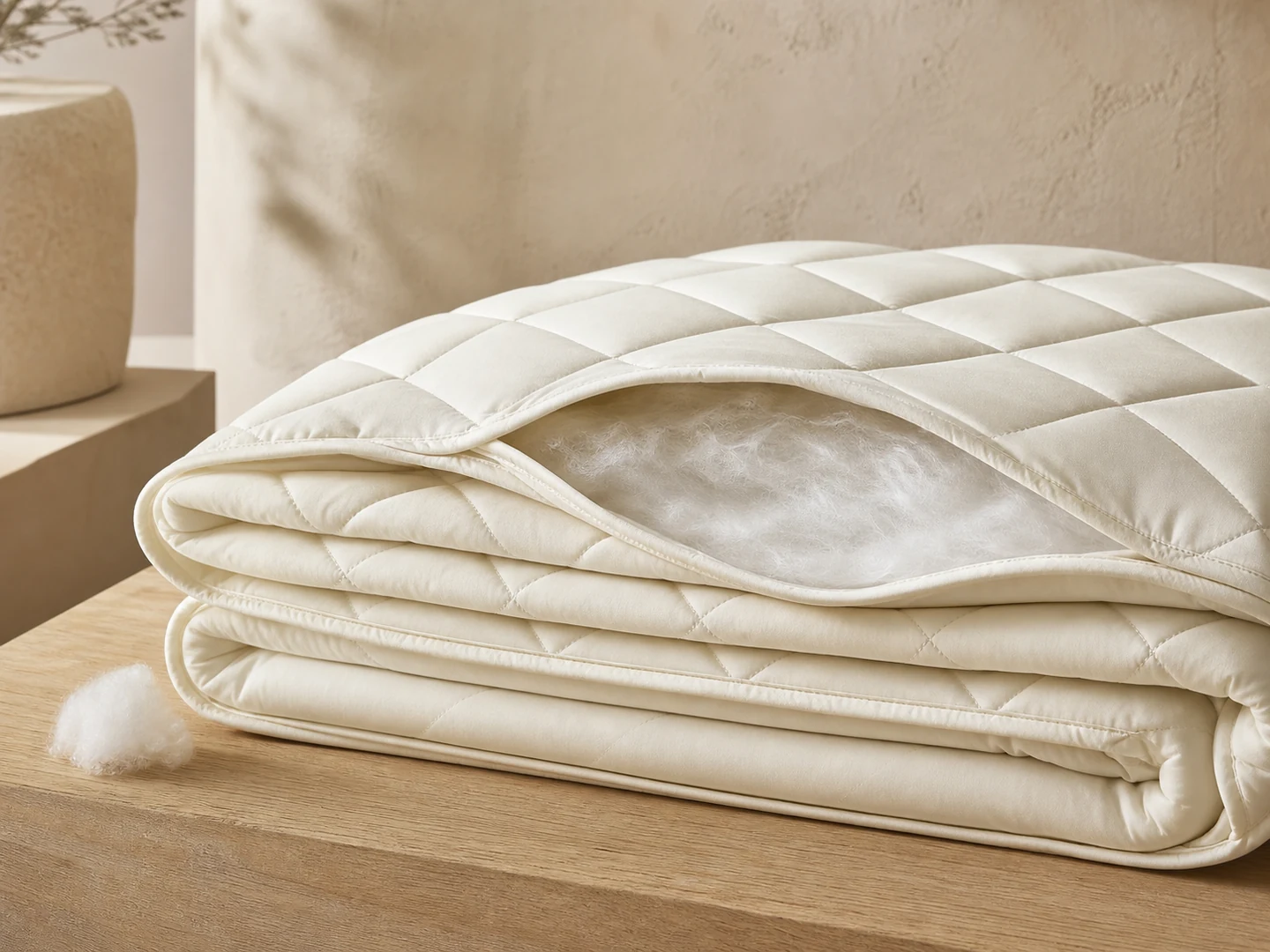
Fill material, fill form, mass, loft, quilting, shell fabric, finishing and product size influence compressibility and recovery. A result from one pillow or comforter should not be applied automatically to another construction.
Approve the uncompressed product first. The fill specification guide explains how fill mass, distribution, shell and quilting work together.
3. Run a controlled packaging trial
| Trial factor | Record | Review after opening |
|---|---|---|
| Compression ratio | Product and packed dimensions | Loft, fill distribution and appearance |
| Pack material | Film/bag construction and closure | Seal, puncture and contamination protection |
| Storage time | Duration and conditions | Recovery at defined intervals |
| Carton fit | Units, orientation and free space | Pack deformation and carton condition |
| Handling | Drop/transport simulation as agreed | Leakage, seal and product damage |
4. Define recovery and presentation criteria
Condition the opened product for an agreed time and environment, then assess dimensions, loft direction, fill distribution, wrinkles, odor, leakage and functional/visual comparison with the approved reference. Record whether gentle shaking or other customer action is expected.
If recovery instructions are required, approve their wording and placement as part of packaging artwork. Avoid promising an exact recovery outcome unless the construction and method support it.
5. Close carton and shipping assumptions
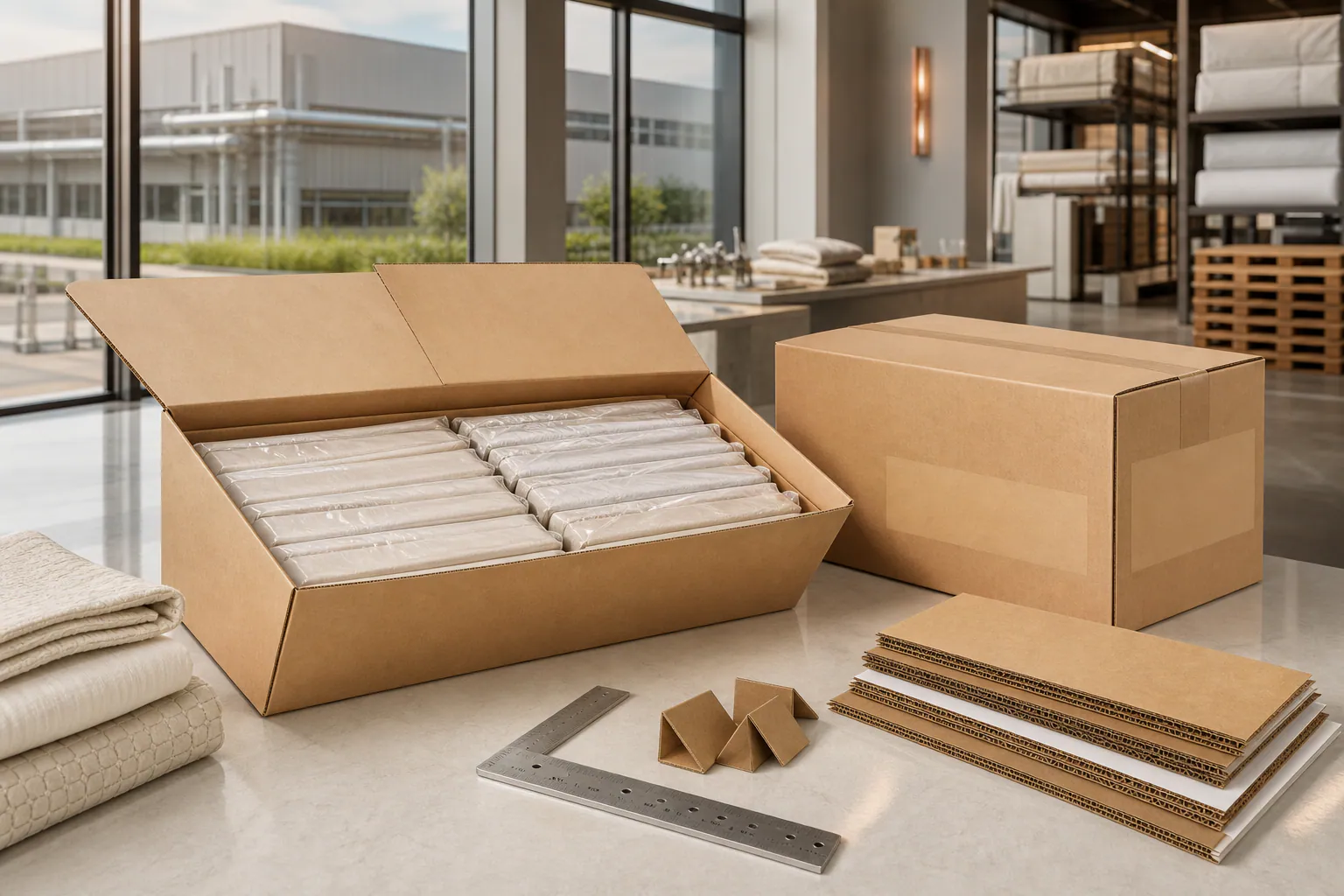
Use verified packed dimensions and weights to calculate case pack, carton dimensions and shipment cube. Add realistic allowance for carton board, bag variation and packing method rather than relying on a single laboratory pack.
Connect the approved pack-out to the quotation and the bulk textile logistics plan. Any later change in fill, unit pack or case quantity should trigger review.
Choose the lowest packaging volume that still protects the product and meets recovery, presentation and handling requirements. Validate the actual construction for the intended compression duration.