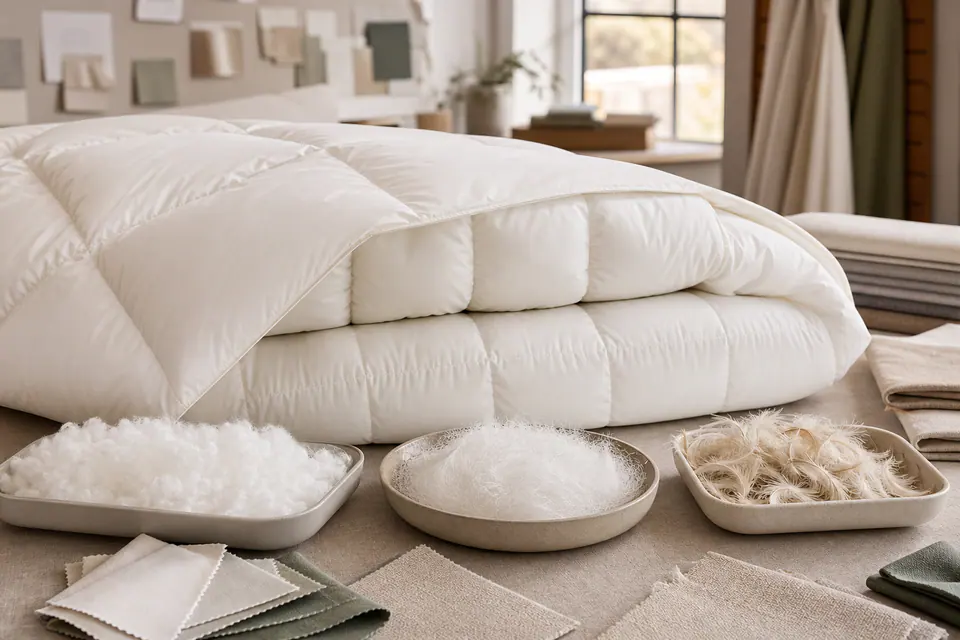
Warmth, loft and drape do not come from the fiber name alone. A commercial duvet or comforter brief should connect fill material, mass, distribution, shell fabric, internal construction, finished dimensions, care route and performance validation. Buyers get a more comparable quotation when every supplier answers the same construction questions.
1. Start with intended use and comfort direction
Define the destination climate, season, room temperature, user expectation, cover system and care method. A light layering insert for a tropical resort is a different product from a lofty winter comforter sold in retail packaging, even if both use a “down-alternative” description.
State finished dimensions and intended bed or cover fit. Oversize appearance, tuck, edge drape and shell shrinkage affect the required fill distribution as well as material consumption.
2. Compare fill systems with measurable inputs
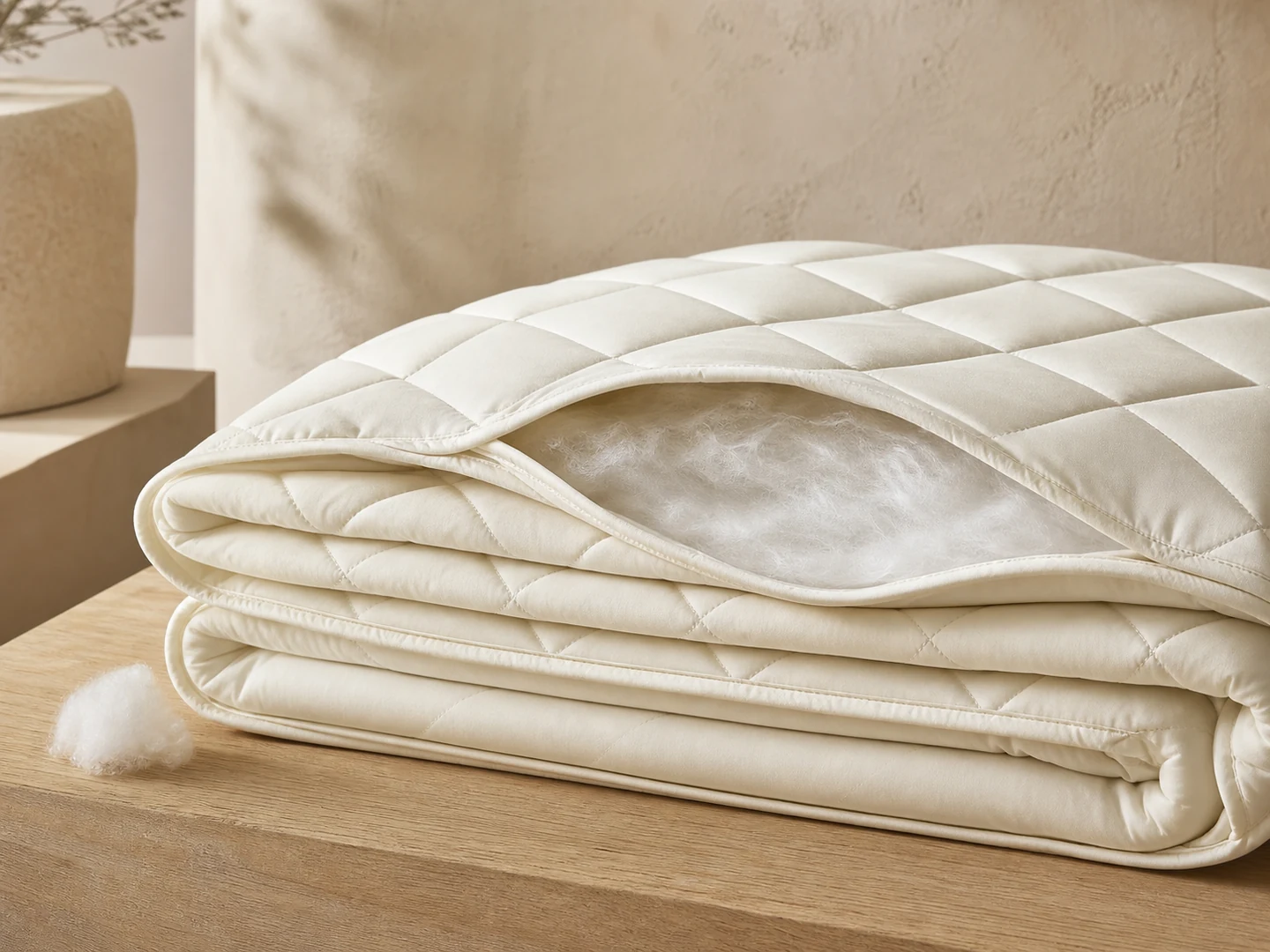
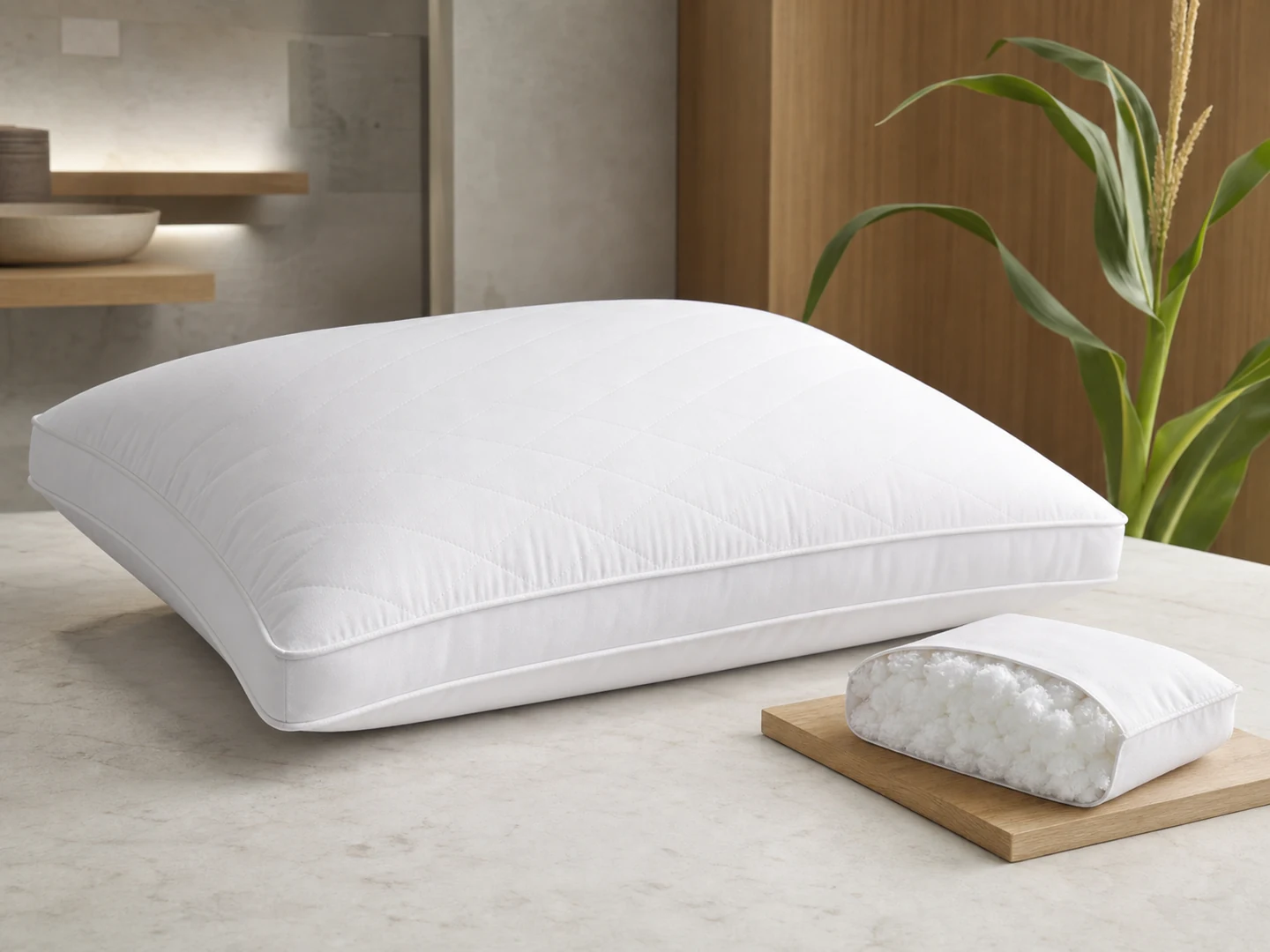
Down and feather blends, conventional synthetic fills and bio-based or PLA-associated fiber directions each need their own specification and evidence review. For any option, define composition, form, relevant grade or performance attributes, supplier reference and supporting document scope.
For an Ingeo™ PLA program, review the dedicated material and evidence page. A material-level certificate does not automatically describe every component or claim of a finished quilt, so keep the product bill of materials and the provided evidence aligned.
3. Specify fill weight, loft and distribution
| Decision | Specification question | Sample validation |
|---|---|---|
| Fill mass | Net fill weight by finished size and tolerance | Weigh representative finished units |
| Loft | Target appearance after recovery and conditioning | Review after unpacking and defined rest |
| Distribution | How should fill remain even across the panel? | Check corners, channels and migration |
| Warmth direction | Season or performance target and method | Use agreed comparative or test protocol |
| Hand and drape | Soft, structured, dense or cloud-like direction | Compare sealed physical samples |
Do not transfer one total fill weight across all sizes. Define the weight per size or a controlled calculation method, then check whether the resulting density and appearance remain consistent.
4. Connect the fill to shell and quilting
Shell fiber, weave, finished weight, finish and air permeability affect containment, feel, noise and moisture behavior. Natural fills may require a downproof construction; fine synthetic fills also need seam and fabric choices that control leakage.
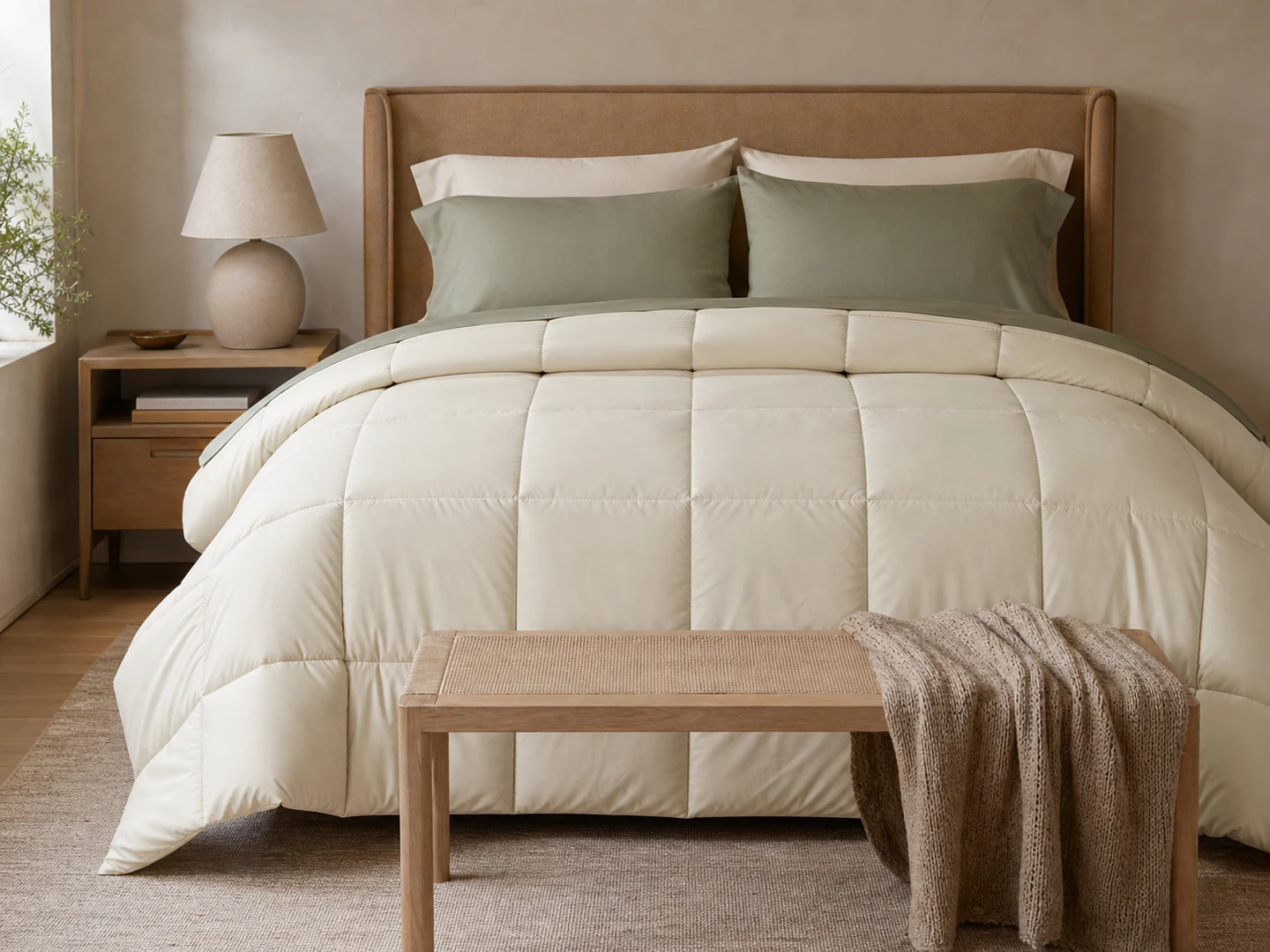
Box, channel and stitched-through patterns distribute fill differently. Record panel dimensions, baffle details where used, edge construction, corner tabs, seams and label placement. Review the down-alternative comforter and Ingeo™ PLA fiber quilt as product-program starting points, not as substitutes for a project specification.
5. Validate care, recovery and bulk control
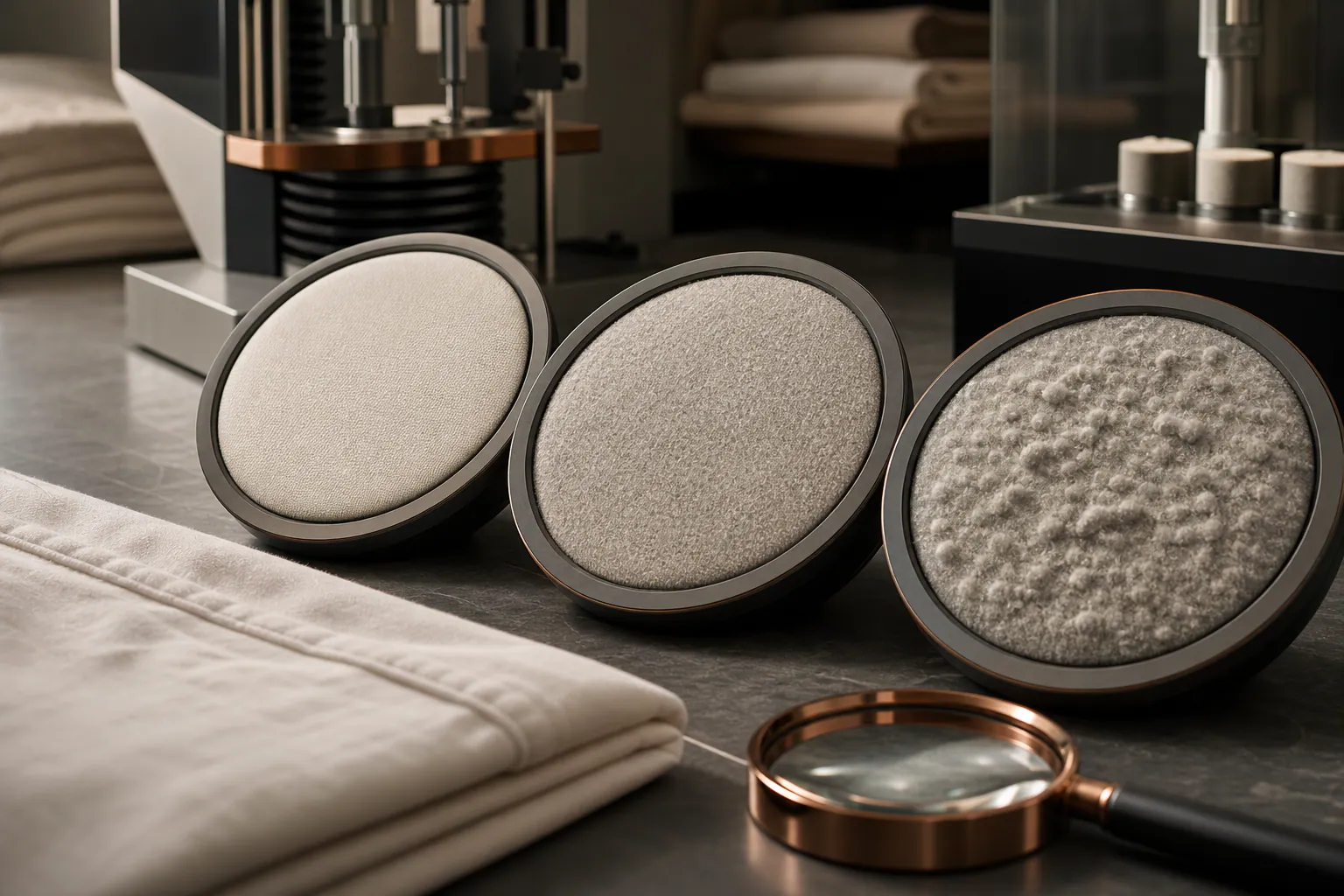
Agree relevant checks from intended use: dimensions and shrinkage, fill weight, fill leakage, distribution after care, seam strength, appearance, odor, compression recovery and packaging recovery. The exact plan should reflect product risk and destination requirements.
Approve the filled sample together with the written specification and packaging method. Compression can reduce shipping volume but may change presentation or recovery time, so test the actual pack-out before release. Use the product testing plan to connect claims and risks to evidence.
Compare complete fill systems—not just fiber names. Freeze fill mass by size, shell and internal construction, physical hand, care method, packaging and the evidence required for the intended market.