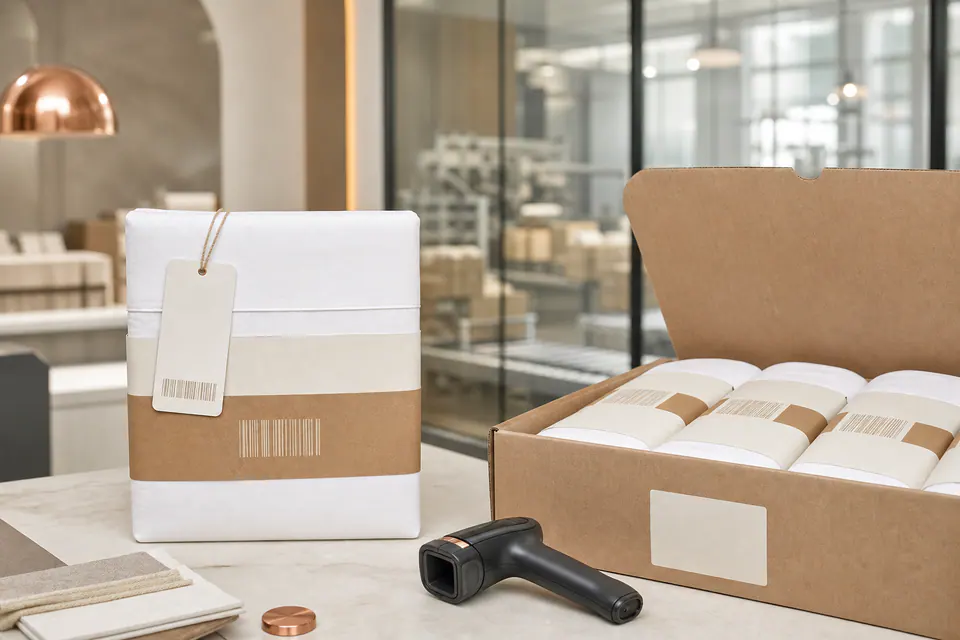
Retail-ready packaging is a data system as well as a visual presentation. The product, sewn label, unit pack, barcode, inner pack, master carton and purchase order must all describe the same SKU. A disciplined approval process prevents a correctly made product from arriving under the wrong code or assortment.
1. Create one controlled SKU source
Build a master table with buyer style, supplier style, color, size, market, language, barcode data, unit-pack quantity, inner-pack quantity, master case quantity and carton-mark reference. Give the file a revision and named owner.
Do not retype barcode data separately into several artwork files. Use a controlled data handoff and verify that revisions reach every affected SKU.
2. Approve artwork and physical execution
Review the visual proof for exact data, quiet zone, orientation, contrast and placement. Then inspect the actual printed label at finished size and on the intended substrate. Curved, glossy, transparent or textured surfaces can affect scan performance.
Coordinate this review with the sewn care-label checklist and the wider packaging approval process.
3. Map the complete pack hierarchy
| Level | Verify | Common mismatch |
|---|---|---|
| Product | Style, size, color and components | Correct barcode on wrong size |
| Unit pack | Fold, insert, label and quantity | Artwork from another market |
| Inner pack | Quantity and assortment where used | Mixed color/size ratio |
| Master carton | Case quantity, marks, weight and dimensions | Carton label disagrees with contents |
| Order data | PO line and shipping-document mapping | Supplier and buyer codes not reconciled |
4. Test scans against the expected data
Scan representative production labels using suitable equipment and compare the decoded data with the controlled SKU source. Check across printers, label rolls and relevant positions, not only the approved digital image.
Scan verification confirms encoding and readability; it does not confirm that the label is attached to the correct product. Pair it with physical SKU and assortment checks.
5. Add packaging data to final inspection
Sample cartons across the shipment, open them and reconcile carton mark, case quantity, unit packs and physical goods. Record any relabeling or rework with affected quantities and reinspection evidence.
Include barcode scans and assortment verification in the final inspection plan before cartons are closed for shipment.
Approve both the data and the physical label, then verify the relationship between product, unit pack, case pack and carton. A successful scan alone does not prove correct SKU execution.