A tech pack does not need to be visually elaborate. It needs to remove ambiguity. The best pack gives development, costing and quality teams one controlled description of the intended product.
1. Identify the product and revision
Assign a product name, buyer SKU, season or program, revision number, date and owner. State intended market, use case and target quantity. Keep prior revisions visible but clearly superseded.
2. Add drawings, measurements and tolerances
Use front, back and detail views to identify seams, hems, quilting, closures, pockets, piping, labels and decorative features. Put measurements in a table with points of measure, method and tolerance.
For a hotel sheeting brief, cross-check the dedicated hotel bedding specification checklist.
3. Define every material and trim
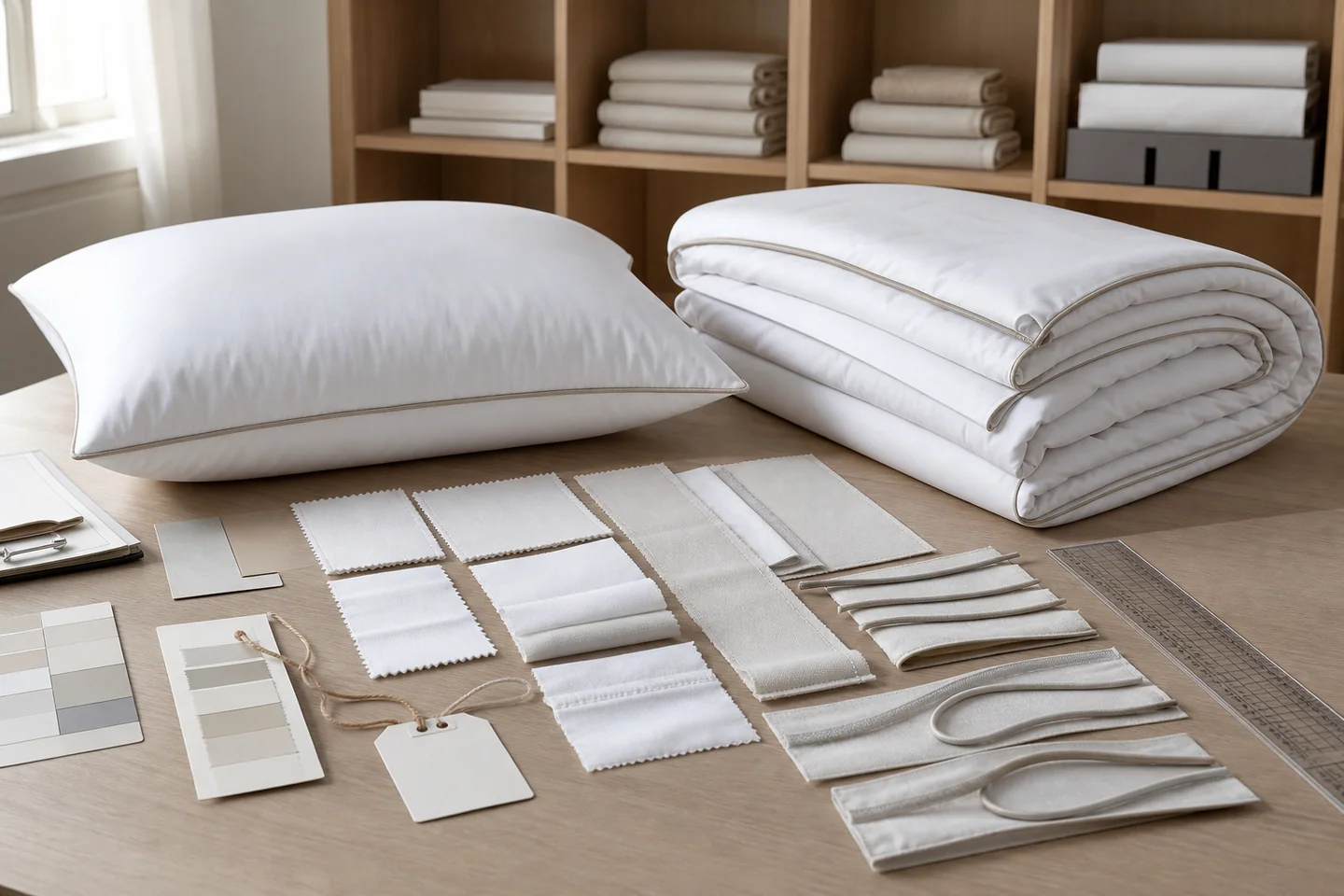
List shell fabric, lining, filling, interlining, thread, elastic, zipper, buttons, piping, labels and packaging. Specify composition, construction, color reference, finished weight or fill weight and supplier restriction where applicable. Explore material directions in the fabric guide.
4. Describe workmanship and appearance
- Seam and stitch type
- Stitch density where critical
- Hem depth and corner method
- Quilting pattern and spacing
- Fill distribution and target loft
- Acceptable appearance reference
Photographs can supplement these fields, but avoid copying a third party’s protected design. Use your own drawings, licensed references or original concept imagery.
5. Include testing, labels and packing
Add care method, required tests, buyer protocol, label content, fold method, unit pack, case pack and carton marks. Then specify the sample stages and approval owner. The packaging approval checklist covers this in detail.
If a decision affects cost, construction, compliance, appearance or inspection, it belongs in the controlled tech pack—not only in an email thread.