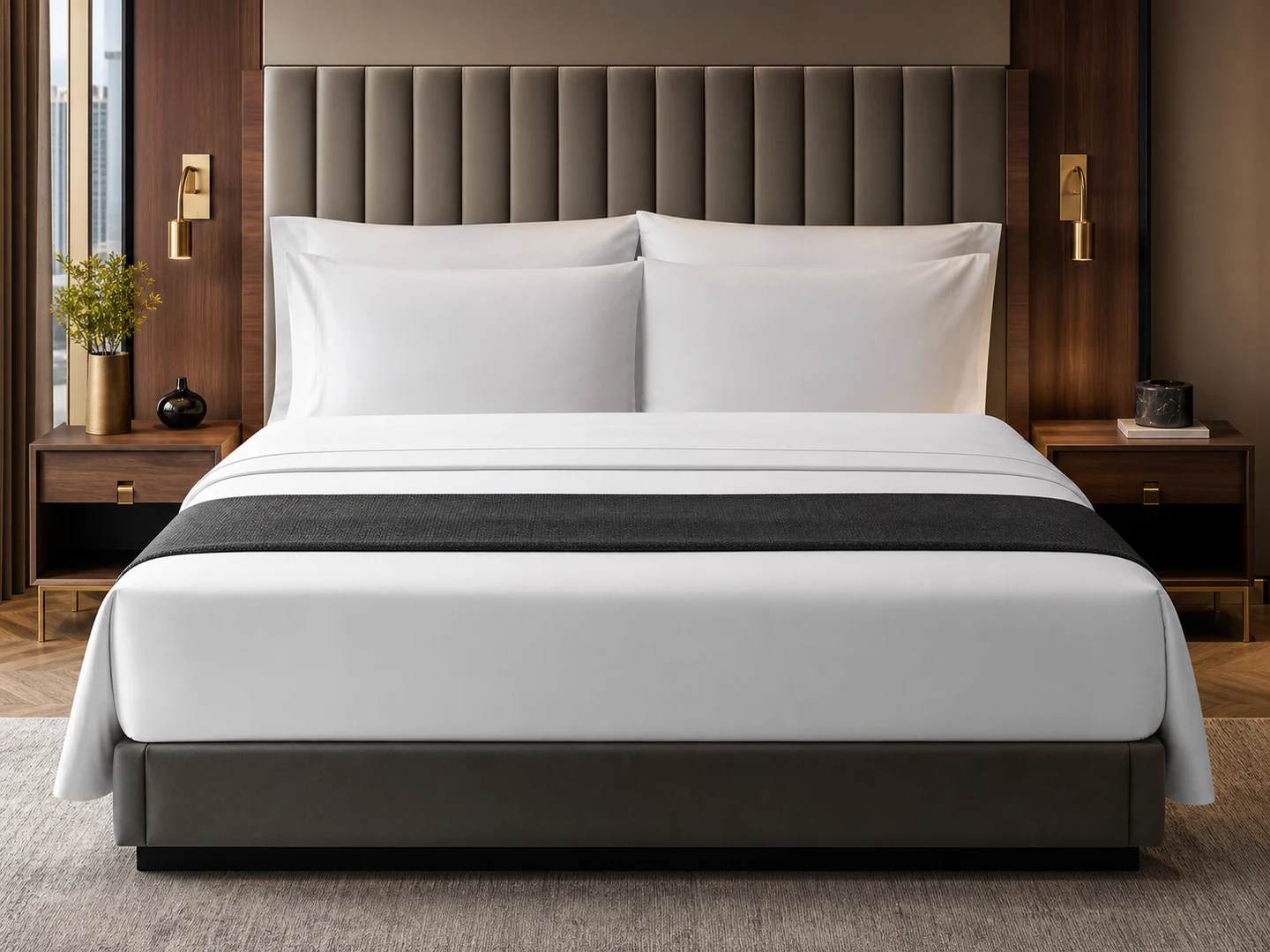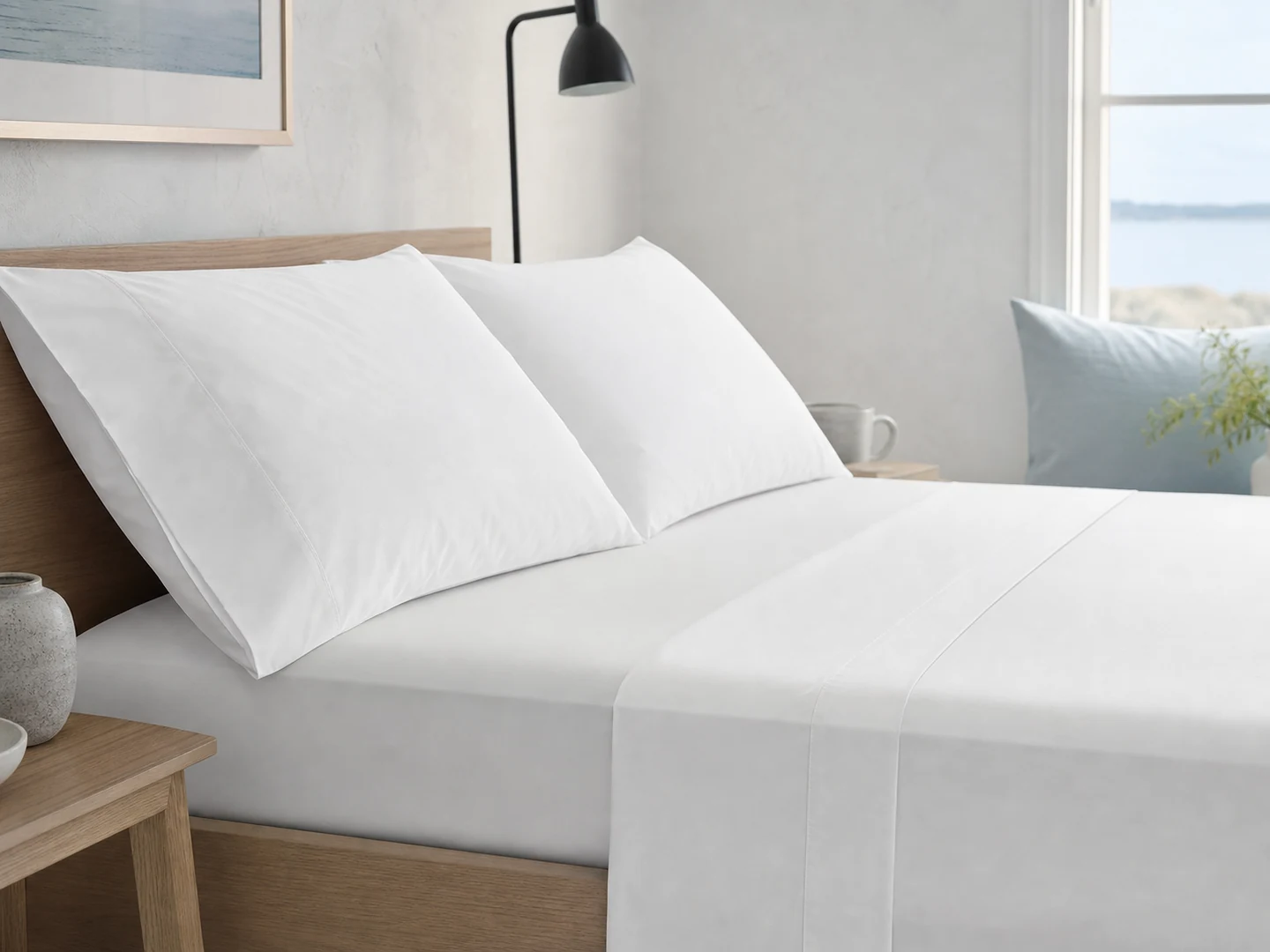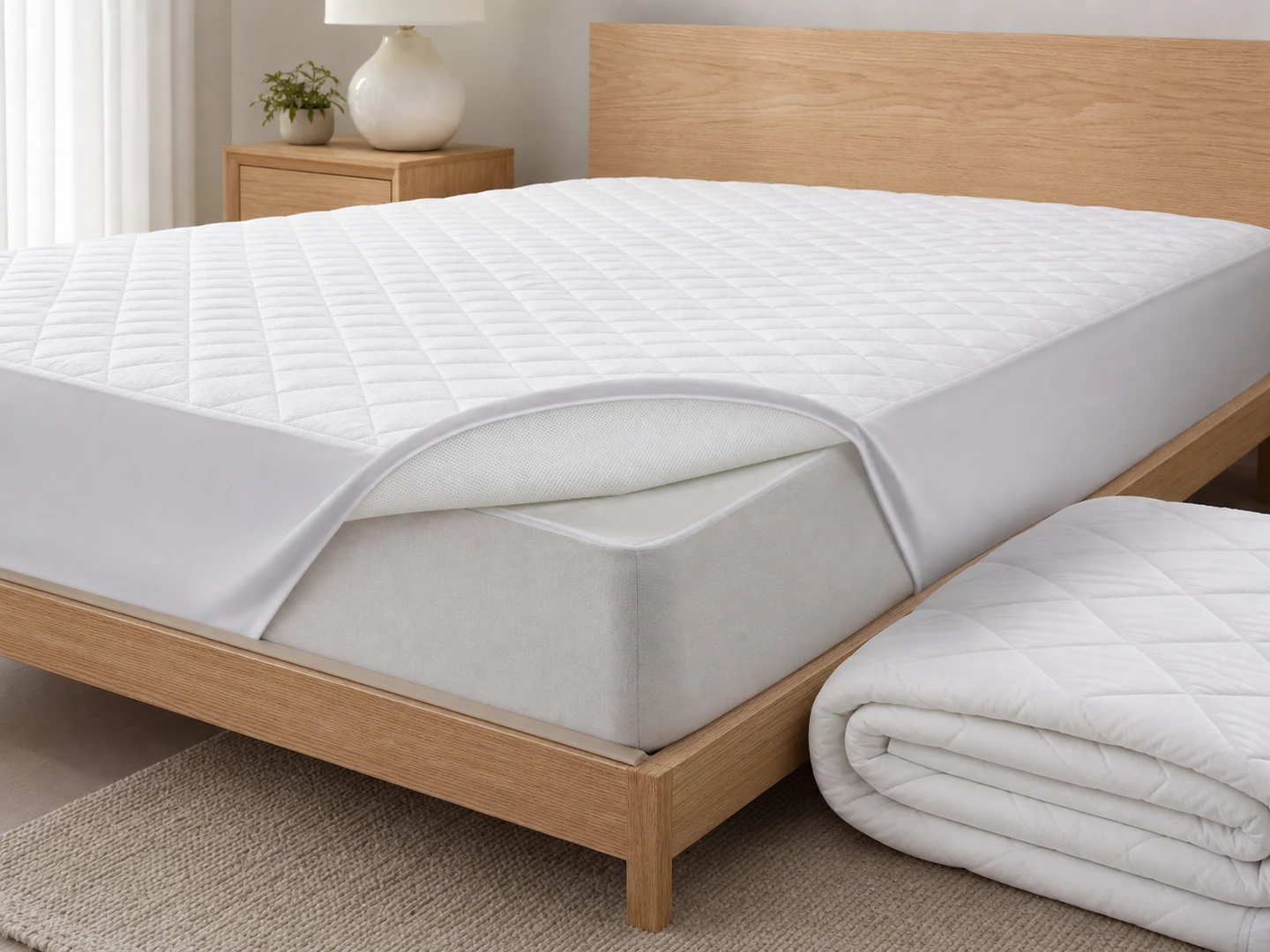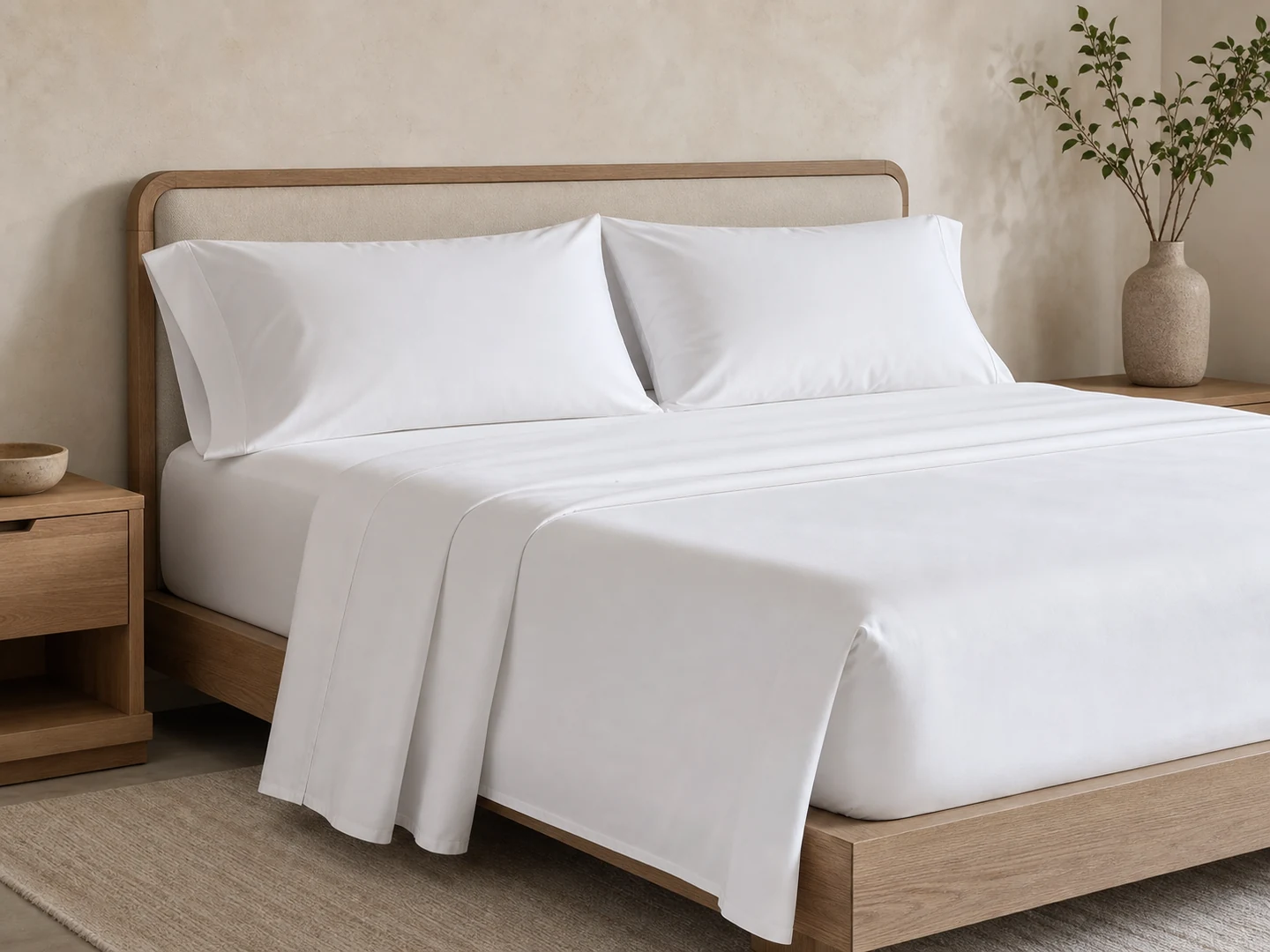
A hotel bedding request should describe a measurable product, not only a look. The strongest specification connects the guest experience to dimensions, materials, construction, laundry conditions, packaging and approval evidence. Use this checklist before requesting a quotation or sample.
1. Start with the program scope
Identify the property type, room count, bed mix, opening or replacement date, destination market and expected order quantity. State whether the program covers only sheets or a coordinated set of sheeting, duvet covers, protectors, pillows and towels.
Separate opening stock from replenishment stock. Opening orders may include every room at once; replenishment programs need repeatability, controlled color and a sensible case pack.
2. Freeze dimensions and fit
Do not rely on names such as queen or king alone. Provide finished measurements, mattress depth, pocket depth, shrinkage allowance and acceptable tolerances. For pillows and duvet inserts, state both finished size and the compatible case or cover size.
| Field | What to define | Why it matters |
|---|---|---|
| Mattress | Length, width, depth and topper | Controls fitted-sheet pocket and elastic |
| Flat sheet | Finished dimensions and hemming | Controls tuck and presentation |
| Duvet system | Insert and cover dimensions | Reduces shifting and overhang variation |
3. Define fabric and construction together
Fiber content, yarn, weave, finished weight, thread count where applicable, color and finish should be considered together. A high thread-count claim does not replace a construction specification. Compare common choices in the fabric and weave guide and review the existing sateen versus percale buyer guide.
Include seams, stitch density, hems, closures, elastics, quilting pattern, fill weight and corner details. Reference photographs can explain intent, but the approved technical description should control production.
4. Translate the laundry process into requirements
Describe the intended wash temperature, chemistry, drying method, pressing or finishing method and expected service cycle. Then agree which properties need verification: dimensional change, colorfastness, seam performance, pilling, absorbency or waterproof resistance, depending on the product.
If the buyer has a corporate test protocol, attach it before sampling. Otherwise, create a project-specific plan with the factory and laboratory; the bedding product testing guide explains how to scope it.
5. Add packaging, evidence and approval fields
State labels, language, care content, barcode format, unit pack, case pack, carton marks and pallet expectations. List the company, material or product documents required by the buyer, but match every document to its actual scope through the quality and documentation library.
- Required samples and approval sequence
- Color, hand feel and workmanship reference
- Measurement and appearance tolerances
- Testing and inspection responsibility
- Target delivery window and destination
A usable specification should allow the buyer, sample room, production team and inspector to evaluate the same product. If two people could interpret a field differently, clarify it before pricing.