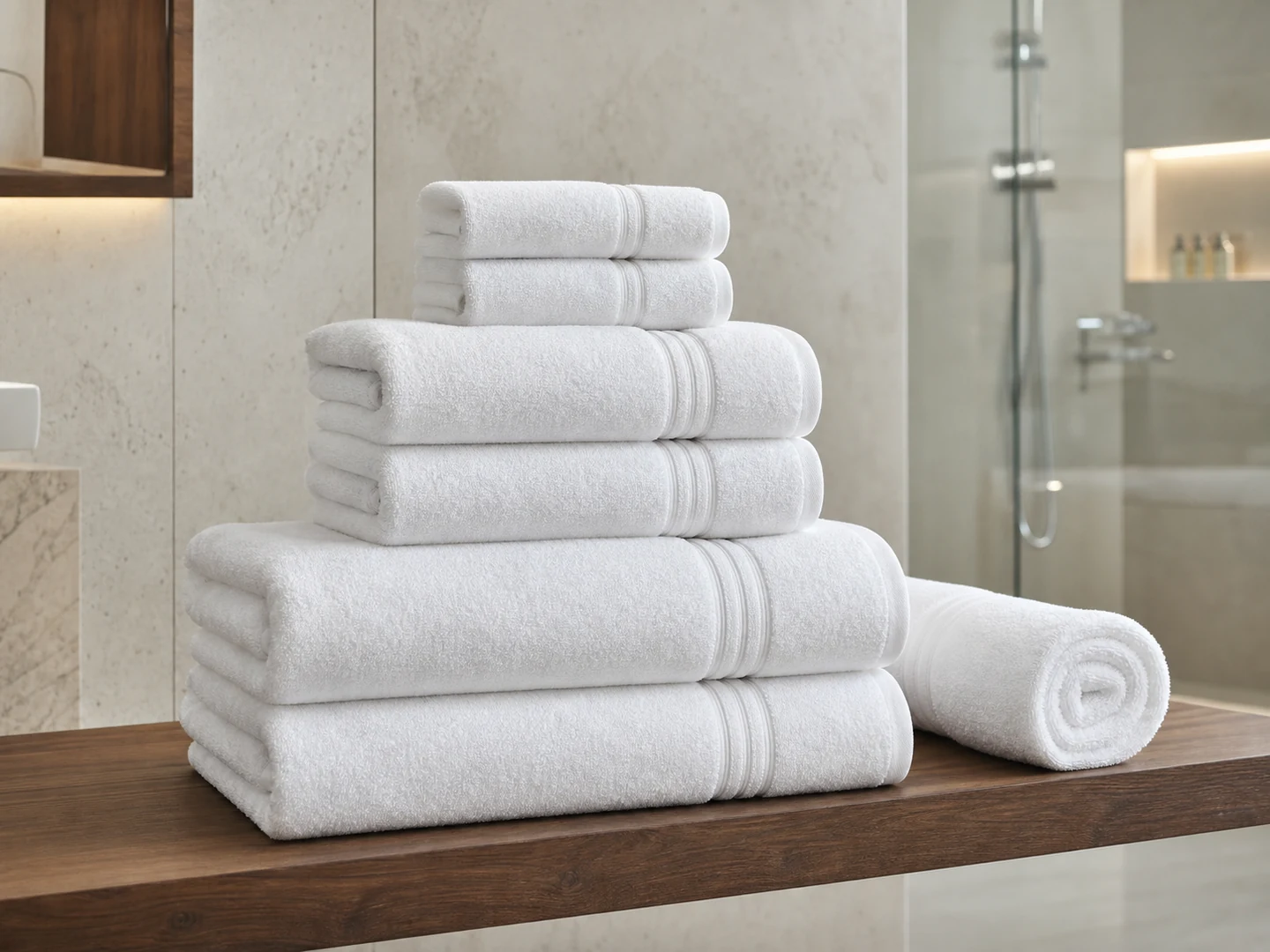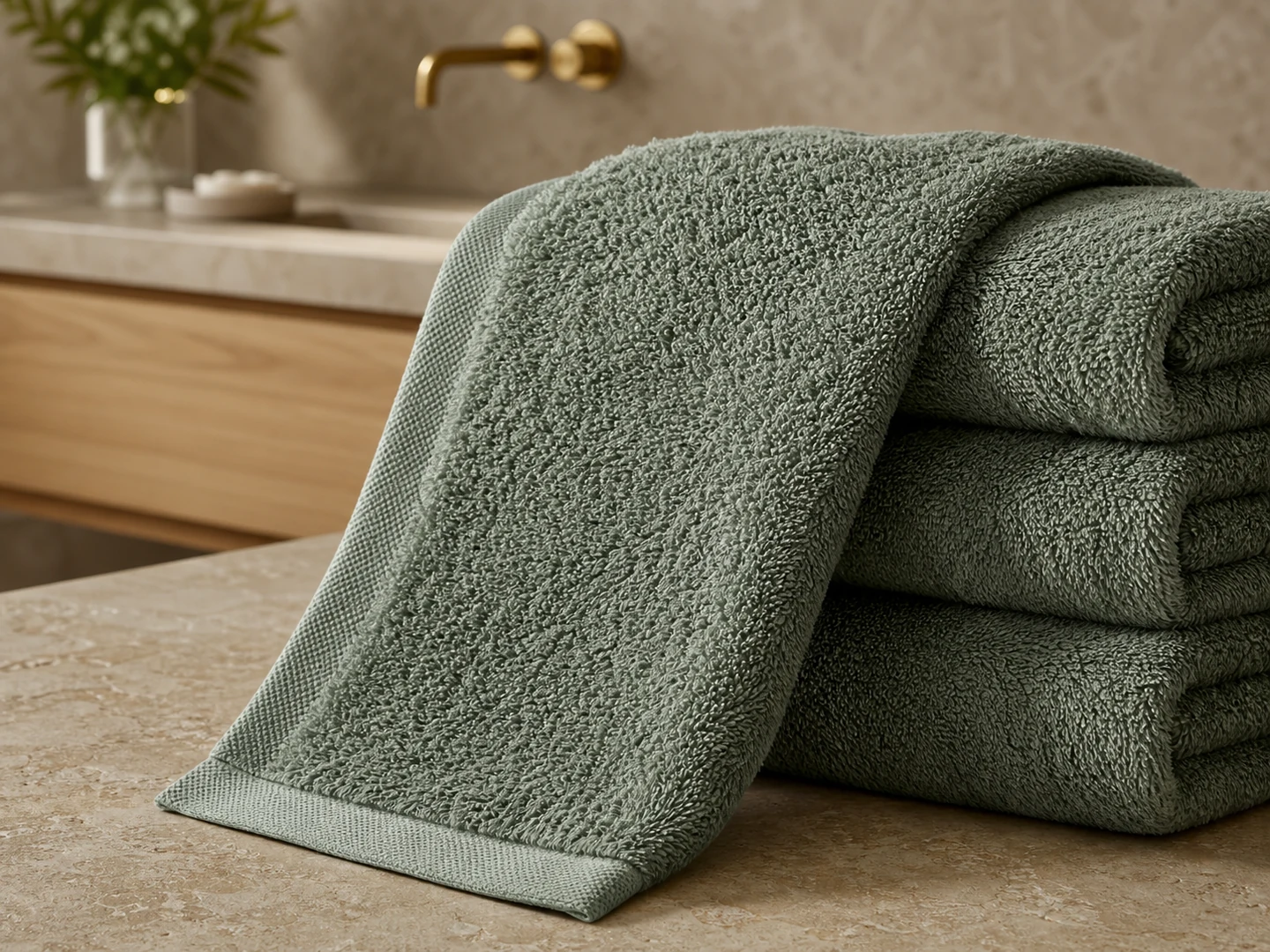
A par level is an operating calculation, not one universal number for every hotel. The right stock position depends on room mix, items placed per occupied room, occupancy pattern, laundry turnaround, linen sent off site, reject and loss rates, emergency reserve and replenishment time. Procurement should build the model with housekeeping and laundry teams before confirming an opening order.
1. Map the bath-linen program by room and use
List each bath towel, hand towel, washcloth, bath mat, pool towel and robe by finished size, weight, color and placement quantity. Separate guest-room, spa, pool, fitness and housekeeping stock because usage, soil level and laundry cycles differ.
Use physical samples from the intended hotel towel program to confirm feel, absorbency direction, hanging presentation and storage volume. A heavier towel may support a particular guest experience but also changes wash load, drying demand and shelf space.
2. Calculate the working par from operations
A useful planning model starts with base pieces in service, then adds stock moving through laundry, clean stock ready for rooms, reserve for peaks or delays and stock awaiting replacement. For an item used only when a room is occupied, the base can reflect expected occupied rooms; for room presentation standards, the opening quantity may need to cover every room.
| Input | Question for operations | Procurement effect |
|---|---|---|
| Items in use | How many pieces per room or guest? | Sets the daily base |
| Laundry time | How long from collection to clean return? | Determines stock tied up in processing |
| Occupancy pattern | What are normal and peak periods? | Shapes ready-stock and reserve |
| Loss/reject | What is the measured historic rate? | Informs replacement allowance |
| Supply time | How long does approved replenishment take? | Sets reorder point and safety stock |
3. Specify towels for the real laundry process
Record finished dimensions, weight or GSM basis, yarn and pile construction, border, edging, color, logo method, shrinkage expectation and care route. GSM is useful but does not describe the entire towel; yarn, pile geometry, finish and laundering also influence absorbency, hand feel and durability. Compare the variables in the towel GSM sourcing guide.
Ask the laundry team about water chemistry, temperature, chemical program, drying, finishing and folding. Then validate the proposed construction through the agreed test and wash-trial plan rather than assuming one construction fits every operation.
4. Build a measured replacement loop
Record issues by item and cause: irreversible stain, tear, edge damage, discoloration, shrinkage, loss or guest removal. A combined “discard” figure is easy to collect but difficult to improve. Cause-level data can show whether the response should be laundering adjustment, construction review, handling training or revised stock control.
Review consumption monthly or at an interval appropriate to the property. Compare actual stock with the target par, forecast high-occupancy periods and place replenishment early enough for production, approval, transit and receiving.
5. Keep replenishment consistent with the standard
Retain the approved specification, sample, shade reference, label and pack details. Reorder documents should name the controlling revision and identify any permitted updates. Mixing visually different whites, borders, sizes or weights can be noticeable even when each item is serviceable on its own.
Connect bath-linen replacement planning with the wider hotel linen care program and keep accepted changes documented.
Calculate par by item and operating flow. Validate assumptions with housekeeping and laundry data, then connect reorder timing to the approved product standard and realistic replenishment route.