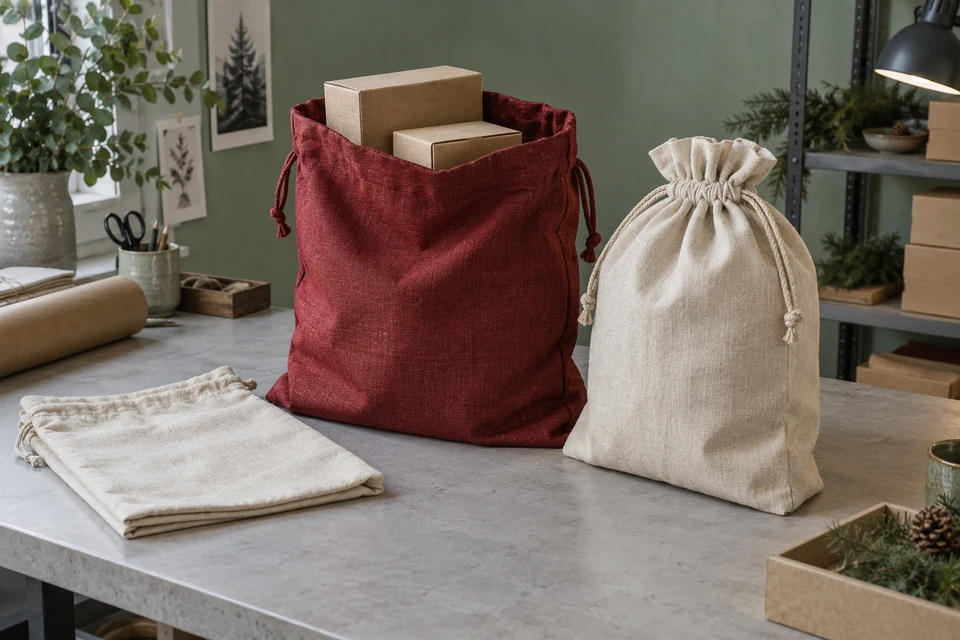
A large gift sack can fit a box at its base and still fail to close around it. The upper fabric needed for gathering, the route past rigid corners and the finished base all reduce usable capacity compared with a flat width-by-height description. Buyers developing Christmas textile sacks should approve the actual loading sequence with representative packages. This guide concerns decorative gift presentation. It does not establish carrying capacity, protective transport performance, child suitability or direct food-contact use. Those functions require separate design decisions and evidence.
Build a realistic contents envelope
Rigid packages behave differently from soft textiles
List the package shapes the sack is intended to accommodate, including the largest rigid face and any protruding corners. Measure representative empty boxes rather than relying only on a marketing phrase such as large gifts. For an assortment of contents, identify which combinations are actually proposed. Keep those examples with the product brief and label them as approval references, not universal capacity limits.
Try each combination through the opening in the intended order. A group that fits after the sack is carefully wrapped around it may not be easy to load from above. Record whether the final display is upright, laid down or supported. Do not let a photo stylist's arrangement become an unstated condition that the retail customer must discover later.
- Identify rigid corners and the largest entry face.
- Trial the intended loading order, not only final volume.
Reserve fabric for the gathered neck
The top measurement is not all usable storage height
Draw the intended filled height and the separate gathering zone above it. Show where the drawstring channel sits and how much material remains visible after closing. Compare the empty flat dimensions with the actual closed presentation. The measurement-method guide helps keep those different dimensions from being combined into one ambiguous size claim.
Check whether a tall box presses into the channel or leaves too little free fabric to gather normally. If the design is meant to show contents above an open rim, present that as a different use from a fully closed sack. Do not solve a capacity mismatch by pulling harder on the cord. Revise the sack size, contents envelope or closure position and repeat the sample trial.
- Separate fill height from neck allowance.
- Define open-display and closed-pack uses distinctly.
Choose a base that suits the presentation
Flat bags and shaped bases should not share a vague description
Compare the offered flat, gusseted or separately paneled base with the intended filled arrangement. Inspect how corners settle and whether the sack stands as expected without concealed supports. Ask the supplier to identify the assembly in the component and construction record. A wide front panel alone does not establish a deep usable base.
Review seams where the loaded boxes contact the fabric, keeping appearance observations separate from any strength claim. If the buyer expects the sack to be carried, refer that additional function to the technical owner for a suitable design and assessment. Do not promote drawcords as handles merely because they are convenient to grasp. The approved product description should remain within the function actually evaluated.
- Name the base construction in the quotation.
- Keep gift presentation separate from carrying performance.
Review closure and decoration together
A name panel can disappear into the folds
Open and close the actual drawstring route with the representative contents inside. Observe the gathering distribution, cord exits and fabric caught at the channel. Record the accepted cord material and ends, while having any intended-user or component-security questions assessed by the responsible specialist. Avoid generic claims that a decorative sack is suitable for every household use.
Place any approved motif or personalization area where it remains visible in the chosen filled presentation. Use the artwork record to distinguish the flat print position from the visible filled area. If the buyer offers names or market variants, identify the process and approval workflow explicitly. A blank sample can approve fit, but it cannot also approve the final decoration or every future personalized layout.
- Inspect the working cord path on a filled sample.
- Approve decoration in its gathered display position.
Compare quoted sizes using the same trial contents
Make retail information honest and useful
Ask suppliers to quote against the same representative boxes, material, construction and closure brief. Record which samples passed each fit trial and avoid translating a flat dimension directly into an unsupported capacity statement. If several sizes are offered, show the meaningful differences using agreed example contents. Keep the examples clearly illustrative and exclude gift contents from the pack description unless they are genuinely supplied.
Use the pack-out review for sack counts, variants and any inserts. Trial the retail fold and inspect the fabric after opening, including any agreed care process. Send FY Bedding the box envelope, preferred base, closure presentation and quantity mix for a development discussion. Confirm material availability, sample scope and timing in the quotation rather than assuming a seasonal design is immediately ready to ship.
- Compare suppliers with identical contents and closure requirements.
- State sack quantity and gift-content exclusions clearly.
Approve loading, closing and presentation with actual representative packages. Flat sack dimensions do not by themselves describe usable Christmas gift capacity.