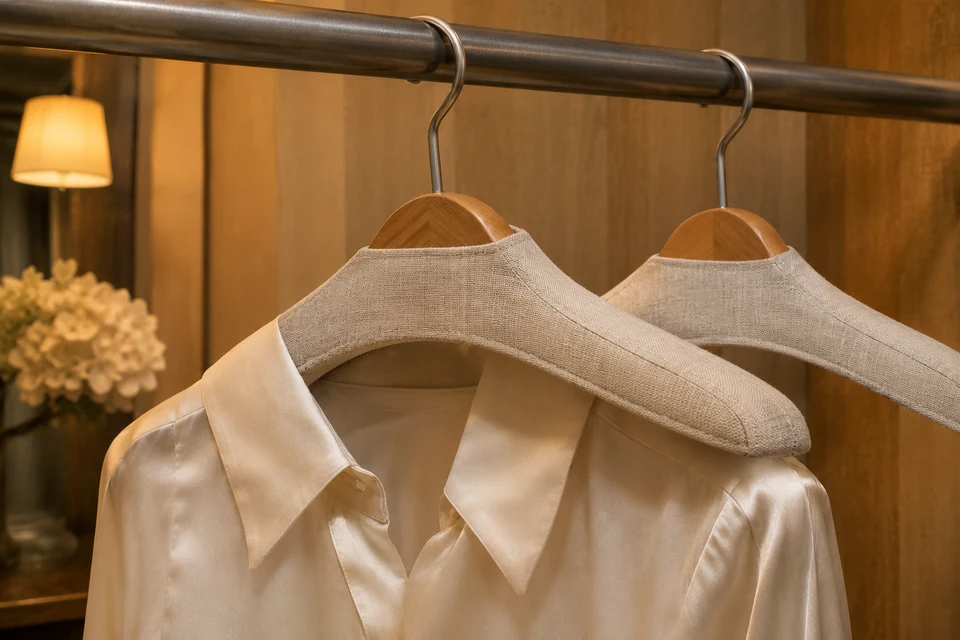
A hanger cover can make a retail rail look more coherent, but it can also put a ridge in a blouse exactly where the shop hopes to show a smooth shoulder. The object being fitted is not a nominal adult hanger. It is a particular hanger body, with an actual slope, end radius and hook connection, carrying a particular group of garments. Before approving a fabric by touch, borrow the hangers and clothes the buyer intends to use.
Trace the shoulder in two directions
Width alone misses the end shape
Lay the empty hanger on paper and trace its front outline. Then look along the rail direction: is the end thin and flat, thick and rounded or sharply tapered? Photograph that second profile beside a scale. Mark the hook offset and any shoulder notches. A cover cut for a flat hanger may pull hard across a deep wooden shoulder while appearing to have the correct tip-to-tip width. A loose cover may mask a notch the store uses to retain narrow straps.
Choose representative hanger families rather than assuming every wooden hanger on the shop floor is the same. Measure the fullest end and the narrowest neck in each family. If the store uses children's and adult hangers or a special jacket hanger, identify them as distinct candidates. The first sourcing decision is whether one textile pattern can cover those bodies cleanly. A slightly higher setup cost for two profiles may be cheaper than constant adjustment of an ill-fitting universal sleeve.
Locate the entry and the hook opening
Test removal as well as installation
Ask for a sample showing the actual underside and the hook exit. An open underside can be quick to fit but may ride upward on a rounded shoulder. A closer enclosure can give a neat appearance but be awkward around a fixed hook. Test installation following the intended method without removing hardware or stretching a finished opening past its design. Note whether an operator can tell front from back when fitting a stack of covers at the start of a shift.
Run the reverse operation. Can staff take the cover off for replacement without catching the hanger tip in a seam? Where does a loose fastening sit when the garment is in place? A closure hidden in the front photograph may face the blouse at precisely the point where the material hangs under its own weight. Try relocating a seam or changing entry geometry before adding padding as a general remedy; extra thickness can create a different ridge.
Judge the garment on the rail
Look beyond the empty covered hanger
Use an expendable or approved sample garment from the buying team. Include a light blouse if delicate shoulders are important and a heavier piece if the range includes one. Hang them on the covered and uncovered reference bodies for the same agreed period under comparable conditions. Look down the rail and then remove each garment. Record visible ridges, shoulder bumps, slipping or loose fibers. This is a comparison of trial combinations, not evidence of universal non-marking behavior.
If a defect appears on both hangers, the original body shape may be responsible. If it appears only under one cover seam, turn to the construction. Avoid changing the hanger, textile and garment all at once; the next sample should answer the specific question the first comparison exposed. Dark and pale garments may reveal different transfer or lint concerns. If the retailer needs a formal claim, request the appropriate evidence for the actual materials instead of relying on one satisfactory shop-floor demonstration.
Plan the rail changeover
Count by use, then by color
Record how many covers belong to each hanger family, where loose stock is kept and whether spares are needed for replacement or cleaning. Give the buyer a means of telling similar profiles apart without putting a visible label on the customer-facing shoulder. Test the identifier when the covers are off the hanger and stacked. For a small order, ask whether the fabric minimum can be shared across profiles and what the sewing minimum is for each cut pattern.
For a custom development request to FY Bedding, send both hanger profiles, the garment category, desired entry method and the quantity by body type. Ask for a working sample on the reference hanger rather than just a loose fabric envelope. The approval file should show a dressed rail, an underside detail and the garment after removal. Those views allow a new merchandiser to understand what the cover was purchased to achieve and when a replacement no longer matches.
Approve a hanger-cover-garment combination, not a standalone trim swatch. Record any shoulders, strap types or hanger bodies excluded from the trial.