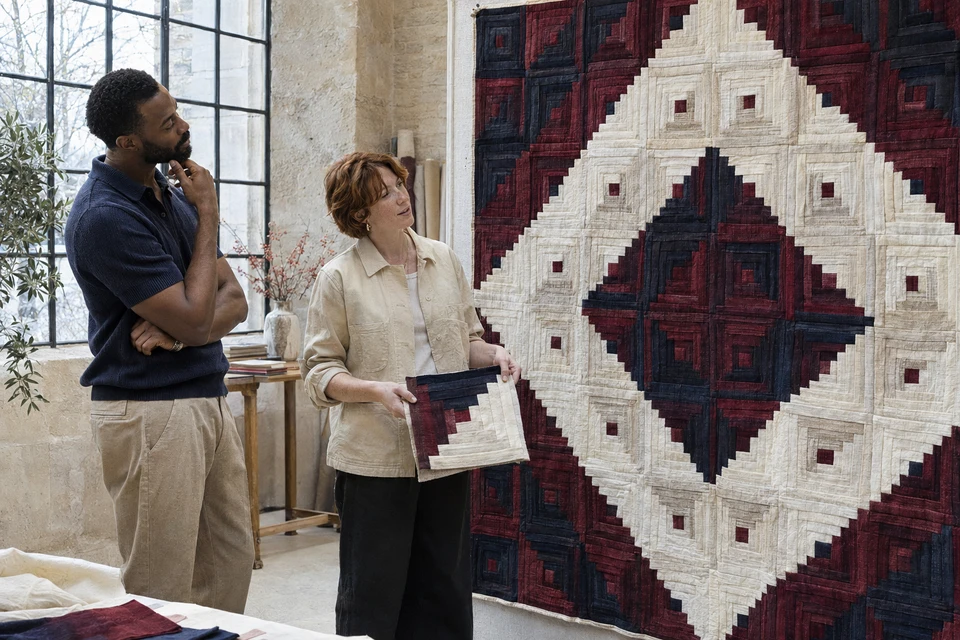
Turning one log-cabin block can change the apparent direction of a whole quilt. The sewing may be neat and the palette recognisably festive, yet an unintended dark patch can interrupt the intended bands or diamonds. A retail buyer therefore needs more than a photograph of a well-made sample block. The purchase should identify how every block contributes to the finished light-dark composition, and what happens when a fabric is substituted during development.
Choose the whole-quilt arrangement first
A familiar block name allows many layouts
The Metropolitan Museum of Art's description of a historical light-and-dark log-cabin quilt explains how differently oriented blocks create a larger pattern. It provides a useful design example, not a specification for a modern Christmas quilt. Do not infer the proposed product's fibre, foundation, filling or stitching method from the museum object. Ask the supplier to describe those components separately while the buyer settles the intended visual arrangement.
Start with a complete face drawing, including borders, rather than approving an isolated square and asking the maker to arrange the rest attractively. Decide whether the range needs diagonal movement, nested light areas or another original layout. Identify the product's top and the direction in which a shopper is expected to see it. A reversible viewing direction can be intentional, but the production map must still have a stable coordinate system for assembly and inspection.
Give each block a location and orientation
The map should survive a team handover
Use row and column references in the working layout and indicate the dark half or another unmistakable feature in every block. Include an orientation key that the sample maker can read without relying on colour alone. Keep this information in development paperwork, not as printed markings on the finished quilt. Where two block variants look similar at first glance, assign distinct identities and show which locations use each variant.
Check the four corners and the central junction before tracing the intermediate rows. This establishes whether the whole map has been rotated or mirrored before a reviewer spends time checking individual pieces. Then inspect each location in order. An apparently pleasing arrangement is not necessarily the approved one. Record an intentional design revision as a new map rather than allowing the accepted sample and the drawing to disagree because both look attractive.
Classify fabrics by their role in the composition
Red is not automatically the dark group
A festive collection may combine red, green, navy, ivory and several small prints. Sort the proposed materials according to the role they play in the actual composition, not according to a fixed rule that all red belongs to one half. A pale red print and a dense red ground can read very differently at room distance. Place the selected fabrics together in a physical block study and observe the boundary between the intended light and dark areas.
Small motifs complicate the judgment. A fabric that looks dark when tightly folded may contain enough pale space to interrupt a broad dark band when cut into strips. Ask for cut strips or an assembled trial using the actual proposed material. Digital greyscale previews can help a design discussion, but they should not replace the coloured physical arrangement. The commercial question is whether a customer sees the intended pattern under ordinary viewing conditions, not whether a software thumbnail passes an arbitrary contrast score.
Inspect the assembled face before it becomes a finished quilt
Record layout errors separately from sewing defects
Lay out the assembled face with the same top reference used on the map. View it far enough away to recognise the larger pattern, then compare row by row at closer range. Note misplaced dark sections, swapped block variants and unexpected breaks in the value path. Keep those observations separate from seam alignment, clipped strip ends or local puckering, which need their own workmanship decisions. One overall pass mark can conceal the difference between a layout problem and a sewing problem.
Retain a full-face photograph with the map revision and material identities before the next assembly stage. This is particularly useful if later quilting lines or edge treatment make the original orientation harder to read. Do not assemble approval from the best block photograph, a different whole-quilt image and a third material card. The record should represent one coherent sample proposal that the supplier can reproduce and the buyer can recognise.
Recheck the pattern after quilting and presentation
A fold can hide the part that identifies the design
Review the finished quilt opened out, using the intended support or bed arrangement. Compare the light-dark pattern with the accepted face record and note whether borders or quilting have altered its visual balance. Specify any deliberate difference across sizes. Adding a row of blocks can change the endpoint of a diagonal band, so a larger size should have its own complete map even when it shares all the same fabrics.
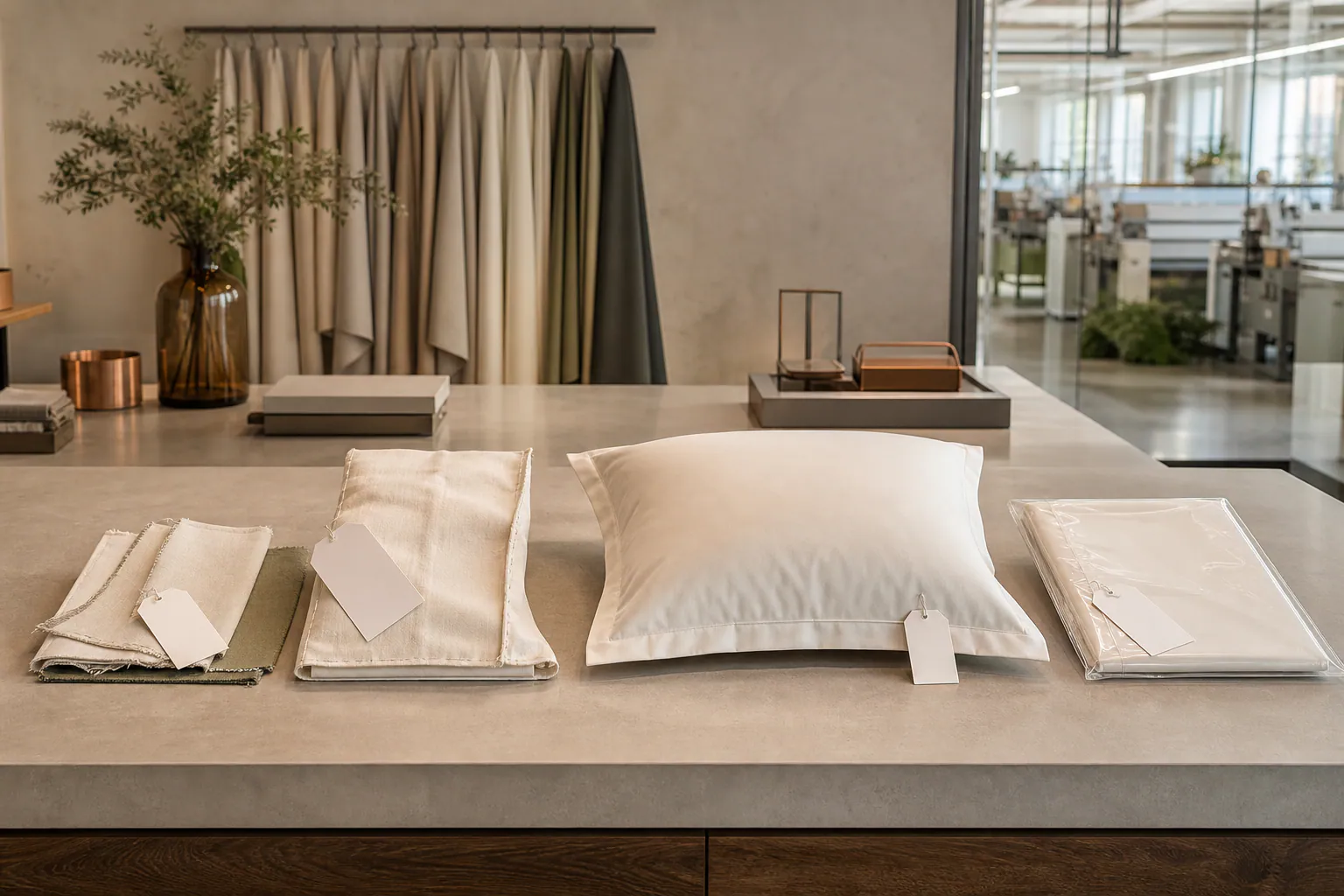
Trial the retail fold and packaging photograph. A small visible corner may look like a generic striped patchwork rather than communicate the selected log-cabin composition. Choose an honest folded view and provide an opened-product image for the actual variant. Keep packaging identity tied to size and map version so images are not silently reused for a differently arranged quilt. The buyer is approving a finished presentation, not only a pattern name.
For a development enquiry to FY Bedding, provide the full block map, material-role references, intended sizes and quantities by colourway. Ask which proposals need separate sampling and what changes a supplier substitution would introduce. Confirm a feasible schedule after that scope is understood; a Christmas palette is not a promise of seasonal availability. Release the order against the accepted arrangement and require a targeted layout review when fabrics, block dimensions or size maps change.
Does the complete assembled and finished quilt preserve the approved light-dark path at every block location, including corners, central junctions and size-specific added rows?
Method references: The Metropolitan Museum of Art: light and dark log-cabin quilt arrangement.