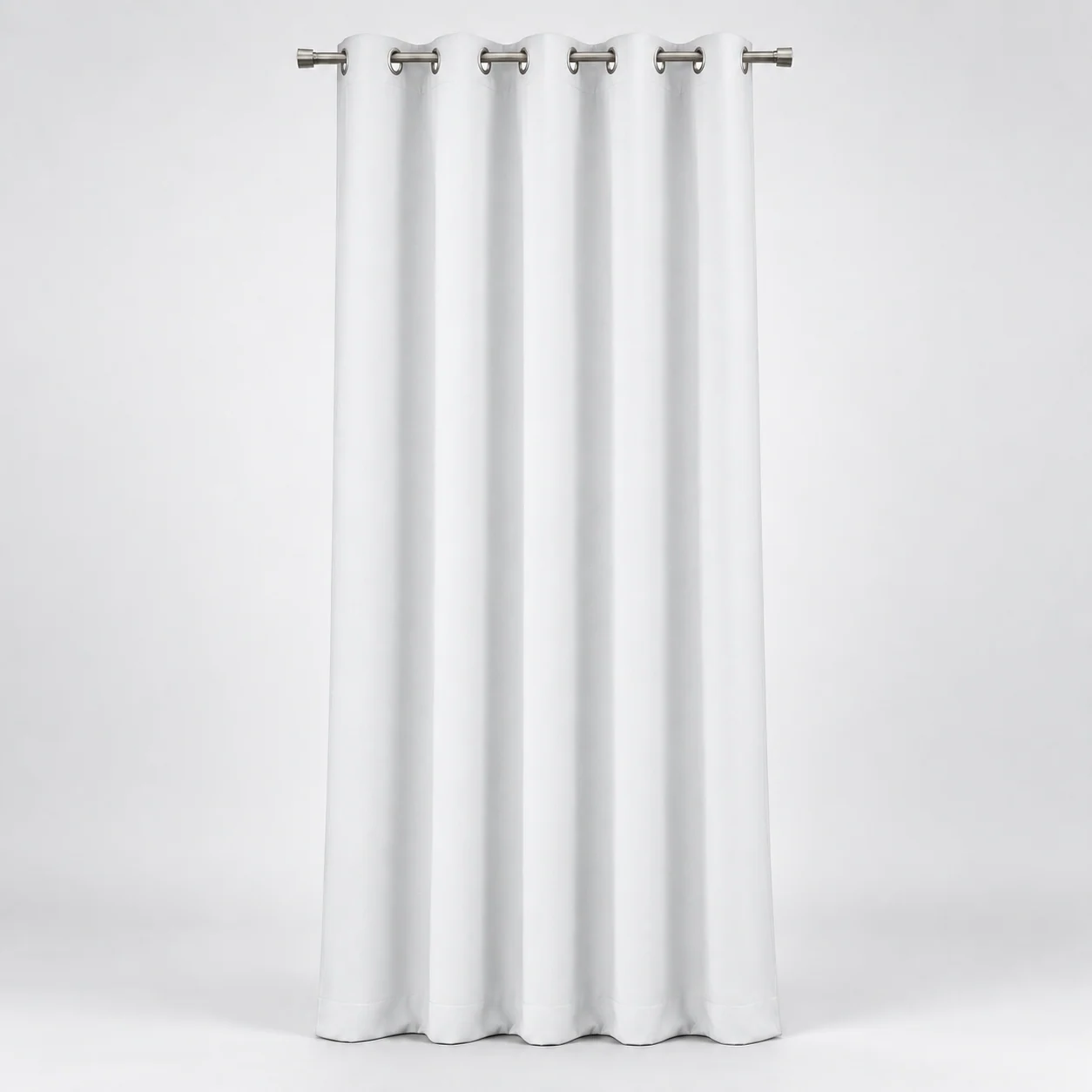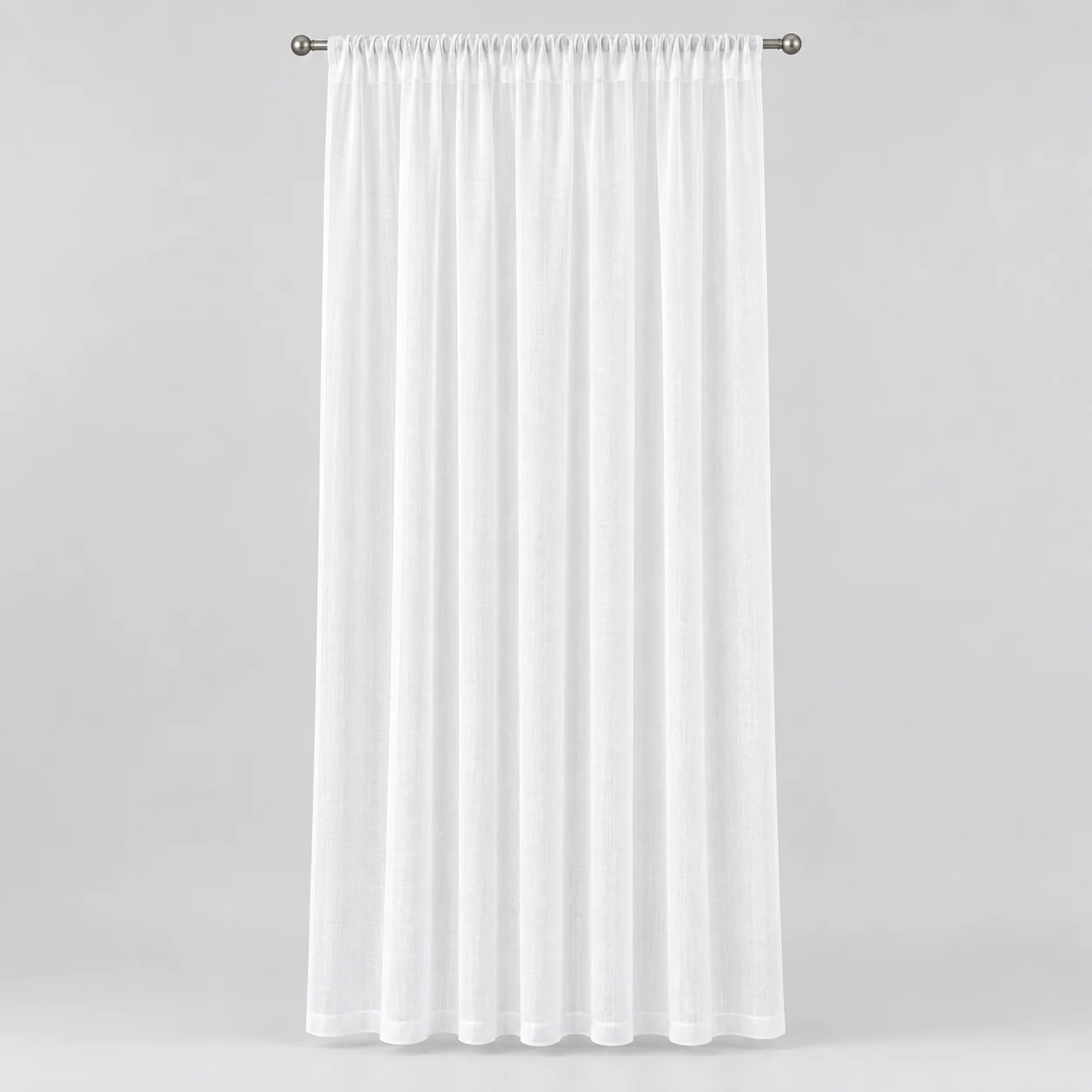
Curtain interlining is considered between the decorative face cloth and the lining, rather than as a substitute name for either surface. Adding that third layer creates a new assembly with different bulk and handling from the face fabric alone. It may help achieve a particular decorative result, but a soft interlining swatch cannot establish how the complete curtain will hang. Buyers should first state the desired change, then compare the proposed combination against a clearly identified baseline before releasing fabric or finished-panel orders.
- 1. Explain why the third layer is being considered
- 2. Name the face, interlining and lining as one combination
- 3. Build the folded details, not just the flat stack
- 4. Hang a representative panel beside the baseline
- 5. Review care for the combination, not three separate swatches
- 6. Price and deliver the approved assembly as a whole
Explain why the third layer is being considered
Separate a decorative objective from a measured performance claim
NEXT's made-to-measure curtain guide describes an additional layer within its luxury lining option. This is a useful example of a three-layer arrangement, not evidence that an untested assembly achieves a specific thermal, acoustic or blackout result. If the brief asks for a fuller-looking fold or a less exposed face cloth, describe that appearance directly instead of attaching an unsupported performance label.
List the requirements that remain independent: light control, care, installation conditions and any destination-specific evidence. Have the relevant project professionals establish the tests or documents needed for those requirements. The curtain buying specification provides the broader project context. This review concentrates on the additional layer and its relationship with the two surrounding textiles.
- Describe the intended visible or handling change.
- Keep quantified performance outside the claim until it is supported.
Name the face, interlining and lining as one combination
A change to an unseen layer still changes the approved product
Ask for the offered fiber composition, construction and supplier reference for each textile. Record which face of each material is intended to sit against the next layer and how the sample maker proposes to retain the assembly. Do not accept a generic soft interlining description if the actual delivered material could vary. Keep any bonding, added finish or separate membrane explicit rather than hidden within a trade name.
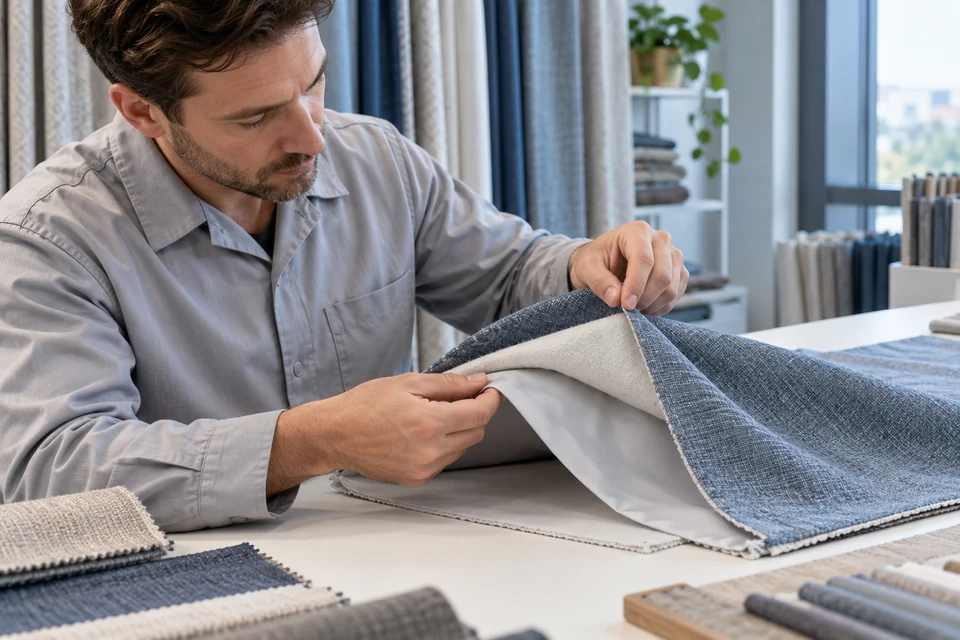
Compare layered swatches large enough to handle and fold, while recognizing that they are only an early screen. Observe whether an underlying color or texture alters the face appearance under the intended lighting. The test-report identity guide helps keep supporting evidence tied to the correct materials and assembly. A report on the face cloth alone should not be presented as a result for the entire layered curtain.
Build the folded details, not just the flat stack
The side edge and lower corner reveal accumulated bulk
Request a sewn sample section showing the proposed side treatment, lower hem, corner and representative heading assembly. Ask the maker to identify where each layer finishes and where it is attached. Examine whether the intended folds remain manageable and whether the perimeter looks consistent with the face design. Do not prescribe an arbitrary seam allowance before the sample maker has explained the offered method.
A flat three-layer swatch cannot demonstrate every folded junction. Turn the sewn section over and inspect the accessible inside as well as the room-facing surface. Photograph the construction before it is concealed if later verification would otherwise be difficult. Add these details to the agreed sample scope, including who will decide whether another construction trial is necessary.
- Include an actual side edge, hem and corner.
- Identify concealed attachment details before closing the sample.
- Record the assembly method without assuming all interlinings are interchangeable.
Hang a representative panel beside the baseline
Evaluate folds and movement with the intended arrangement
Progress from the sewn section to a representative panel when scale affects the decision. Use the planned heading and suitable supporting hardware, with the complete assembly weight reviewed by the responsible supplier or installer. Compare the interlined version with the identified baseline under equivalent conditions. Record the hanging time and preparation so one sample is not freshly unpacked while the other has been carefully dressed for several days.
View the panel closed, partially drawn and gathered. Note the fold definition, side presentation and space occupied when open. If the added assembly changes that space, refer to the stackback review rather than assuming the original room arrangement still works. Keep mechanical or installation acceptance with the appropriate project specialist; visual approval alone does not establish hardware suitability.
Review care for the combination, not three separate swatches
All layers need to remain compatible through the proposed process
Collect the care information for every component and ask the supplier to propose a compatible route for the finished assembly. Where the instructions conflict, resolve the combination before approving it. Do not average separate recommendations or assume that a hidden layer can be ignored. Agree the representative trial and evaluation condition with the project team or the intended professional cleaner.
After the trial, review the hanging appearance, lower edge, side folds and any visible interaction between layers. Record the actual process and findings without extrapolating them to indefinite service life. Use the care-information checklist to keep final instructions consistent with the approved combination. A substituted interlining should trigger a review of the affected care and assembly evidence.
- Resolve incompatible component care instructions before ordering.
- Repeat affected observations when a layer or attachment method changes.
Price and deliver the approved assembly as a whole
Layer identity should survive the move from sample room to installation
Request quotations that identify all three textile references, agreed finished details and the sampling stages included. Ask which minimums relate to material rolls and which relate to finished panels. Confirm the packing method using a representative sample so delivery does not introduce unexplained fold marks or confuse panels with different internal constructions.
Send FY Bedding the desired appearance, proposed layer set, care expectations and installation context through a drapery project enquiry. A focused request makes it possible to discuss the relevant sample work and evidence before committing to quantities. It does not imply that every interlining, performance claim or production route is already available; those points need confirmation for the specific project.
Approve the identified face–interlining–lining combination through sewn junctions, a representative hanging panel and a compatible care review before releasing the complete curtain specification.
Method references: NEXT: curtain lining options and additional third-layer example.