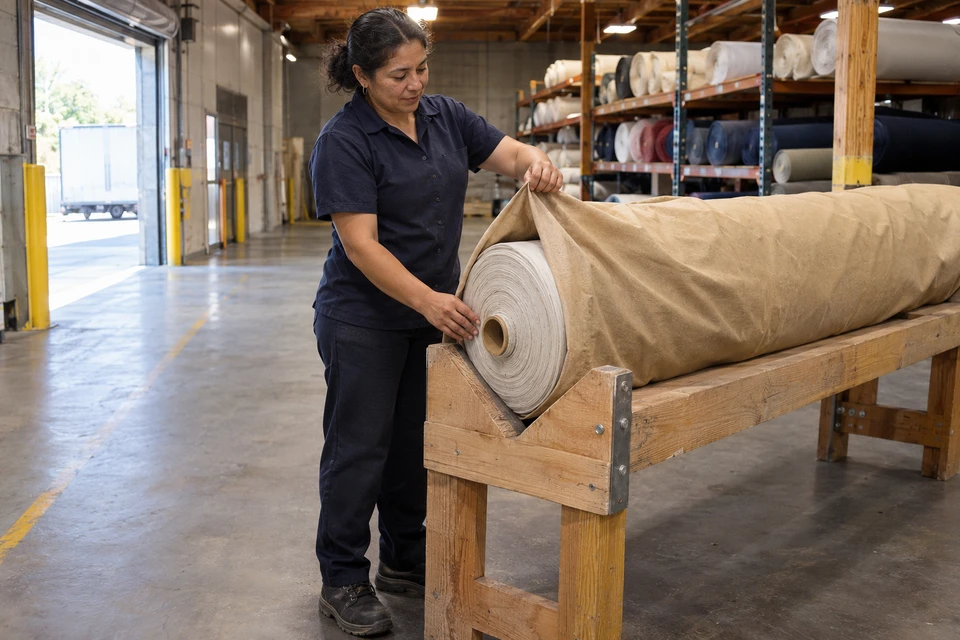
A removable transit sleeve can keep a fabric roll's outer surface covered, but it can also conceal the evidence a receiving team needs to assess delivery condition. The specification should therefore address both protection and inspection access. Define what the sleeve covers, how the roll is identified and how the cover is opened without losing the record of its arrival state. Do not assume that an ordinary textile sleeve provides waterproofing, impact protection or contamination control. Those claims require their own suitable design and evidence, separate from a tidy wrapped appearance.
Identify the roll and protection boundary
Define the supplied sleeve rather than a general packing promise
Record the range of roll lengths and diameters the sleeve is intended to accommodate, including any end protection used with it. Distinguish a full-length removable cover from a loose outer wrap or a sleeve that leaves both ends exposed. State what contacts the fabric and what contacts only the core or other packaging. A drawing of the covered and uncovered roll helps prevent different interpretations of the same phrase. Include the proposed material and closure details as items for supplier confirmation, not assumptions based on a photograph.
Decide whether the sleeve is a single-trip component or intended for a controlled return-and-reuse process. That choice affects the required identification, cleaning review and condition criteria. Do not claim environmental benefits merely because the item can be removed. If reuse is proposed, the buyer needs an actual return route and acceptance process. Keep the sleeve's role distinct from core strength, pallet restraint and moisture barriers; changing one outer component should not silently remove another protective element required by the shipment plan.
Preserve roll identity while it is covered
Make identification available before opening
Agree how the receiver will associate the wrapped roll with the packing list and the underlying fabric lot. If an external identifier is used, define its position and how it remains linked when the sleeve is removed. A removable cover should not become the only place where the roll's identity is recorded. Consider the sequence in which several similar rolls arrive and are opened. The receiving team must be able to distinguish them without guessing from the cover colour or order on the vehicle.
Review any label holder, opening or inspection flap as part of the sample. Check whether it exposes fabric unnecessarily, interferes with the closure or becomes unreadable in the normal handling position. Keep commercial and traceability identifiers consistent with the existing order records. Do not add customer information to a public concept image or use a decorative label as evidence that the identity process works. Demonstrate the actual handoff using controlled sample identifiers and retain the outcome in the internal receiving procedure.
Record the arrival state before removal
Do not erase useful evidence by unpacking too quickly
Define the first observations the receiver should record: overall wrapped condition, closure state, visible marks, end exposure and the roll's identifier. Photograph relevant areas before removing the sleeve, using the site's established handling and documentation process. The purpose is to preserve an observation, not to decide liability from one image. If damage or an uncertain condition is found, follow the agreed segregation and escalation route rather than mixing the roll into usable stock while waiting for an explanation.
Open the sleeve only with the roll safely supported and according to the local handling procedure. The illustrative photograph shows a stable cradle, not a recommendation to lift a heavy roll by hand or improvise equipment. Inspect the newly exposed surface and compare any mark with the outer cover observation. Keep the sleeve associated with the roll until the review is complete where that is required. A stained sleeve and clean fabric, or the reverse, are different findings and should not be collapsed into one unqualified pass or fail.
Trial access and closure on representative sizes
Check usability without inventing protective performance
Fit the proposed sleeve to representative rolls from the intended dimensional range. Observe closure reach, end coverage and the ability to open it for inspection without dragging the cloth over contaminated surfaces. Look for excess material that becomes trapped beneath a roll or a tight opening that makes removal difficult. Record the tested sizes and configurations. A successful fit on one small roll should not be presented as approval for every diameter in the purchasing plan without an appropriate review of the other cases.
If the project requires resistance to particular hazards, ask the packaging and technical teams to define suitable evidence for those hazards and the complete packing system. Do not infer moisture protection from a heavy woven sleeve or impact resistance from a padded appearance. Compare proposed materials on a common specification and request the relevant documentation. The receiving-access trial can establish how the sleeve is used and what remains visible; it cannot by itself establish the level of protection delivered during an actual transport route.
Close the loop between dispatch and receiving
Use observations to refine the next order
Agree who supplies the sleeve, who applies it and who checks its condition before dispatch. Include the intended quantity, size mix and any reuse or disposal instructions in the order scope. Ask the supplier to confirm minimum quantities and the sample or production schedule before relying on the component for a booked shipment. If the sleeve changes the packed dimensions or handling arrangement, have the responsible logistics team review those effects rather than assuming the new cover is operationally neutral.
Send FY Bedding the roll-size range, packing arrangement, identification method and receiving sequence when asking whether a textile sleeve programme can be developed. Request confirmation of feasible materials and construction; this guide does not establish an existing supply line or test result. Retain observations from the agreed trial and state which changes require another review. The finished brief should allow both dispatch and receiving teams to answer the same question: what was covered, what arrived, and what was observed before the cover was removed?
Keep arrival-condition evidence and roll identity intact through sleeve removal; a clean-looking outer cover is not proof that the fabric beneath is acceptable.