A floral cushion described as chintz may be offered for its botanical appearance, its glazed surface or both. Those meanings should not remain interchangeable in a quotation. A buyer expecting a smooth reflective finish can otherwise receive a matte floral cloth that matches the illustration but not the intended product. Begin by asking what the supplier means by the word, then approve the actual finished material and the conditions under which its appearance has been reviewed.
Split the description into design and finish
A museum term is not a supplier specification
The Fitzwilliam Museum's terminology record associates chintz with multicoloured textile and notes that it is usually glazed. That wording is a useful reminder to ask about the finish; it does not certify the composition or treatment of any current cushion. Have the supplier state separately the proposed fibre content, fabric construction, coloration route and surface finishing description. Keep unknown fields visibly unresolved rather than filling them with assumptions from the style name.
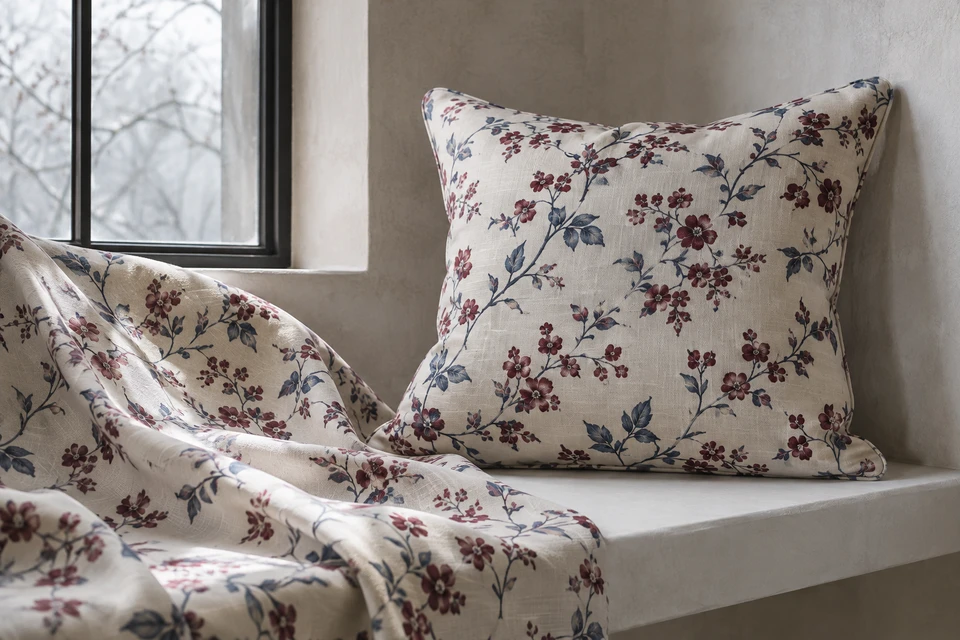
Use the FY floral collection to communicate the kind of botanical composition you are considering. A collection photograph can help discuss blossom density or colour direction, but it cannot establish that the proposed fabric is glazed. If the project only requires a chintz-inspired floral appearance on a matte cloth, say so directly. If a glazed finish is central to the concept, identify that as a sample requirement and ask how the offered material will achieve it.
Compare sheen on a moving fabric surface
One bright reflection can overstate the effect
Ask for physical material large enough to form a natural fold. Observe it flat and curved under the same lighting, then change the viewing angle. A small glossy highlight in a photograph may come from the light position rather than represent the overall cloth. Compare the sample with the proposed target under ordinary room light as well as a consistent review setup. Record which views best explain the desired appearance to another team member.
Describe the boundary in practical terms: a gentle smooth reflection, a more pronounced polished appearance, or a deliberately matte alternative. Do not invent a numerical gloss limit without an agreed measurement method and relevant physical references. If instrumental measurement is proposed, identify specimen preparation and the method with the qualified provider. A photograph of a sheen difference should support communication, not be presented as a laboratory result or a universal finish grade.
Ask what treatment the quotation covers
Similar appearance can conceal different care behaviour
Request an appropriate description of the finishing route and its place in the production sequence. The supplier may need to protect process details, but the purchasing file still needs enough information to identify the offered finish and evaluate relevant product evidence. Distinguish a temporary development treatment from the intended bulk route. Do not accept a specially prepared sample as representative if the quotation excludes the treatment that creates its defining surface.
Avoid promising permanent gloss or a particular chemical composition from the word chintz alone. Ask what care route is proposed and what evidence is available for the actual finished textile. If a supplier offers an alternative finish to meet quantity or timing constraints, compare it as a new option. A matching floral print does not make the two treatments commercially equivalent, and a generic fabric certificate may not describe the finished version being sampled.
Sew the selected cloth into the cushion
Curves and seams reveal another aspect of the finish
Review a completed cover with the proposed insert arrangement. The curved face can distribute reflection differently from a flat swatch, while seams and folds may create local changes that were invisible in the material card. Inspect corners, the closure area and any flange under consistent viewing conditions. Note whether an apparent line is a normal fold, an assembly feature or an unwanted surface difference before asking the maker to correct it.
Keep the face and reverse specification explicit. A contrasting plain back can be deliberate, but a buyer should not discover that change only after receiving the sample. If both sides are intended to share the finish, compare them as part of one completed unit. The acceptance record should identify the actual material variant used on each side, not rely on a broad collection name that could describe several different cloths.
Keep a cared-for appearance reference
Do not judge the new sample against an untouched memory
Agree the care procedure relevant to the proposed retail instructions and retain an uncared-for comparison. After the agreed treatment, review the same folds, curved face and assembly areas. Record changes in sheen, surface feel, colour and visible creasing separately. If the programme needs a particular retained appearance, the parties should agree that requirement and the evidence needed to assess it. This article does not supply a durability result for any finish. The FR-01 floral reference can communicate a botanical direction; its photograph does not confirm the proposed production process or materials.
Do not combine favourable observations from different prototypes. A sample with the preferred initial gloss and another with better post-care appearance do not together make one approved product. Re-identify the selected construction and retain its actual before-and-after references. If the buyer chooses a matte alternative after this review, update the quotation and retail description accordingly instead of continuing to advertise a glazed effect that is no longer part of the offer.
Send FY Bedding the botanical reference, intended sheen, product dimensions, care expectations and quantity split. Ask for confirmation of a suitable development route without assuming that any displayed floral style has the requested finish or is available from stock. Release the chosen material and completed cushion together, then use the same reference conditions for subsequent lots. That makes chintz a clearly scoped purchasing description rather than a decorative word that conceals an unresolved finish choice.
Does the quote distinguish floral styling from the actual surface treatment, and can the approved finished cushion be compared with an identified cared-for reference of that same treatment?
Method references: Fitzwilliam Museum terminology: chintz and glazed fabric.