Two suppliers may describe a floral cotton design as printable while proposing quite different colouration routes. Choosing between pigment and reactive printing is therefore not just a choice between two photographs. The buyer needs a comparable sample brief and a clear account of what each proposal includes. Otherwise differences in base cloth, finishing or artwork adjustment can be mistaken for the effect of the printing route itself.
- 1. Ask what the two route names mean in the proposal
- 2. Build a comparison that changes only the intended variable
- 3. Review appearance without using colour strength as the only score
- 4. Keep performance evidence separate from visual preference
- 5. Compare complete development offers
- 6. Close with a route-specific approval record
Ask what the two route names mean in the proposal
Separate colourant, application and finishing
CottonWorks describes pigment printing as using a binder to hold pigment on the textile, while reactive printing uses a dye system that reacts with suitable fibre. That basic distinction explains why the proposals should not be treated as interchangeable. It does not establish the performance of either supplier's finished sample. Ask each supplier to name the route being offered, identify the cotton substrate and outline the included production and finishing stages at a level appropriate for purchasing review, without requesting proprietary recipes.
Clarify whether terms such as digital, screen or inkjet describe the application equipment rather than the colourant chemistry. A quotation that says digital print may still leave the central route question unanswered. Equally, a general pigment-versus-reactive comparison found online does not tell you what a particular factory has priced. Put the supplier's explanation beside the quotation so that the approved sample, commercial offer and final purchase specification all refer to the same proposed process rather than three loosely related names.
Build a comparison that changes only the intended variable
Keep the cotton and floral artwork identifiable
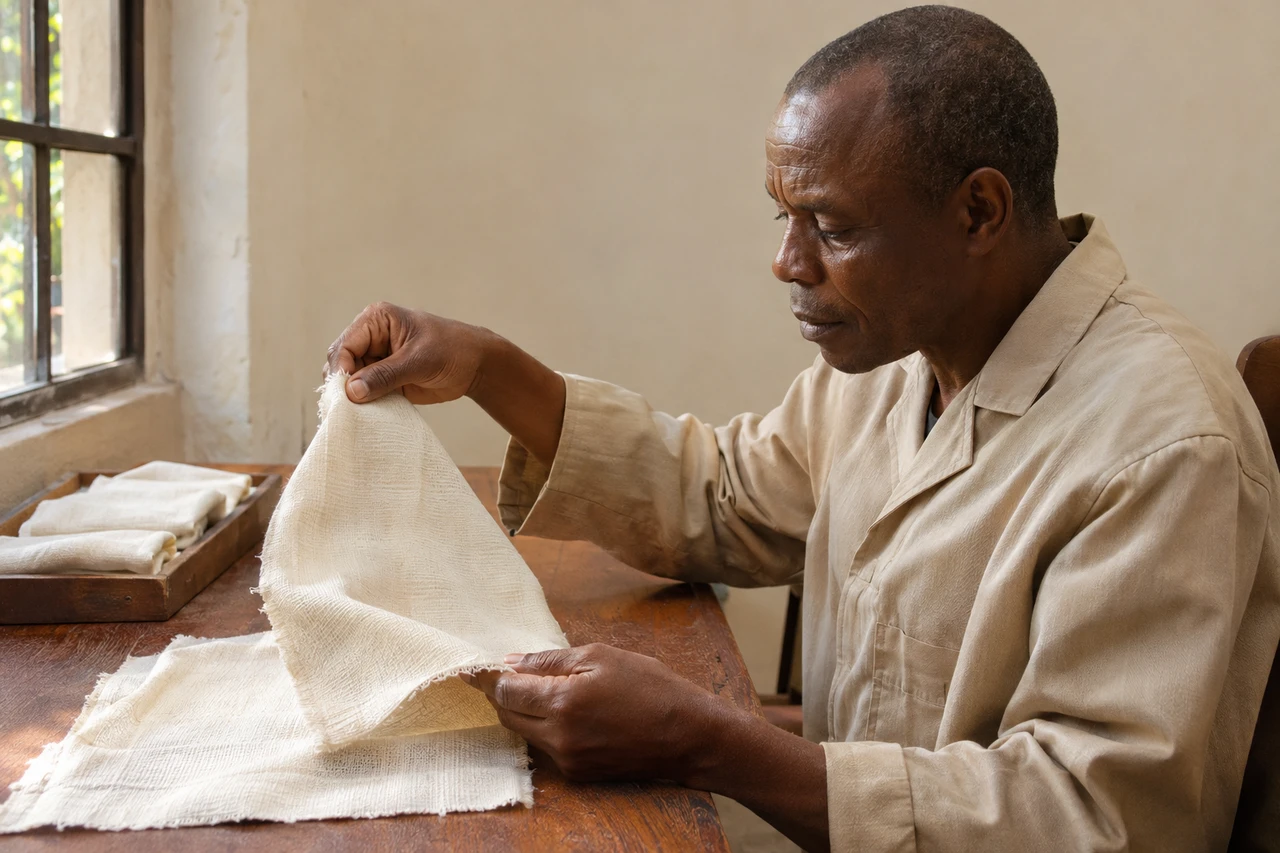
Prepare one controlled floral artwork version and specify the proposed base cloth for both trials. Record fibre description, construction, colour of the unprinted ground and any relevant preparation or finish. Where an identical substrate cannot be supplied for both routes, disclose that limitation rather than calling the result a controlled route comparison. It may still be a useful comparison of two commercially available options, but its conclusion must be limited to those complete options, not a general ranking of the technologies.
Include the botanical details that matter to your design: pale petal washes, fine stems, dark leaf areas and the transition into the unprinted ground. Keep their scale consistent. Ask for enough material to view a meaningful part of the repeat rather than isolated attractive fragments selected by each supplier. If a supplier changes the artwork to suit its route, request both the proposed adjustment and the reason. An improved drawing or stronger colour separation should not be hidden inside a claim that one process automatically prints better.
Review appearance without using colour strength as the only score
Examine the parts that affect the range
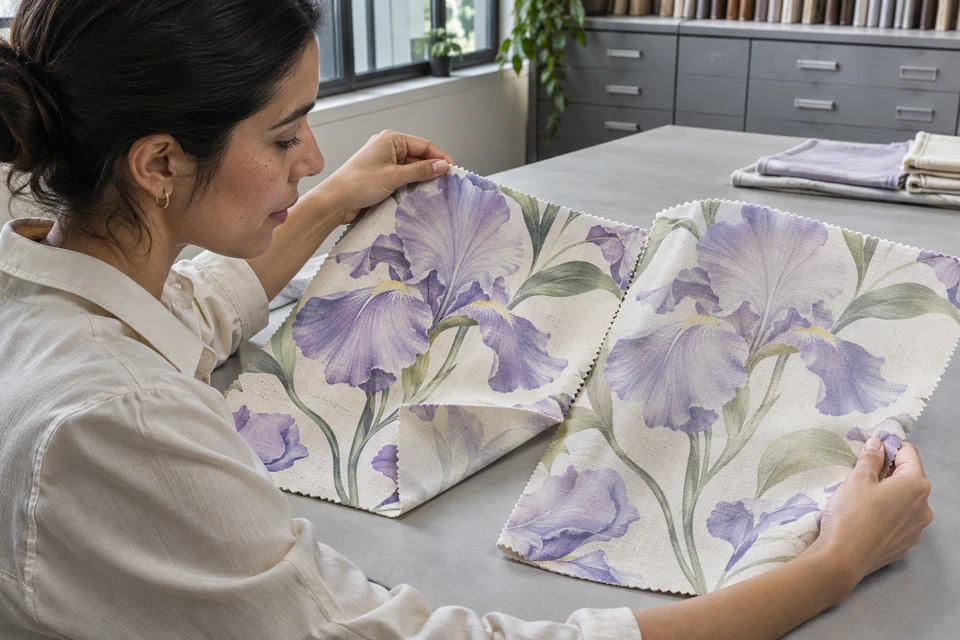
View the two samples together under the buyer's agreed conditions and record specific observations. A pale iris may lose internal detail while its outline remains sharp; a dark leaf may look convincing but obscure a fine stem junction. Describe those features separately. Avoid ranking the entire strike-off with a single word such as vibrant. A supplier can respond more usefully to a marked area showing lost petal gradation than to an instruction to make every part of the print richer.
Examine hand and drape on comparable finished samples, with the finishing differences recorded. Do not infer that every pigment print must feel a certain way or that every reactive print will achieve the same softness. The actual formulation, substrate and finishing proposal remain relevant. Turn the fabric over if reverse appearance matters for a reversible component, but do not treat penetration as a universal quality grade. A duvet face and an exposed-back decorative textile may require different visual priorities from the same floral design.
Keep performance evidence separate from visual preference
Agree what will be assessed on the proposed article
A preferred strike-off is an appearance decision, not a complete performance release. Identify the care conditions and end use for the proposed bedding or accessory, then agree appropriate test methods, acceptance requirements and sample identity with the responsible technical parties. Where a laboratory report is supplied, check which fabric, print route, colourway and finish it actually covers. A report for an unrelated cotton print should not be represented as evidence that the current pale-petal or dark-leaf design meets the buyer's requirements.
Do not invent a wash-fastness advantage, environmental benefit or certification from the route name. If such a claim affects the purchase, ask for evidence specific to the proposed material and relevant production scope. Treat absence of evidence as an unresolved purchasing question, not proof that either route is unsuitable. The same discipline applies to a particularly successful trial: its observed appearance can justify further development, but it does not guarantee every production lot or every colour used elsewhere in the collection.
Compare complete development offers
Identify what is inside each price and lead time
Request the cost and timing of the comparable sampling exercise separately from the eventual production offer. Ask how artwork adjustment, substrate supply, sample finishing and any agreed assessment are handled. Minimum quantities, available widths and scheduling depend on the actual supplier proposal; they should be confirmed rather than inferred from a general printing category. A cheaper initial strike-off may not represent the lower total development cost if it excludes the finishing stage needed for a fair hand comparison.
Keep the quotation tied to the selected sample revision. If the buyer changes the base cotton or requests a different finish after choosing a route, ask whether the earlier sample still represents the offer. Do not assume that a process decision survives every subsequent change. Conversely, avoid reopening the entire comparison merely because a minor administrative correction is needed. Define which changes affect the approved sample and which only correct the paperwork, so that both parties know when another physical trial is necessary.
Close with a route-specific approval record
Preserve the reason for the choice
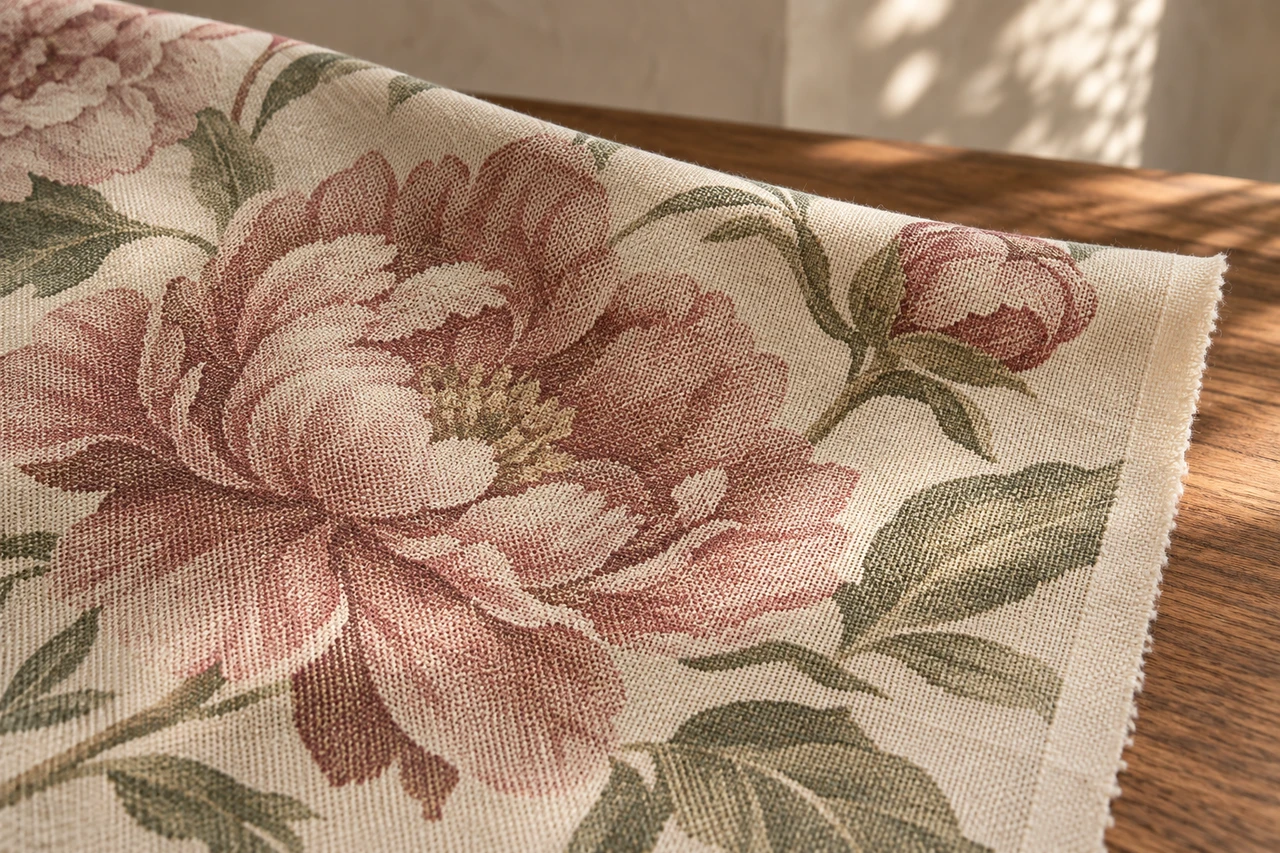
Record why the chosen option suits this floral project: for example, the accepted petal transitions, the assessed hand on the specified base cloth and the evidence still required before bulk release. Do not turn that project-level conclusion into a statement that one route is best for all floral cotton. Keep the alternative sample and its record if practical; it can explain why a later substitution is not automatically equivalent. Label any outstanding condition clearly rather than burying it in a general approval email. The FR-01 floral reference can communicate a botanical direction; its photograph does not confirm the proposed production process or materials.
Use FY Bedding's floral collection as a discussion of botanical direction, then send the selected reference, intended textile, artwork scale and comparison priorities with your sample enquiry. Ask which route can be proposed for that specific project and what evidence would accompany it. Collection photography alone does not identify pigment, reactive or any other production method. A useful next step is a written sample brief containing those open questions, not a public claim about a product technique that has not yet been confirmed.
For a fair route decision, identify both processes, control or disclose the substrate difference, use the same floral artwork, review the finished samples together, check relevant evidence and bind the chosen route to the quotation and approval revision.
Method references: CottonWorks: distinction between pigment and dyestuff printing.