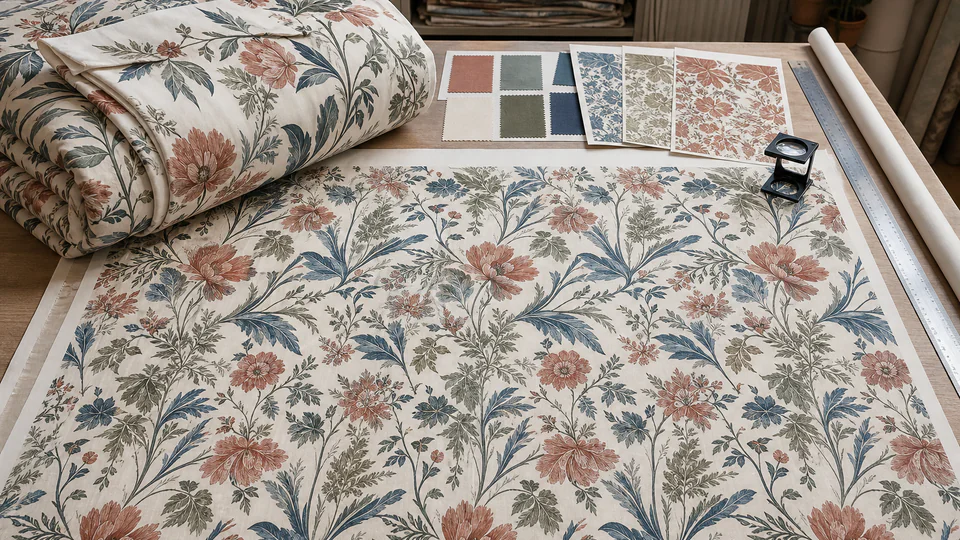
A strike-off approves a defined combination of artwork, scale, repeat, base fabric, print route, color and finish. Changing one of those inputs can invalidate the reference.
Freeze artwork, scale and repeat before color review
Provide the repeat tile or engineered placement file, physical dimensions, orientation, color separations and intended product direction. Identify the controlling file and revision. A visual PDF may explain the design but should not replace the production artwork source.
Review repeat joins, motif spacing and scale on a full-width simulation where possible. A small screen view can hide abrupt repeats or motifs that fall poorly at seams. The technical-pack guide helps connect artwork with product panels and cut direction.
Use one color standard and named viewing conditions
Define each color through an approved physical or instrument-supported standard and identify substrate or material limitations. Colors interact with the fabric base, print chemistry and finish; a code alone does not guarantee the same appearance across constructions.
Agree lighting and comparison method, then control acceptable variation using the shade-band framework. Keep color approval separate from artwork correctness so comments are clear.
Review a production-relevant strike-off systematically
Confirm base fabric identity, print route, scale, repeat, registration, color sequence and finish. Evaluate motif edges, fine lines, penetration or show-through, surface defects and overall balance. Use enough printed area to see at least one complete repeat and adjacent joins.
Record disposition by colorway: approved, approved with a stated condition, revise and resubmit, or rejected. Mark the reviewed sample and attach comments to the artwork revision. Avoid vague approval that leaves several alternate strike-offs in circulation.
Check pattern placement on the finished product
A correct fabric repeat can still create poor product placement. Review seams, hems, pillowcase fronts, duvet-cover orientation and paired items. Define whether motifs require centering, matching or one-way cutting, and include the yield or cost implications in the quotation.
Approve a finished sample when placement materially affects presentation. For engineered prints, measure artwork position from stable finished edges and include tolerance. Photograph front, reverse and folded retail presentation.
Control first production and lot consistency
Compare first production against the approved strike-off before all fabric is consumed. Record lot or roll identity and watch for side-to-center, start-to-end or roll-to-roll variation. Keep the approved sample protected from light and contamination.
Final inspection should include artwork revision, orientation, registration, colorway, placement and visible print defects. If base fabric, print route or finish changes, reassess whether the prior strike-off remains representative.
Keep a production swatch from each accepted bulk lot with its roll or batch identity. When reorders are expected, compare the new strike-off with the prior accepted lot and current color standard. This separates normal lot direction from gradual artwork, shade or finish drift and gives merchandising teams a physical continuity reference. Store digital artwork and physical samples under the same revision. Note storage date and light exposure.
Approve enough physical area to judge the repeat, then check the design on a finished product. Release bulk with one marked strike-off and one artwork revision.