A shaded flower can be built from small printed dots rather than an uninterrupted field of colour. If that dot pattern is intentional, making it disappear is not automatically a quality improvement. If it is an unwanted result of the output process, approving only the artwork can miss it entirely. Buyers need to establish which role the dots play before asking for a floral fabric sample.
Separate the image from its output screening
Similar numbers describe different things
Adobe distinguishes image pixels, printer resolution and screen frequency. That is a useful vocabulary boundary, not a ready-made textile printing specification. Ask the artwork owner and proposed printer to explain which information belongs to the source file and which belongs to the production output. A printer's advertised dots per inch does not, by itself, describe the visible tonal dot pattern on the fabric.
First establish whether a halftone appearance is embedded deliberately in the artwork or will be introduced by the proposed printing route. Not every floral textile print uses the same screening approach. Keep any production settings with the competent printer and its identified process. The buyer's decision is the accepted appearance and evidence, not a universal frequency chosen from a graphics tutorial or another supplier's brochure.
Choose the floral details that reveal the decision
A full bouquet can hide a weak tonal area
Select representative pale petals, darker centres, overlapping leaves and transitions into the unprinted ground. Include the smallest motif offered in the range, because a broad flower enlarged for presentation may not show what happens in a compact repeat. Mark the areas on an identified proof so the sampling team knows which tonal relationships the buyer wants to preserve.
Decide where visible dots are part of the design character and where the effect should read as a quieter tonal transition at normal viewing distance. Do not call one preference universally better. A graphic botanical collection may deliberately expose its dot pattern, while a soft painted effect may need a different interpretation. Record that distinction in words and physical references instead of asking the printer simply to make it high resolution.
Sample at final physical scale
A magnified screen view is only one reference
Request a print sample at the intended motif size on the proposed fabric and identify the output route used. A paper proof can help discuss artwork but cannot establish the interaction with the actual textile surface. Keep the source revision, colourway and scale with the sample so a later viewer can tell whether the difference came from resizing, process interpretation or a material change.
Inspect from both a normal use distance and a close distance. At the first, assess whether petal shading and flower hierarchy read as intended. At the second, observe the dot structure, pale-area continuity and transitions without assuming every visible dot is a defect. Use a consistent viewing setup for comparisons. A phone photograph enlarged beyond its useful detail should not overrule the physical sample without further investigation.
Ask targeted questions when tone changes
Avoid treating every pattern as moire
Record whether the observation is a regular dot screen, a loss of small tonal details, an unexpected band or an interference pattern seen mainly through a camera. Preserve the original sample and note the viewing condition. Ask the printer to investigate the actual file-to-output route rather than assigning a cause from a single screenshot. Several different problems can look like unwanted texture in a reduced photograph.
Where a revision is proposed, identify the variable being changed and compare it with the same reference areas. Changing source contrast, motif size, output screening and fabric simultaneously may produce an attractive result but makes the approval difficult to reproduce. The buyer does not need to operate the printer; the buyer does need a clear link between the accepted result and the production-intent sample record.
Check the complete textile presentation
Dot texture can interact with folds and seams
View the selected floral cloth in the intended product form where practicable. A pillowcase fold or cushion curve can change which pale and dark areas dominate the display. Check whether a seam or border removes an important transition from the visible face. Keep these placement questions separate from the approval of the screened tonal effect itself, while ensuring the completed item uses the same accepted artwork scale.
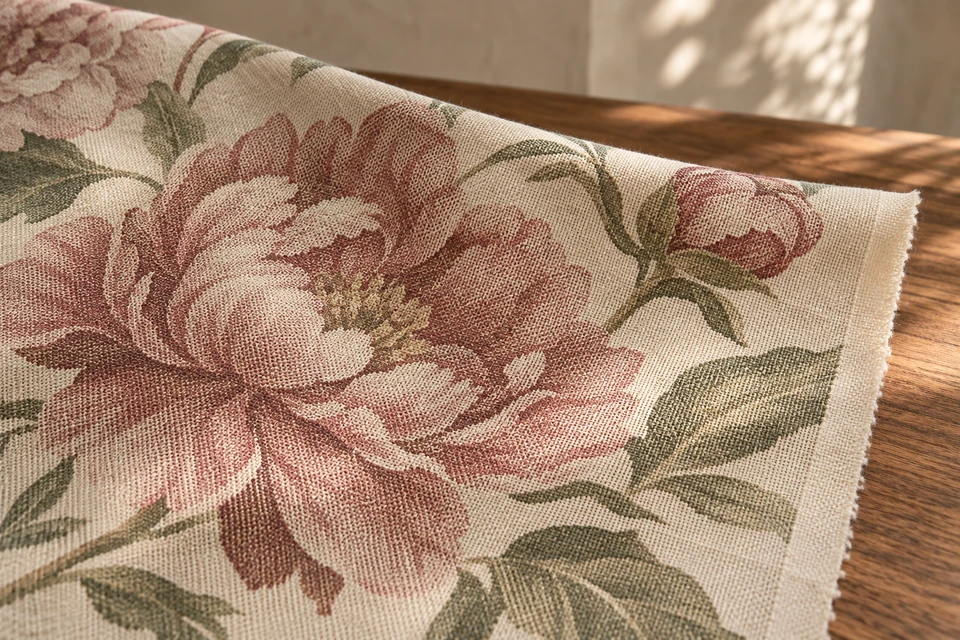
For a collection, compare the colourways together rather than assuming that a dot treatment accepted in a dark rose will look equivalent in a much paler version. Ask for the relevant development comparisons and identify any extra sample work before ordering. Do not infer a specific printing method, fabric composition or available colourway from an FY floral product photograph; those details require confirmation for the actual proposal.
Preserve the approval chain through production
Release a result with an identified output route
The final record should connect the source file, physical motif size, proposed textile, printing route and accepted sample. Include close references for critical pale and dark areas and a whole-product view. Ask how the printer will recognise the approved result at production startup and which changes require renewed approval. A file name ending in final is insufficient if the output interpretation remains undocumented. The FR-01 floral reference can communicate a botanical direction; its photograph does not confirm the proposed production process or materials.
After the agreed care assessment, compare the same tonal areas and record the procedure and sample identity. Keep any performance claims within the evidence actually obtained. To discuss a floral project with FY Bedding, provide the artwork and explain whether the dot texture is a deliberate feature or an output concern. That makes sampling more useful than requesting a generic sharper print, and helps the quotation reflect the particular development work still required.
Identify whether the dots belong to the artwork or the output process, then approve representative light and dark floral areas at final size on the proposed fabric. Printer resolution alone does not define the tonal result.
Method references: Adobe: image resolution, printer resolution and screen frequency.