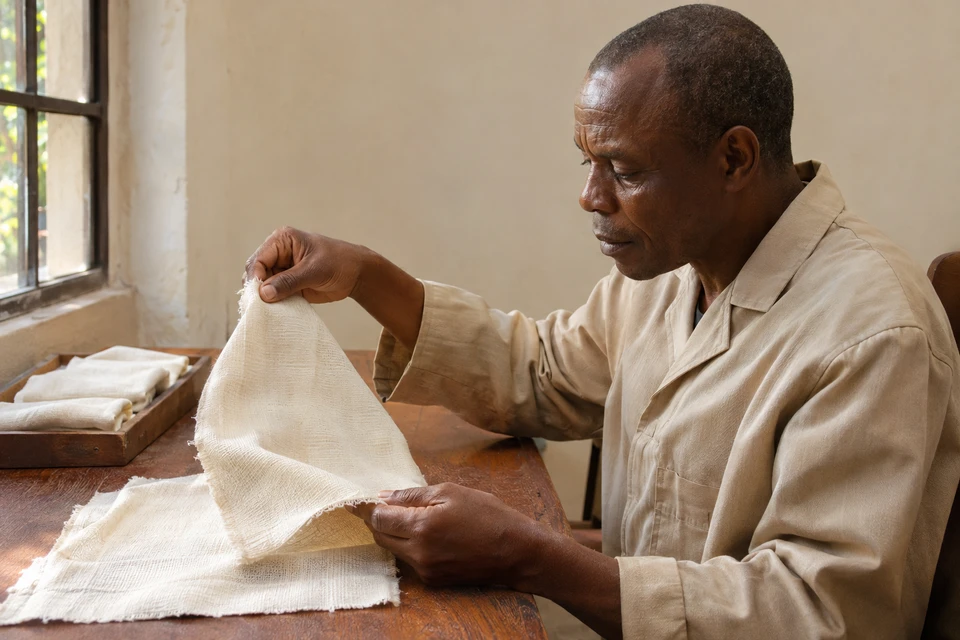
Desizing is easy to overlook when a buyer sees only the final colour and softness of a cotton bedding fabric. Yet the preparation record should explain what happened to the size applied to warp yarns for weaving. A smooth finished sample is not enough to establish that history. The useful procurement question is which size was involved, how the proposed route addressed it and what evidence is relevant to the supplied cloth.
- 1. Start with the actual woven-fabric route
- 2. Ask what size system the process addressed
- 3. Connect records across the preparation stages
- 4. Agree evidence that can answer the residual question
- 5. Investigate a preparation concern without guessing its cause
- 6. Release the evidence with the fabric specification
Start with the actual woven-fabric route
Do not attach the question to every cotton textile
CottonWorks defines desizing as removal of warp size from woven fabric during preparation. Keep that scope clear. Ask whether the proposed bedding cloth used sized warp yarns and request the supplier's account of the relevant material and processing stage. Do not infer the answer from cotton content alone or apply a woven-fabric preparation description automatically to a knitted product.
Identify the fabric lot, construction and supplier reference before requesting evidence. The same finishing company may handle different materials through different routes, and a generic process flow cannot establish what happened to the cloth being quoted. If the supplier is not the processor, ask it to obtain a traceable response from the responsible party. The buyer needs an intelligible record, not unrelated production details or a claim that all cotton is treated identically.
Ask what size system the process addressed
A removal claim needs a defined target
Request the relevant size description at a level sufficient for the technical discussion, including whether more than one size component is involved. The supplier or qualified technical adviser should determine what information is needed. A buyer should not choose a test simply because it is familiar from a demonstration involving another size material. Different preparation questions can require different evidence.
Keep any commercially sensitive formulation details within the appropriate supplier process. Purchasing can still ask for a clear statement of the target material, the offered preparation route and the evidence supporting its completion. If the available documentation is limited, record that limitation. Do not fill the gap by assuming that a visibly white or soft fabric must have no residual material of interest.
Connect records across the preparation stages
One finished-fabric report may not answer the question
Ask where desizing sits in the actual route and which later steps precede the submitted finished sample. The sequence can affect how a finding is interpreted, so retain the sample's preparation state with the result. A document for an intermediate fabric should not be presented as a complete report for the final finished bedding textile without explaining the relationship between those stages.
Separate desizing from singeing, scouring, bleaching and later softening in the procurement record. The names concern different process purposes and are not interchangeable quality grades. A supplier's claim that the fabric was well prepared should therefore be unpacked into the relevant operations and evidence. Do not prescribe chemical recipes, temperatures or machine settings; the competent processor should establish a route suitable for the actual materials.
Agree evidence that can answer the residual question
An improvised visual test is not enough
Ask a qualified technical owner or laboratory to identify a suitable assessment for the specific size system and purchasing requirement. Record the method, sample identity, sampling stage and interpretation of the result. Where acceptance criteria are needed, agree them before treating the result as a release decision. A number without its method and scope can be less informative than a clearly documented limitation.
Do not use a water drop, handfeel comparison or colour photograph as proof that every relevant size component has been removed. Such observations can raise questions but do not establish a universal conclusion. Keep unrelated performance and chemical-compliance claims separate as well. A desizing record does not certify the whole bedding product or replace the evidence required for other statements in the buyer's specification.
Investigate a preparation concern without guessing its cause
Preserve the sample and its history
If a later dyeing, printing or finishing result is uneven, record the visible finding and the sample location before assigning a desizing cause. Ask the processor what evidence would distinguish residual-size concerns from other contributors. Retain relevant untreated or intermediate references if available through the agreed investigation. The purpose is to build a defensible explanation for this material, not to diagnose the entire process from a single photograph.
Where corrective processing is proposed, obtain an identified trial and review its relevant consequences before approving broader use. A more even appearance after treatment does not automatically answer every material or performance question. Keep the original condition, proposed action and assessed result together. The authorised parties should decide disposition against the purchase requirements rather than allowing a general promise of reprocessing to become an unrestricted acceptance.
Release the evidence with the fabric specification
Carry the same boundary into reorders
The purchasing file should identify the woven fabric, relevant size system, preparation route, assessment scope and accepted finished reference. State which changes require technical review, such as a different yarn source, preparation route or finishing proposal. At reorder, ask the supplier to confirm the applicable records rather than recycling a previous report whose sample identity no longer matches the offer.
For a FY Bedding discussion, share the intended cotton bedding construction and the preparation concern you need resolved. Ask for the available process explanation and an appropriately scoped evidence proposal before making a broader claim about the material. This creates a practical sampling brief without asserting an unverified factory capability. The finished article still needs its own agreed appearance, dimensions, care and other acceptance information alongside the preparation record.
Identify the actual warp-size system and preparation stage, then request a suitable, traceable assessment. Softness, whiteness and informal wetting observations do not independently prove the desizing outcome.
Method references: CottonWorks: desizing woven cotton fabric.