Singed cotton can appear in a bedding specification as though it were a complete quality grade. It is a process description, and the buyer still needs to identify what was treated and what the delivered fabric should look like. A cleaner-looking surface may be the objective, but an attractive swatch does not establish a zero-pilling promise. Define the relevant surface-fuzz review and connect it to the actual yarn, cloth and finishing route before accepting the term in a quotation.
Identify the treated material and production stage
Yarn treatment and fabric treatment are not interchangeable records
CottonWorks describes singeing, also called gassing, as passing yarn or fabric through a flame to remove projecting fuzzy fibres. That definition explains the process category; it is not an operating recipe or evidence that a particular bedding lot has received it. Ask whether the supplier's statement concerns the yarn, the woven cloth or another identified stage. Keep the answer connected to the material reference used in the sample.
Do not infer singeing from the terms combed, mercerized or smooth. Those descriptions raise different specification questions. A cotton preparation document may cover several stages without showing which were applied to the offered lot. Request a concise process declaration or available production reference that identifies the relevant treatment and scope. The buyer does not need to invent machine settings or ask untrained staff to demonstrate a flame process; qualified production personnel should control that work.
Decide which visible feature matters to the bedding
Loose contamination is not the same as projecting fibre
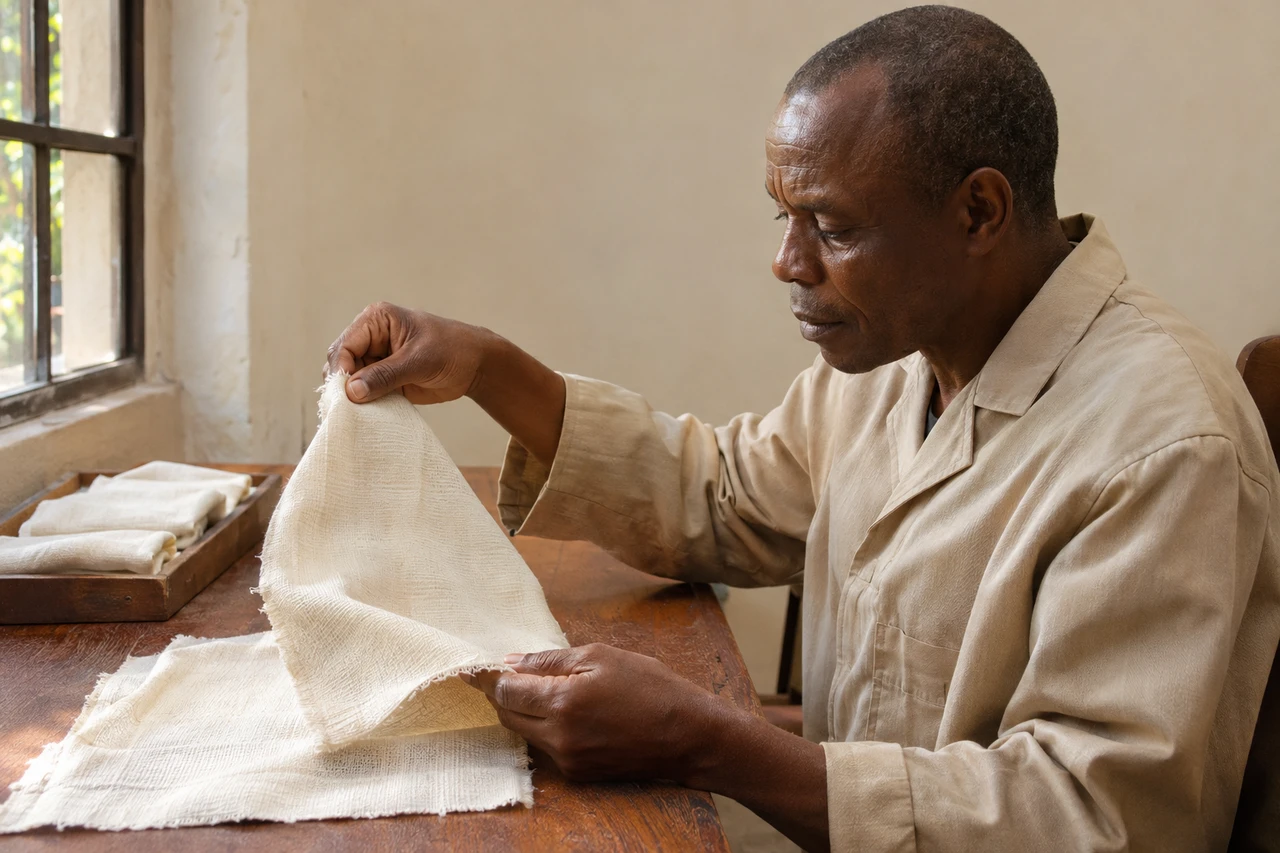
Agree what reviewers should observe: a general fuzzy halo, longer projecting hairs, isolated loose lint or another defined feature. Use physical examples where terminology could be misunderstood. A dark speck or a slub in the yarn should not automatically be recorded as failed singeing. Separating the observations makes the supplier's investigation more useful and avoids changing a process that may not be responsible for the complaint.
Consider the product's intended face and colour. Surface hairs may be more apparent against one background or under a low-angle light than in a straight-on photograph. Explain why the appearance matters in the actual sheet or pillowcase programme. Do not demand a completely featureless surface simply because a heavily retouched catalogue photograph looks that way. The target should be an agreed textile appearance that can be reviewed on physical material, not a digitally smoothed ideal.
Establish a repeatable visual comparison
Better lighting should reveal the sample, not select the winner
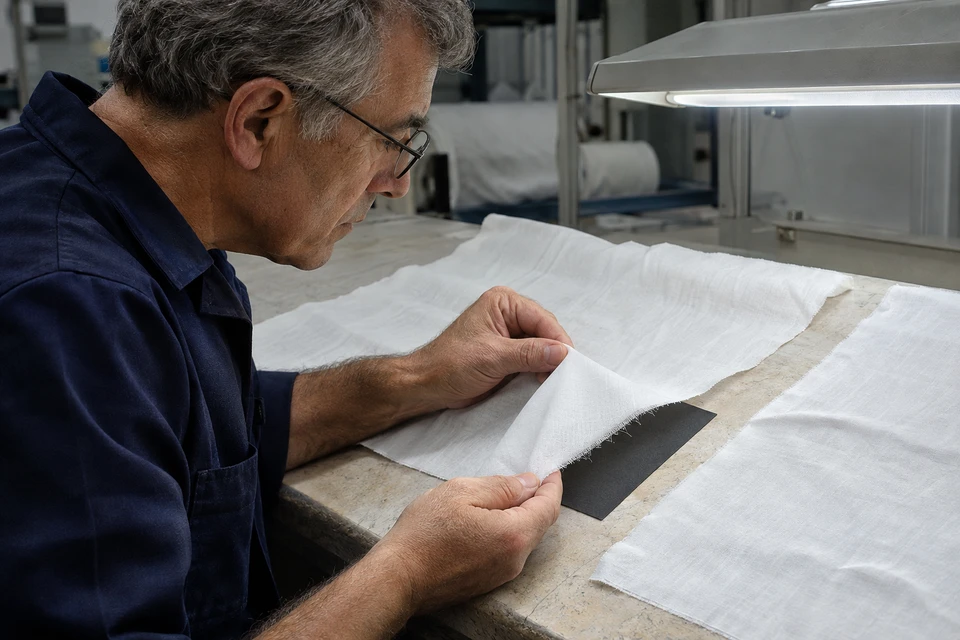
Compare identified samples at the same stage of finishing and under the same preparation conditions. Use consistent orientation, lighting, viewing distance and handling. A side light and a contrasting backing can help show projecting fibres, but retain an ordinary room-view comparison as well. If magnification is used, state it and avoid comparing one sample enlarged with another viewed normally. The assessment should be reproducible by the receiving team.
Examine more than the most favourable small cutting. Ask for representative positions across the proposed material and keep location references with the observations. Do not brush, shave or repeatedly rub one specimen before the comparison unless that preparation is part of the agreed method for every specimen. Handling can change what is visible. Record photographs as supporting evidence, while keeping the physical reference as the primary appearance comparison where camera rendering is unreliable.
Review the finished cloth rather than an isolated intermediate
Later operations may change what the buyer receives
A sample shown immediately after one preparation stage may not resemble the fully dyed and finished bedding cloth. Ask for the completed proposed route and compare the delivered state that the buyer will actually purchase. If the supplier provides an intermediate sample to explain the treatment, label it clearly and do not use it alone to approve the final retail surface. Keep the identities of intermediate and finished references linked rather than treating them as competing products.
Inspect a sewn item when its construction or presentation matters. A smooth flat cutting can look different at a curved pillowcase edge or along a pressed seam. Identify any local appearance difference without assuming singeing is the cause. Ask the supplier to investigate the relevant stage and present a corrected, representative sample if needed. Combining unrelated attractive samples into one approval record makes that investigation harder because no single material reproduces the claimed result.
Keep pilling and other performance questions separate
A process name cannot replace finished-product evidence
If the programme requires a pilling assessment, agree the appropriate method, specimen identity and acceptance requirement with the buyer and testing provider. Review the actual result for the finished material. Do not convert the removal of some surface fuzz into a statement that the bedding will never pill. The same caution applies to softness, strength, absorbency and care performance: each claim needs evidence relevant to its scope.
Review the agreed appearance after the intended care route where that matters to the product promise. Retain untreated and cared-for comparison samples of the same approved construction, and record actual changes rather than relying on memory. If the supplier modifies the yarn source, treatment stage or later finish, decide which comparisons need to be repeated. A familiar fabric name should not allow a materially changed route to bypass the original approval decision.
Send FY Bedding the intended bedding application, colour range, current surface concern, available material references and quantities. Ask what process and sample evidence can be provided for a scoped proposal. The released specification should identify the treatment statement, finished material and appearance reference together, with performance evidence listed separately. That makes singed cotton a traceable part of the purchasing brief rather than an unsupported shorthand for premium quality.
Can the declared singeing stage be linked to the actual finished material, and is its accepted surface appearance documented separately from pilling or other performance claims?
Method references: CottonWorks: singeing and projecting surface fibres.