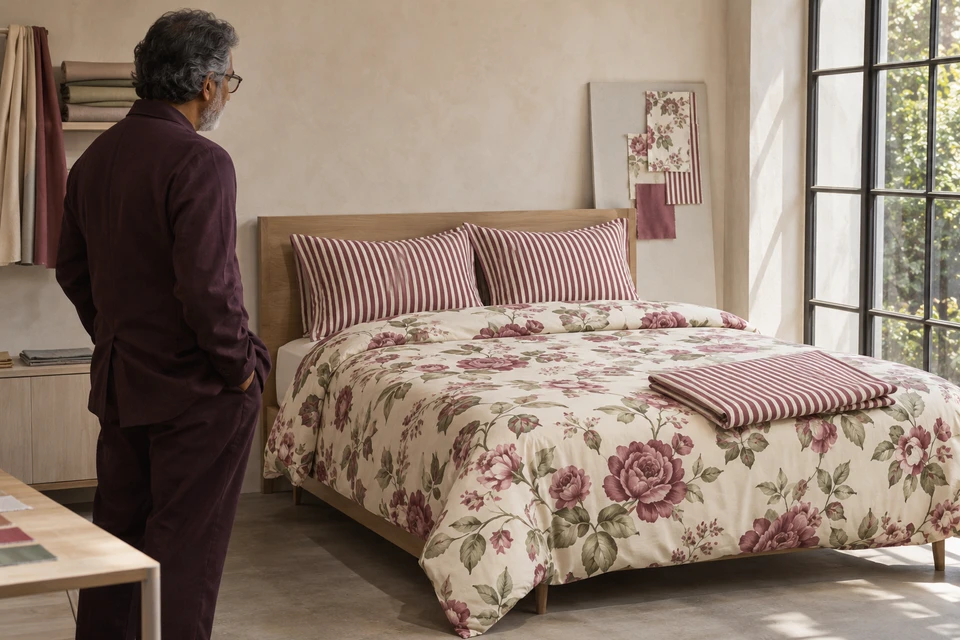
A floral duvet beside finely striped pillowcases may look calm in the room but show ripples or unexpected colours in a photograph. Before a buyer rejects the fabric or approves heavy retouching, establish whether the effect exists in the textile itself. Camera moire is an image problem with a different owner and corrective route from an actual printing or weaving defect.
Compare the photograph with the identified physical sample
Do not diagnose from the thumbnail alone
Inspect the same area on the actual bedding under suitable light and record the sample identity. Note whether the visible ripple or colour exists on the fabric. If the physical sample is not available to the reviewer, ask the holder to check it directly and provide a documented response. A second compressed screenshot of the first photograph is not an independent observation of the material.
Fine repeat structures can interact with digital image capture. Nikon explains that a subject pattern and the image sensor's sampling pattern can produce an additional pattern in the image, and identifies woven textiles among susceptible subjects. This explains why a photograph may show something absent from the cloth; it does not mean every unexpected line is moire. Keep real print streaks, actual stripe irregularity and changing illumination in the investigation until evidence separates them.
Locate which component creates the visible issue
Floral fields and striped companions need separate checks
Review the floral face, the fine striped coordinate and exposed woven texture independently at the affected image scale. Mark the location of the artifact on a review copy while preserving the untouched original file. If the striped pillow is affected but the floral duvet is not, do not ask the textile supplier to redesign both patterns. The photographic investigation should focus on the actual area and capture conditions involved.
Use the FY floral collection and a relevant reference such as FR-01 to identify a proposed visual direction, not to infer a final material or an available coordinated set. For retail photography approval, the sample in front of the camera must be the specifically identified product version. A reference image and a production sample have different roles in that record.
Request a controlled reshoot before altering the product
Keep the textiles and styling identifiable
Ask the photographer to compare capture alternatives while retaining the same approved bedding arrangement and recording what changes. Nikon describes changing camera angle, position or focal length as possible ways to alter moire. The photographer should choose suitable adjustments for the equipment and scene, then check the result rather than treating one setting as a guaranteed cure for every textile.
Compare the reshot image with the original and with the physical product. Ensure the revised framing still shows the intended pieces and that a useful construction detail has not simply been cropped away. A deliberately soft image may conceal an artifact but also conceal fabric texture or edge quality that the buyer needs to see. The goal is accurate presentation, not merely the absence of visible ripples at any cost.
Check the deliverable at the sizes customers will see
Approval belongs to the actual output files
Review the selected photograph at full detail and in the intended web and catalogue layouts. Include desktop and mobile views where the image will be displayed, not just the photographer's large working file. Record the exact output versions reviewed so that a later export cannot be assumed to carry the same approval. If a problem appears only in one delivered size, return that actual file and viewing context for investigation.
Keep a clear distinction between image correction and product redesign. Any retouching should be reviewed against the physical sample and should not invent a smoother weave, remove real defects or change the stripe spacing. Retain the original photograph alongside the approved output. That record helps a later buyer understand whether a visible difference came from the material, capture conditions or the preparation of the published image.
Decide who can close the issue
Photography approval is not bulk textile acceptance
Document the physical observation, affected image area, reshoot or correction performed and final files accepted. The product reviewer should confirm that the approved image still represents the identified bedding. The photography reviewer should confirm that the delivered files are suitable for their intended presentation. Neither approval substitutes for inspection of the bulk order or evidence supporting claims about the textile's performance.
When discussing a floral project with FY Bedding, include the intended product photography use and the material sample required for that work through the project enquiry route. Confirm the sample version and availability before arranging a shoot. The practical purchasing benefit is avoiding an unnecessary fabric change or a misleading retouching decision when the real problem belongs to image capture and delivery.
Compare the image with the actual identified cloth first. Preserve the original file, request a controlled reshoot where appropriate and approve the exact delivered images without concealing real product characteristics.
Method references: Nikon: moire and false colour.