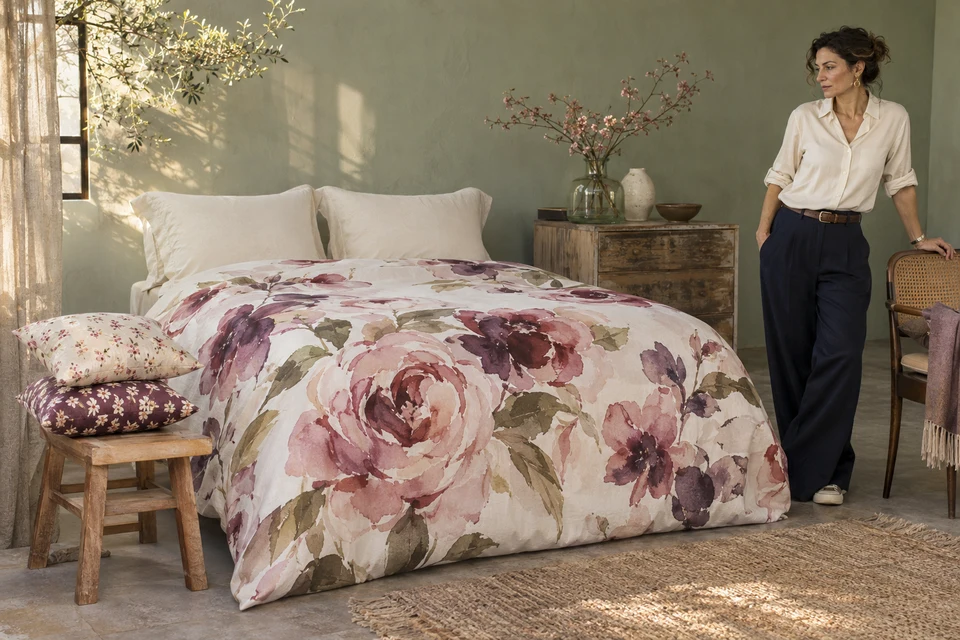
Two attractive floral prints do not automatically form a useful bedding range. When the duvet and a decorative cushion both demand equal attention, the display may lack a clear focal point even though their colours coordinate. A buyer developing a floral capsule should decide which print leads and which supports before multiplying colourways or creating bundled sets. This is a range-editing decision rather than a rule that every companion must be plain. A second floral can work well when its scale, contrast and placement give it a deliberate role in the complete presentation.
Assign a role to each printed component
Name the focal product before adding options
Identify the product that should communicate the collection at first glance. In one range that may be the duvet face; in another it may be a statement cushion sold with quieter bed linen. Write the intended role of each component in the assortment brief. Without that hierarchy, a supplier can reasonably develop every item as an independent feature product, leaving the buyer to resolve the conflict during final photography.
Browse the floral collection and an individual reference such as FR-01 to establish the desired visual character. Use those references to discuss colour, density and motif mood, not to infer confirmed fabric, construction or availability. A new range needs its own approved artwork and component specifications. The reference page does not establish that every proposed companion is an existing matching product.
Compare scale and contrast separately
A smaller flower is not always quieter
Place the proposed prints together at their intended finished scale. First compare motif size while keeping colour intensity similar; then compare contrast with scale held steady where possible. A small, tightly repeated high-contrast floral can compete strongly with a large soft bouquet. Conversely, a medium-scale print with restrained contrast may support the duvet effectively. Record the observed relationship instead of relying on broad labels such as large floral and small floral.
Use the actual visible area of each component. A cushion may show only part of its artwork when placed behind another accessory, while a duvet presents a much larger field. Make a simple physical or correctly scaled mock-up before deciding. Do not enlarge a cushion print in the approval sheet to make its details easier to see and then judge its visual importance from that enlarged view. The comparison must represent the customer's arrangement.
Test more than one valid bed arrangement
The range should not depend on one photograph
Review the intended hero print with each companion individually and with the proposed full set. Then remove one optional item and inspect the result again. This reveals whether a companion works as a flexible addition or only as part of a tightly controlled photograph. Retail customers may buy a duvet without every decorative cushion, so the range brief should distinguish essential coordinated components from optional styling accessories.
Check the arrangement from the foot of the bed and from an oblique room view. Note whether the floral focal point changes when a cushion is moved or turned. If the buyer wants a specific face presented outward, communicate that in merchandising guidance without implying that alternative arrangements are defective. The technical specification should still identify the approved faces and artwork placements, while the styling document explains the intended hierarchy.
Edit the assortment before expanding colourways
Remove redundant choices deliberately
Lay out the proposed selling units and ask what distinct purchasing reason each one offers. Two companions with similar scale, colour and density may add administration without adding a useful visual choice. The buyer can retain both when they serve different channels or price structures, but those roles should be explicit. Do not use a larger assortment count as a substitute for a clearer collection story.
Consider how minimum quantities and sampling effort apply to the actual components rather than assuming the range will share one combined threshold. Ask the supplier which artwork, colour or construction changes require separate development. Use the answer to compare a focused capsule with a broader range. This is a project-specific quotation decision; neither fewer prints nor shared colours automatically guarantee a lower total cost. Confirm the implications before making a commercial commitment.
Approve the range as a linked set of records
Keep styling decisions separate from specifications
Create a final assortment sheet with the hero item, approved companions, optional additions and the quantity structure for each selling unit. Link every image to its artwork version and component specification. Include a photograph of the chosen bed arrangement, but do not let that image replace the technical details. A production team needs to know exactly which product is being ordered even when a stylist has temporarily added unrelated props.
Send FY Bedding the proposed hero reference, companion concepts and intended sales channels to discuss a development plan. Confirm sampling stages, order quantities and timing after the range has been edited. Keep rejected alternatives in a separate review folder so they cannot be mistaken for approved colourways. Release the capsule when each printed component has a defined role, the combination works at actual scale and the selling-unit structure matches what the retailer plans to offer.
Approve the hero and each companion together at finished scale, then confirm that optional products can be removed without making the remaining range visually incoherent.