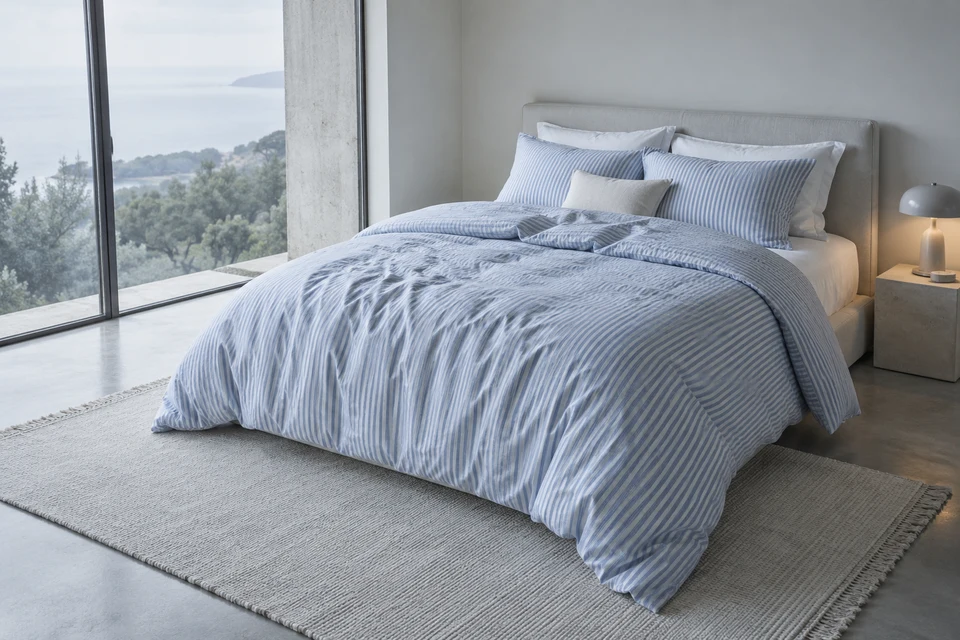
A ticking-style stripe describes a visual direction, not a complete material specification. Fine bands can look calm on a swatch yet produce a different effect across a duvet, pillow pair and turned-back edge. Buyers need to decide the offered construction and the visible layout together. This guide addresses striped duvet-cover programs, not mattress ticking performance or a guarantee that a striped fabric is downproof. The approval target is a defined bedding arrangement made from an identified material.
Separate the stripe name from the material record
Confirm how the offered fabric is made
Ask for declared fiber composition, fabric reference, construction and coloration route. Do not assume yarn-dyed material from the word ticking or infer durability from the stripe's traditional appearance. A printed option and a woven color arrangement may both be commercially relevant, but they should be quoted as named alternatives. Keep them distinct in the material record and confirm which sample represents each offer.
CottonWorks' material library distinguishes examples by construction and treatment rather than treating a visual pattern as a single fabric specification. Use that same discipline when discussing your own offered reference. The buyer's sample must still establish the actual material, finish and appearance under review. A general industry example is not evidence that a supplier is using that fabric or that the finished duvet cover has a particular performance.
- Name printed and woven-color options separately.
- Request the actual offered fabric reference and composition.
Measure the band system rather than one line
The complete repeat determines visual scale
Record the narrow and broad bands, their order and the total repeat width. Include the ground color and the contrast between neighboring bands. A small change in spacing can become conspicuous across a wide bed even when individual lines remain fine. Add a physical reference to the color and material board, keeping monitor images as communication aids rather than the only approval basis.
View enough repeats to understand the rhythm. For a multi-width stripe, identify where the repeat begins so two suppliers do not measure different units. Decide whether the reference is a fixed pattern or a direction that still permits alternatives. That distinction matters commercially: an available stock stripe and a specially developed stripe need different sample and material-booking discussions.
- Record all band widths and the complete repeat.
- Identify whether the design is fixed or still exploratory.
Lay out the whole duvet and pillow pair
Mark orientation at the closure and the turned-back edge
Show the intended stripe direction on the duvet face, reverse and pillowcases. Decide whether the turn-back should continue the same direction or create an intentional contrast. Mark closure position and any joined panels on the drawing. The pattern-layout guide can support those decisions, but the approved image should still show the complete bed arrangement rather than only a perfectly aligned corner.
If the material width requires a join, ask the maker to show the proposed location and the relationship between bands on either side. Do not demand an invisible join without reviewing what the actual construction can support. Check the pillow pair from the normal room viewing position, especially where openings or flanges interrupt the stripe. Keep every intentional mismatch visible in the approval record.
- Mark face, reverse and pillow orientation.
- Approve any joined-panel stripe relationship.
Review straightness in the correct condition
Distinguish fabric geometry from normal drape
Inspect the fabric and finished cover in a defined flat condition before judging the dressed bed. A striped cover naturally curves over a filled duvet; that does not by itself establish fabric skew. Conversely, folds should not be used to hide a consistently drifting stripe in a flat panel. Use the bow and skew guide to agree the technical evaluation with the responsible quality owner.
Repeat relevant observations after the specified care trial and record the sample's finishing state. Avoid promising that all lines will remain perfectly straight under every filling and bed-making method. The practical acceptance needs both a controlled textile check and the intended room presentation. Record these separately so a styling preference is not confused with a measured construction issue.
- Separate flat-panel assessment from draped appearance.
- Record the care and finishing state of the reference.
Compare quotations using the same stripe program
Material availability affects the buying route
List the chosen fabric, stripe repeat, orientation, set contents and closure in each quotation request. Ask whether the material is available, requires a new color arrangement or needs a development sample before feasibility is confirmed. Discuss minima by fabric and colorway alongside finished-set quantities. The material-booking guide is relevant when a program depends on reserved input material, but it does not make a particular stripe available automatically.
Request a full presentation sample where band scale is central to the decision. Confirm the packed fold and which view will appear in retail imagery, without changing the declared material to fit the styling story. Send FY Bedding the physical stripe reference, intended bedding arrangement and order mix for a project-specific discussion of sampling, material options and delivery assumptions.
- Compare identical set and orientation specifications.
- Separate stock-material options from new development.
Approve one identified stripe material in the complete duvet-and-pillow arrangement. The visual name, a narrow swatch and a generic bedding specification are not substitutes for that record.
Method references: CottonWorks material library.