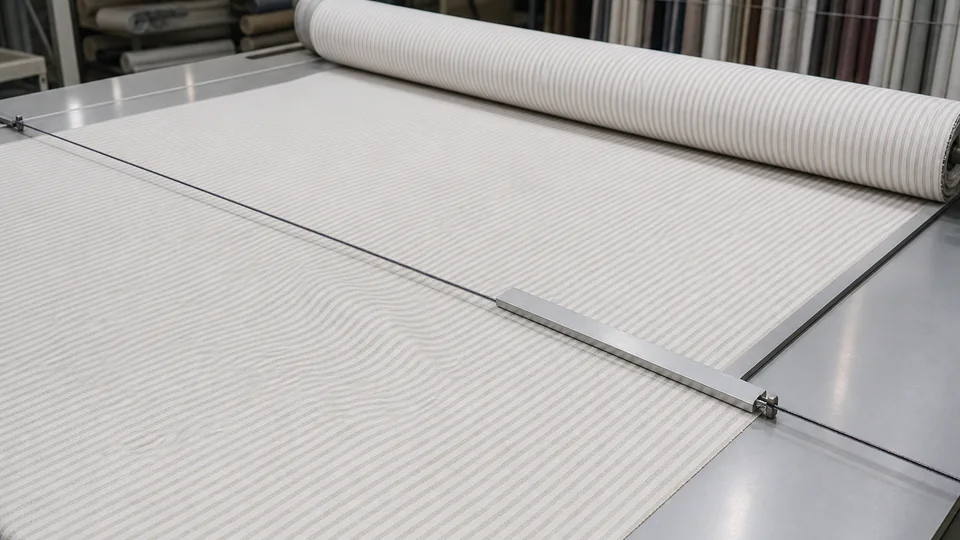
Bow and skew shift filling yarns, stripes, checks and printed references away from the intended crosswise line. In bedding, that distortion can create twisted panels, uneven hems and obvious pattern misalignment after care. Control begins before cutting and continues through finished-product inspection.
Define bow, skew and the measurement method
Bow is a curved crosswise line, while skew is an angular displacement across the fabric width. Specify which visual or construction reference is measured, the fabric state, usable width, sample positions, calculation and reporting units. Printed motifs and woven grain may need separate assessment.
Use drawings and defect samples so mill, factory and inspector identify the same condition. A general straight fabric requirement is difficult to enforce without measurement points, limits and disposition rules.
Inspect representative roll length and width
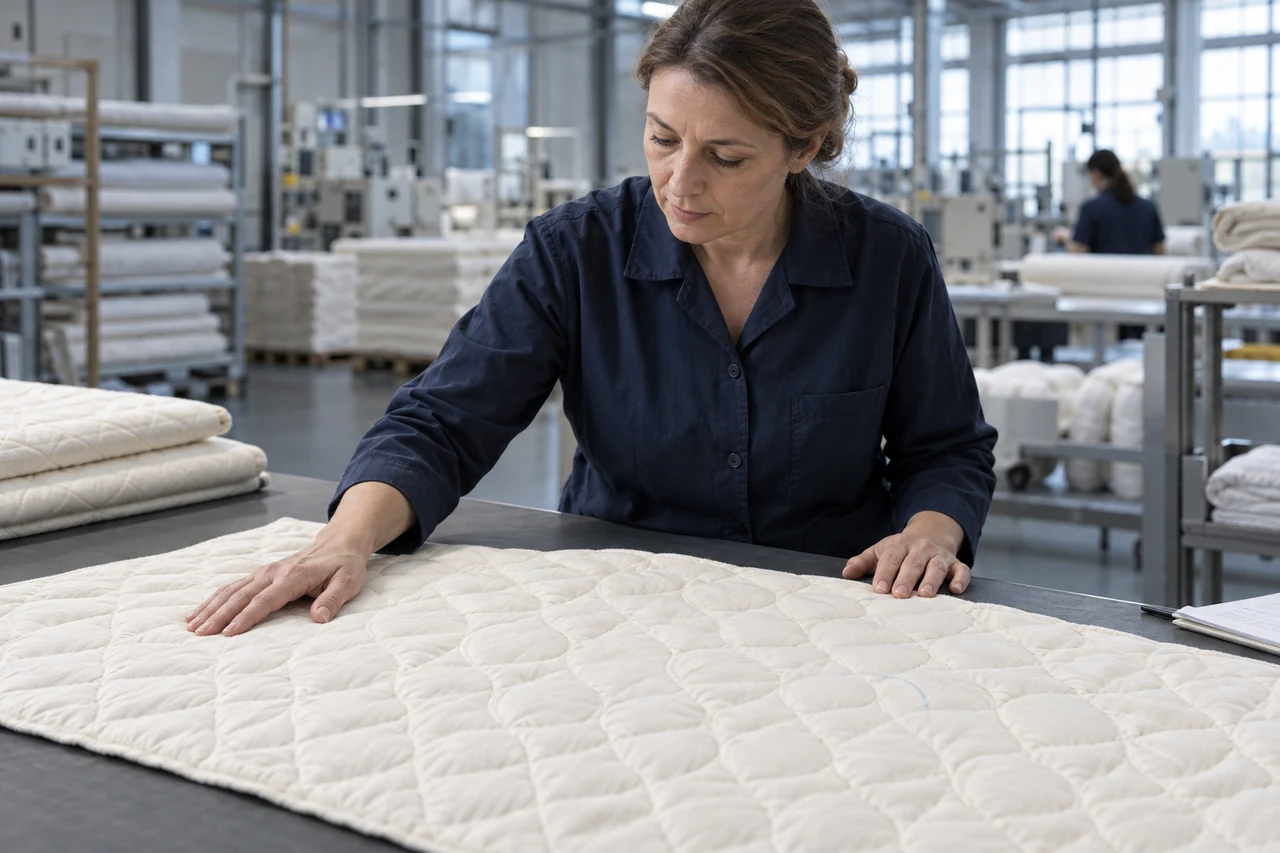
Check bow and skew at multiple positions through selected rolls after the agreed relaxation or conditioning. Include beginning, middle and end areas where process variation may appear. Record roll number, color lot, width, direction and measured result.
Integrate the check into the quality inspection system before cutting. Local correction or rejection decisions should consider product layout, visible pattern and whether distortion changes during spreading or care.
Control relaxation, spreading and alignment
Define relaxation time and conditions for fabrics sensitive to roll tension. During spreading, align selvedges without forcing a distorted crosswise grain into apparent straightness. Excess tension can reappear after cutting, sewing or laundering.
Mark face, direction and reference lines where the product requires consistent orientation. Review ply alignment and lay length for long duvet or sheet panels. Stop and escalate when distortion exceeds the approved cutting strategy rather than allowing operators to improvise.
Protect pattern placement through cutting and sewing
Show stripe, check, print or weave orientation on the technical drawing, including matching priorities at seams, hems and closures. Define acceptable displacement from finished reference points. Cutting markers should account for direction and avoid mixing rotated panels where appearance or shrinkage differs.
First-piece approval should inspect grain, seam alignment, hem shape and completed product symmetry. The pre-production meeting should close any material concession before bulk cutting begins.
Verify finished products before and after care
Lay representative products flat without forcing edges and assess panel twist, rectangularity, hem alignment, pattern position and seam torque. Run the intended laundering and drying route, allow relaxation, then repeat the same measurement.
Classify visual and functional effects using the defect classification guide. Preserve approved limits, photographs and samples. Trend results by fabric lot and mill so recurring distortion triggers corrective action rather than repeated final sorting.
When a concession is considered, evaluate the exact product size, panel location and visible design. A result hidden inside a plain small item may be unacceptable on a striped duvet face. Record the restricted use, affected quantity and approval owner before cutting.
Review cutting yield and rework after production. High offcut or alignment correction can show that an apparently acceptable roll is commercially unsuitable. Feed that cost and risk back into the material release decision and supplier corrective action.
Agree measurement state, references, locations and limits before roll release. Protect grain through relaxation, spreading, cutting, sewing and the final care trial.