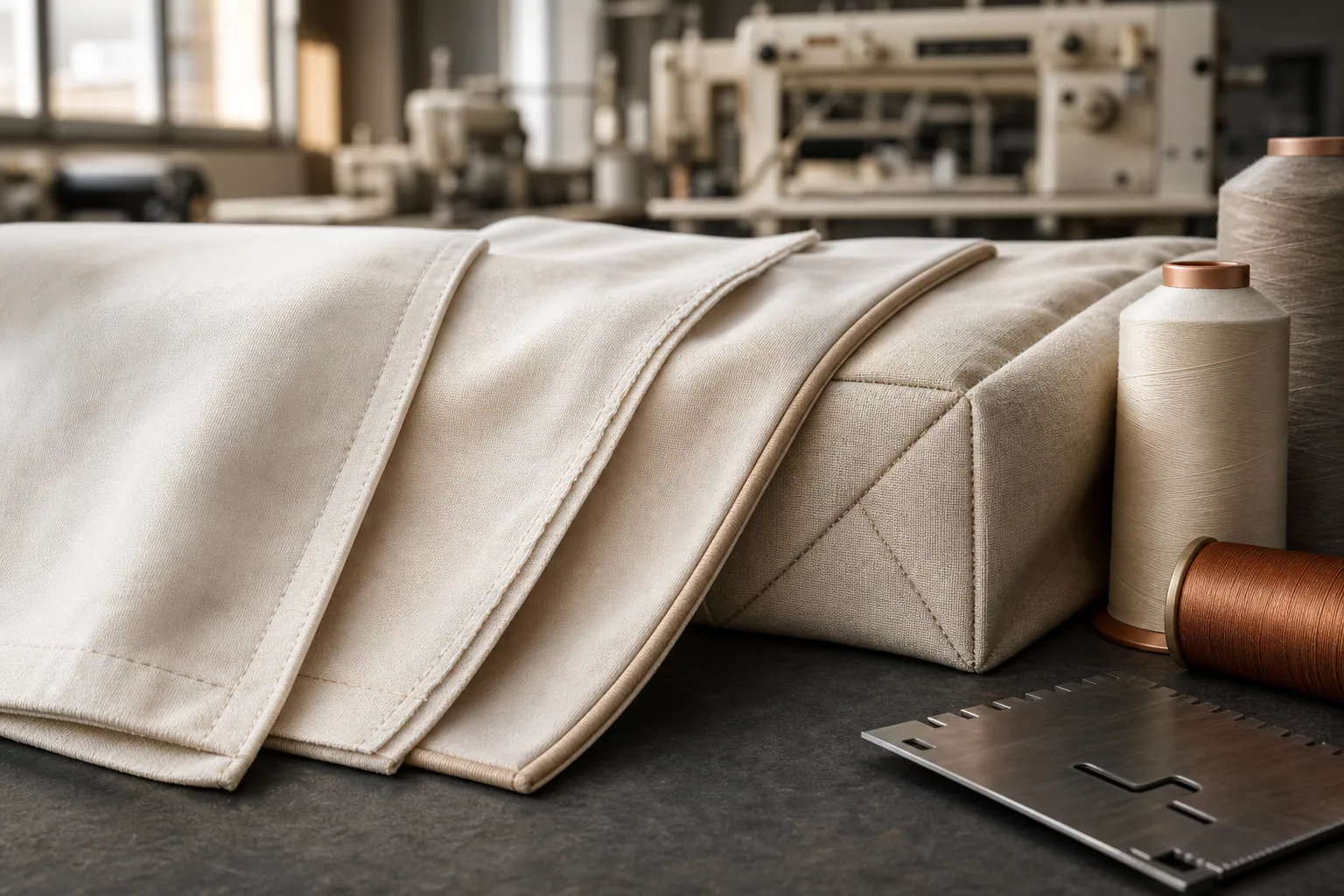
Incoming inspection prevents an unsuitable material from becoming a finished-product problem. The control should verify identity, quantity, lot traceability and selected risk characteristics before cutting, sewing, quilting, filling or packing consume the input. The plan should be specific to the material and the approved product—not a generic checkmark.
1. Establish identity and release status
Match delivery documents with purchase order, supplier, material code, color, lot, quantity and approved reference. Mark material as pending, approved, conditionally released or rejected so production cannot confuse status.
Keep lots traceable through storage and issue. If materials are combined, record the controlled rule and affected work orders.
2. Inspect fabric against construction and risk
| Check | Compare with | Why it matters |
|---|---|---|
| Fiber/construction | Specification and supplier reference | Confirms intended material identity |
| Width/weight | Approved range and test method | Affects yield, hand and performance |
| Shade/lot | Approved color and shade band | Prevents visible mixed-lot variation |
| Surface defects | Agreed grading method | Controls cutting loss and appearance |
| Finish/hand | Approved cutting or sample | Detects process or formulation variation |
| Targeted tests | Product risk and test plan | Checks shrinkage, function or other critical input |
Use the shade-control guide when lots require visual grouping.
3. Check trims, fill and packaging inputs
Thread should match approved color, ticket and performance direction. Confirm zipper length/function, button size/finish, elastic dimensions/recovery, hook-and-loop construction, labels/artwork, embroidery thread, piping and closures. For fill, check identity, lot, condition and relevant specified properties.
Packaging materials require their own controls: dimensions, artwork revision, barcode data, print quality, bag/carton construction and case-pack compatibility.
4. Use a risk-based sample and disposition plan
Define how rolls, cartons, lots or deliveries are selected and which findings trigger expanded review, hold or rejection. Critical identity or safety-related issues should not be treated like minor visual variation.
Record result, quantity, finding, photographs or measurements, disposition and approval authority. Conditional release should state the exact limit and affected order rather than becoming an informal permanent standard.
5. Connect incoming results to production
Share shade groups, defect maps, usable width or handling conditions with cutting and production teams. Material approval without the relevant use instruction can still allow a defect to enter bulk.
Trend supplier and lot performance. Repeated issues should enter the CAPA process, while any accepted substitution should follow change control.
Do not release material only because the label matches the purchase order. Verify the characteristics that control appearance, fit, function and claims, then keep lot and disposition visible through production.