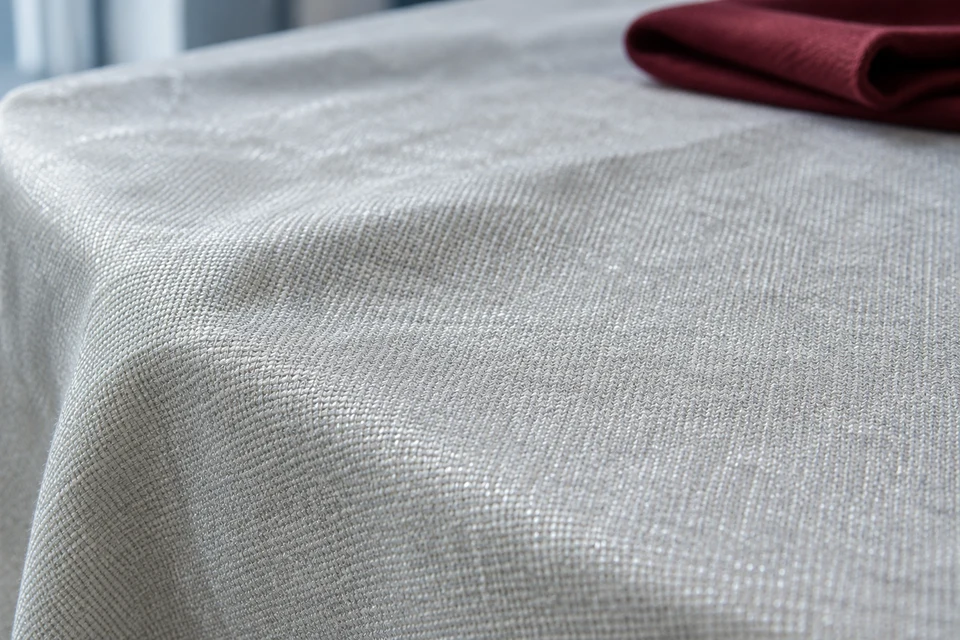
Metallic-yarn tablecloths create a festive dining effect through the cloth itself rather than through a metallic print applied to its surface. That distinction should be clear in the buying brief. A Christmas range needs an approved balance between visual sparkle and practical contact with plates, sleeves and table edges. Review the offered construction under the lighting and service conditions intended for the collection, and avoid treating a shiny swatch as proof that the completed tablecloth is suitable for every dining setting.
Identify what produces the metallic appearance
Do not group woven shimmer and foil printing under one specification
Request the fabric composition, construction description and identification of the yarn responsible for the effect. Ask whether the metallic-looking component runs throughout the ground, appears in a woven motif or occurs only in selected bands. The supplier should distinguish the offered yarn from an applied coating or printed film. Keep the description specific enough for a replacement fabric to be checked against the original offer.
For a Christmas capsule with napkins, runners and tablecloths, do not assume one shiny fabric should be used in every product. A buyer may select it for the table covering while using a plainer coordinating napkin after handling both. That is an assortment decision, not an assertion that all metallic fabrics are unsuitable for skin contact. Obtain the actual component information and assess the intended product before choosing the combination.
- Record the effect yarn and ground fabric separately in the material brief.
- Ask for both face and reverse swatches, with the intended top face identified.
Check the table from more than one seat
Approve brightness in the intended room rather than only at the sample desk
Spread a representative length over the target table and walk around it. Compare the cloth under normal daylight and the planned evening room lighting. A weave that looks understated from the entrance may appear much brighter to someone seated opposite the light source. Use photographs as records of those positions, but keep the physical sample as the approval reference because a camera may render the sparkle differently.
Place the proposed dinnerware and a plain coordinating napkin on the cloth. Decide whether the cloth should act as a quiet background or a highly reflective feature. Record that decision with the room view and sample identity instead of requesting an undefined premium shine. If the collection includes two metallic colors, review them independently; a silver-looking sample does not establish the appearance of a gold-looking alternative.
- Include a seated view along the surface and a view of the drop.
- Avoid judging the whole order from a narrow folded corner.
Examine exposed yarns where the table is used
Make the handling trial observable and repeatable
Agree a practical sample-handling review using the actual table edge, plates and ordinary service movements. Look for yarn catches, pulled loops, surface roughness or visible changes after items are repositioned. Record the objects and actions used so the observation can be repeated on a revised fabric. Do not invent an abrasion rating from this informal review or substitute it for a requested laboratory method.
Pay attention to the reverse where the cloth meets the tabletop and to the edge where sleeves may brush it. Ask the supplier to explain any longer exposed yarn sections and the proposed finishing. If the fabric catches during the agreed trial, decide whether the construction, product placement or intended application should change. Moving a sample to a decorative display-only use is a new scope that should be reflected in the offer and product copy.
- Retain the handled sample alongside an untouched comparison piece.
- Describe the visible change and its location rather than writing only pass or fail.
Approve joins and care on the complete cloth
A fabric swatch cannot establish the finished edge behavior
When the table size needs joined fabric widths, request a seam map before cutting. Observe how the metallic effect changes across the join and around the corners. Keep the face direction and fabric orientation consistent unless a deliberate contrast has been approved. A join hidden on one small test table may sit prominently on a larger banquet table, so review each offered size family rather than copying the smallest sample.
Request care recommendations for the complete fabric and finishing combination, then agree a suitable trial with the responsible service team. Assess the metallic appearance, ground shrinkage, edge shape and seam presentation after the proposed process. Component documents should identify the actual supplied material; a certificate for an unrelated thread range is not evidence for this finished tablecloth. Do not publish bleach, drying or ironing promises that have not been established for the offered product.
- Measure the finished cloth after the agreed conditioning and care sequence.
- Keep any unverified care or durability claims out of the pack artwork.
Build the quotation around the approved surface
Separate festive styling from supply and delivery commitments
A useful quotation distinguishes fabric width, usable cutting width, joined or unjoined sizes, hem treatment and pack format. Ask how minimums are applied to the metallic yarn color and the ground fabric color, especially when a collection combines a small accent line with a larger plain line. Do not compare a decorative overcloth price directly with a full-size dining cloth without reconciling dimensions and construction.
For retail, approve one image that shows the overall drape and another that reveals the woven effect without exaggeration. For hospitality, include the receiving and service teams in the sample decision. FY Bedding can receive the table dimensions, intended room images and variant quantities as a development brief; availability, sample scope and delivery milestones must be confirmed for that project rather than inferred from the Christmas theme.
- Link the approved metallic surface to the exact quotation line.
- Confirm whether coordinating products use the same material or a separate plain cloth.
Choose the metallic-yarn tablecloth only after its appearance, contact behavior, seam map and proposed care have been reviewed as one finished product. Keep seasonal presentation separate from unsupported performance or delivery claims.