A branching floral design can suggest crewelwork without actually being crewel embroidery. A retail buyer may be shown a printed botanical image, a stitched interpretation in another thread or a wool-thread sample under the same collection name. Before comparing offers, separate the visual style from the supplied construction. That distinction protects the sampling brief and keeps the final product description aligned with what has been agreed.
Use the technique name and style name separately
A Jacobean look does not identify the thread
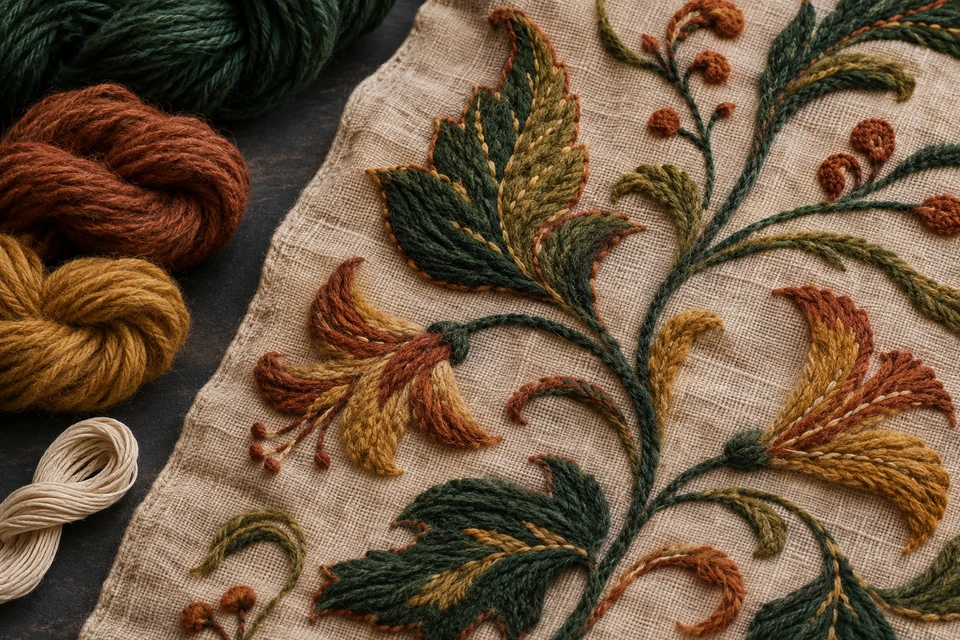
The Royal School of Needlework describes crewelwork as embroidery using wool thread, often associated with stylised botanical designs and a variety of stitches. That gives buyers a useful starting distinction: the technique concerns how the decoration is made, while a Jacobean-style appearance describes a design direction. Ask the supplier which meaning is intended in its offer. Do not infer wool embroidery from the presence of curling leaves, large flowers or branching stems alone.
Write two separate lines in the brief: one for the authorised visual direction and one for the proposed decoration method. If the supplier offers a printed interpretation, label it as a print. If another thread is proposed, identify that material and describe the embroidery accurately rather than silently retaining a crewel claim. A different construction may suit the budget or end use, but it should be evaluated as a clear alternative with its own sample and quotation.
Map the materials by component
The ground and embroidery need distinct identities
Request the proposed ground-fabric description and the embroidery-thread description separately. A wool-thread decoration does not make the entire cushion cover or bed runner a wool article. Similarly, the appearance of a linen-like ground does not establish that it is flax linen. Keep the supplier's component information linked to the sample code and seek the evidence appropriate to any material statements intended for the product's destination and sales channel.
If more than one thread material is used within the floral design, ask where each appears. A contrasting outline or a highlighted flower centre may be specified differently from the main leaves. Mark that on the design reference so the approved material scope remains clear. Do not turn a technique definition from an educational source into a composition declaration for an offered product; the actual project's documents and, where needed, appropriate verification must establish that declaration.
Choose a representative stitched section
One leaf cannot represent every surface treatment
Select a development area that includes the main leaf, a flower, a stem junction and a transition between different stitches where those features exist in the design. Ask for the sample on the proposed ground at the intended scale. This gives the buyer a view of how the components work together, not merely a close-up of a decorative stitch. Keep enough surrounding ground visible to judge whether the balance between embroidery and open cloth matches the brief.
Evaluate the textile in ordinary viewing conditions before inspecting small details. A crewel-inspired collection may be intended to feel relaxed and tactile, or more restrained and graphic. State which qualities matter to the buyer and ask the embroidery specialist to interpret them in a sample. Avoid prescribing a universal stitch density or assuming that a heavier embroidered area is automatically more premium. The acceptable result belongs to the selected design, material combination and finished product.
Compare alternatives without mixing their identities
Price differences need a construction explanation
When offers vary substantially, ask each supplier to identify the decoration route and component materials behind its price. Compare like with like where possible. If one proposal uses printed motifs and another uses actual embroidery, the difference is not just a lower or higher price for the same specification. Likewise, a different thread, ground or amount of stitched coverage can create a materially different article even when the overview photograph looks similar.
Create a short comparison record showing the proposed construction, the sample examined and what remains unverified. Keep commercial conditions such as minimum quantities and sampling charges separate from the technique description. Request actual quotations for the relevant design and quantity; do not apply a general price expectation to every floral layout. If a lower-cost alternative is selected, revise the project description and sample approval together so the marketing team does not retain claims from the unselected proposal.
Review the completed product and intended care
A decorative panel is not the whole approval
For a cushion, assess the embroidery as part of the assembled cover, including its position and the way the ground sits around it. For a runner or bed accent, review the intended placement and the appearance of the complete piece. Check the reverse construction with the supplier and document what is retained inside the article. Do not assume that an attractive face establishes the suitability of every hidden material or finishing choice.
Agree a sample-care and performance evaluation appropriate to the proposed components and intended use. Keep any observed results tied to that sample, without extrapolating them to all crewelwork. A wool-thread identity does not establish washability, colour retention or suitability for a particular commercial laundry. If the care route changes, discuss whether further evaluation is required before approving the article for a retail or hospitality programme. Avoid publishing care instructions that have not been confirmed for the actual construction.
Turn the floral direction into a documented enquiry
Keep brand and process claims within evidence
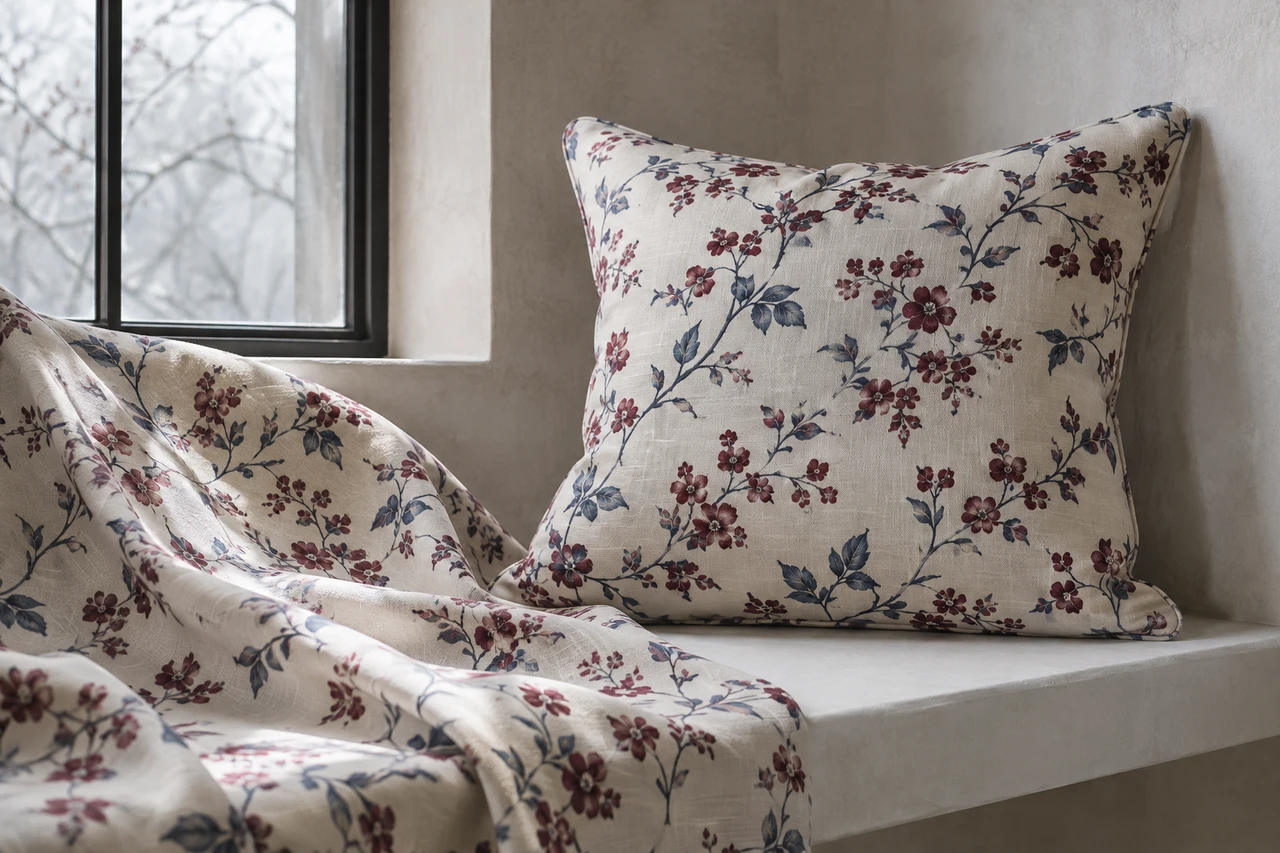
Start the discussion with the botanical direction, product type, dimensions, authorised artwork and expected quantities. Add the desired decoration method and component-material proposal, identifying any points left open for development. FY's floral series can support the visual conversation, but its photographs do not establish wool content, crewel technique or a third-party brand partnership for a proposed order. Those matters require the relevant project evidence rather than an inference from the image. The FR-01 floral reference can communicate a botanical direction; its photograph does not confirm the proposed production process or materials.
Ask FY Bedding to review the brief and clarify the available sampling route, information needed and proposed timing. Keep the accepted thread and ground references with the finished sample and retain any alternative that was rejected for comparison. The final release should name what is actually supplied: a documented wool-thread embroidery proposal or an accurately described alternative. That gives the buyer a reliable basis for purchasing, merchandising and later repeat-order discussions without relying on an ambiguous style label.
Separate the botanical style, decoration method, embroidery-thread identity and ground composition. Compare quotations only after those four fields are explicit, and keep all public material and technique descriptions within the approved project's evidence.
Method references: Royal School of Needlework Stitch Bank: wool-thread crewelwork.