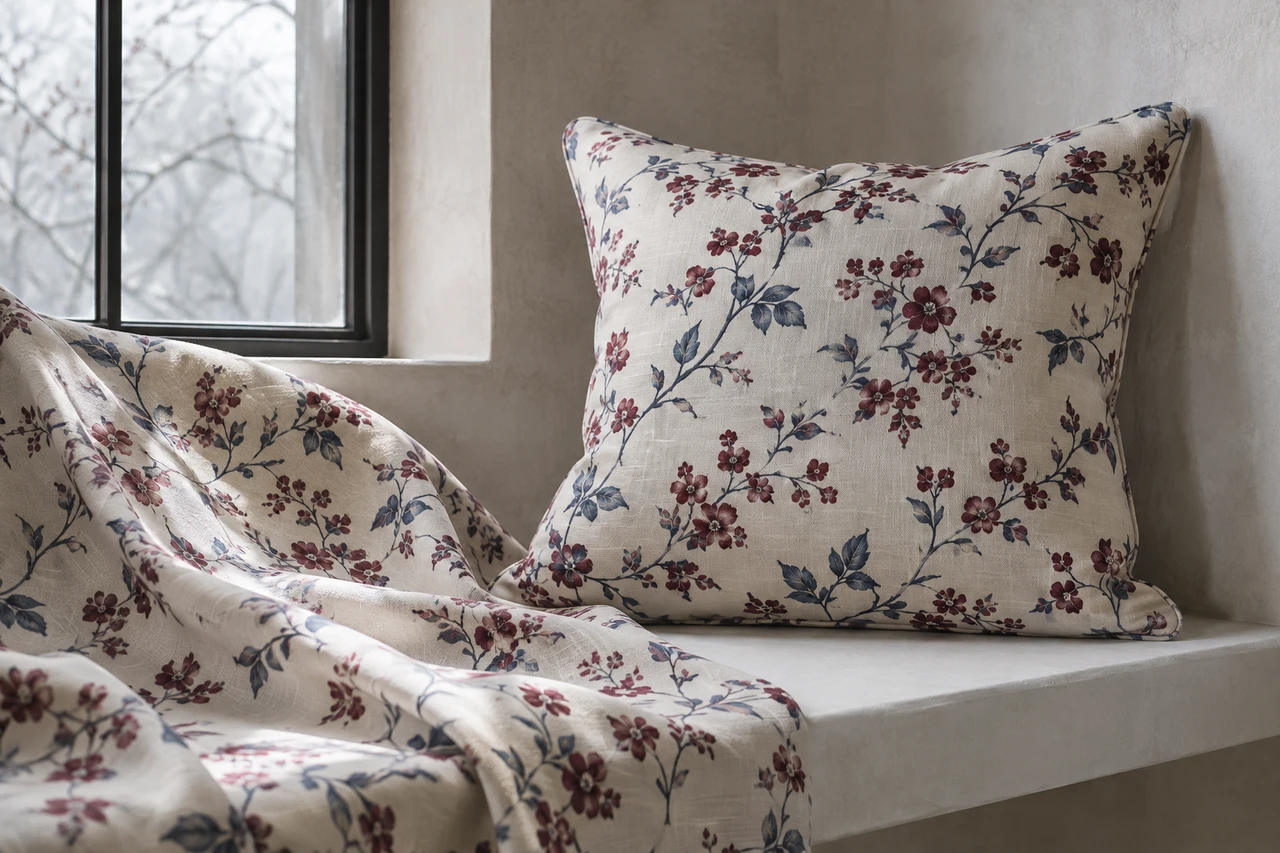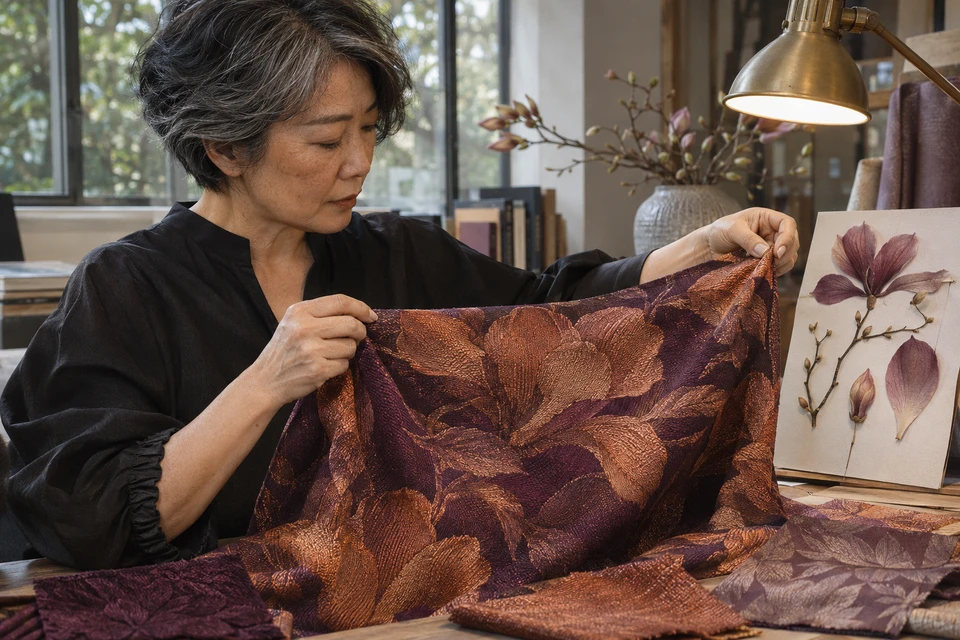
A floral print reference describes an appearance, not a ready-made weaving instruction. When a buyer asks for that visual direction in jacquard, the useful question is which features define the flower and which can change as the design becomes woven structure. A painted tonal wash, a fine stem and a broad petal outline may require different decisions. Establish those priorities before requesting a production quotation. The goal is an approved woven interpretation, not an unsupported promise that a photograph can be reproduced exactly in any yarn, construction or finished product.
Rank the features that carry the design
Separate essential identity from optional shading
Mark the features that must remain recognisable: perhaps the outer petal silhouette, a dark flower centre or the curve of a particular leaf. Then identify details that may be simplified, such as fine speckling or a continuous painted shadow. Keep those priorities in a short annotated brief. If every small mark is described as equally essential, the technical team has no basis for proposing a workable interpretation. Compare alternatives by how well they preserve the chosen identity rather than by counting all the differences from the reference photograph.
Use FY's floral references to identify a direction and include the exact page, such as FR-01, when discussing the project. Do not state that the referenced item is jacquard unless confirmed. A reference image also does not establish yarn composition, stock, loom capability or a third-party partnership. Ask for an authorised development route and a new woven proposal. The visual-reference role and the proposed construction should remain separate fields in the enquiry.
Request a woven interpretation, not just a digital simulation
Review structure and appearance together
Ask the supplier to explain the proposed construction and provide an appropriate woven trial. A digital rendering can help agree motif layout, but it cannot show the complete physical surface, reverse or handle. Examine the trial at normal viewing distance and close up, tracing the features identified as essential. Note where adjacent petals merge, fine stems disappear or a broad shaded area becomes visually flat. Link each observation to the brief so a revision addresses a defined design issue rather than a vague request for more luxury.
Stephen Walters describes jacquard development as a translation involving weave construction, pattern and colour. That is a useful distinction, not evidence that FY uses the same equipment or offers that company's services. For this project, request confirmation of yarns, fabric structure and feasible sample scope from the actual supplier. Avoid specifying a machine setting from a photograph or treating a generic weaving term as a complete material description. The buyer needs a reviewed result and documented construction, while technical parameters belong with the responsible production team.
Examine both faces and the intended use
Appearance approval does not establish performance
Turn the sample over and inspect the reverse as well as the face. Ask which side is intended to be visible and whether the reverse will be exposed in the proposed product. Note loose-looking yarn lengths, bulky transitions or differences in surface feel without immediately assigning a performance rating. If snagging, abrasion, laundering or other requirements matter to the end use, define the evidence needed separately. A visually convincing woven flower is not proof that the cloth is suitable for every bedding or upholstery application.
Make a sample in the intended product form after the fabric direction is selected. Review seams, foldbacks, corners and any lining relationship. A motif that looks clear on a flat swatch can read differently when it curves around an insert or drops over an edge. Keep the material and orientation identities with the sample. If the technical team changes the structure to improve performance, repeat the affected appearance review; the original visual approval should not be assumed to cover a different woven surface.
Confirm the development and minimum-order basis
Distinguish an existing construction from a new programme
Ask whether the quotation assumes a new design on an established construction or a broader development involving different yarns and fabric parameters. Identify sample charges, revision scope, minimum quantities and the point at which production commitments begin. Do not infer those terms from a small swatch or another supplier's public offer. If several colourways are planned, ask how their quantities are assessed and whether they share the same approved construction. Keep unanswered questions visible rather than filling them with a standard minimum-order assumption.
Compare proposals on a common basis. One may include only a fabric trial while another includes an assembled product and packing review. Record what is supplied, what remains to be confirmed and which revisions would change the quotation. A lower initial sample charge does not by itself establish a lower total development cost. Give the decision maker a clear choice between retaining more reference detail, accepting a simpler interpretation or revisiting the material route, supported by actual trials rather than an unqualified reproduction promise.
Approve the interpretation as its own design
Keep the reference and final sample distinct
Retain the original authorised reference as the starting point and the selected woven sample as the production appearance standard. Name the accepted differences explicitly, including simplified petals or altered tonal effects. The final artwork, material record and product description should describe the approved woven result. Avoid continuing to circulate an earlier printed photograph as though it were an accurate image of the item that will be delivered. Retail images should be checked against the physical sample when they become available.
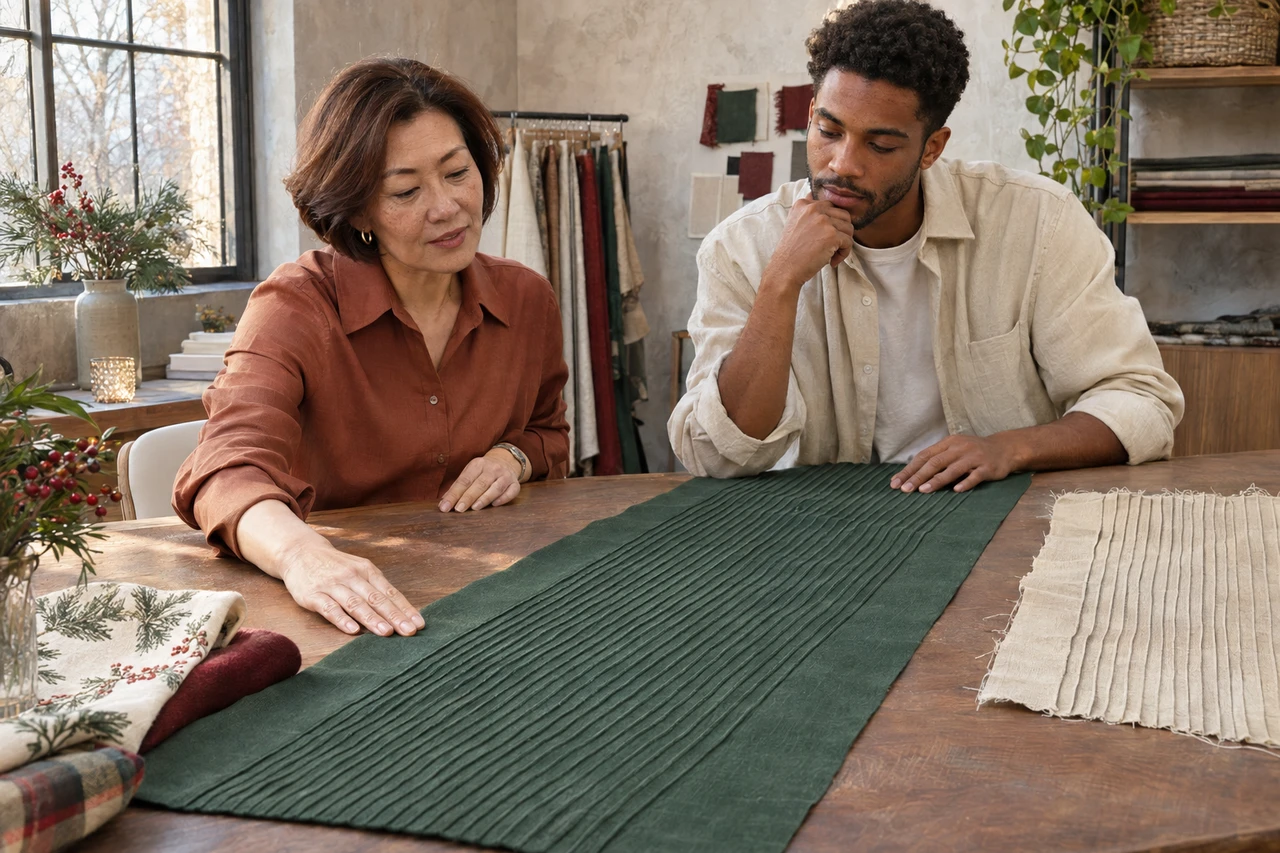
For an FY Bedding enquiry, send the reference, ranked design features, intended product, dimensions, market and quantity plan. Request confirmation of feasible construction and sample stages before making claims about availability or performance. The illustration here depicts a design discussion, not an existing stocked fabric. Release the project only when the buyer and supplier agree which floral details define success, which changes were accepted and which evidence supports the intended finished-product use.
Approve a named woven interpretation with its own material and sample record; do not treat the original print photograph as a jacquard specification.
Method references: Stephen Walters: Jacquard design and archive.