A small swatch can show a beautiful flower but conceal the spacing that makes the bedding work. It can also miss the main flower entirely. For distributors and private-label buyers, a floral sample book should answer two separate questions: what does the actual material look and feel like, and how does the complete pattern behave beyond the small piece attached to the page?
Choose the information before choosing the book size
Do not let the binder crop the decision
Record the artwork's repeat dimensions and identify the main flower group, connecting elements and open ground. Compare that area with the proposed physical sample leaf. If the leaf cannot contain the information needed to judge the design, decide how the missing view will be supplied. Increasing the page size, adding a fold-out or pairing a physical swatch with a clearly identified overview are different options with different handling costs.
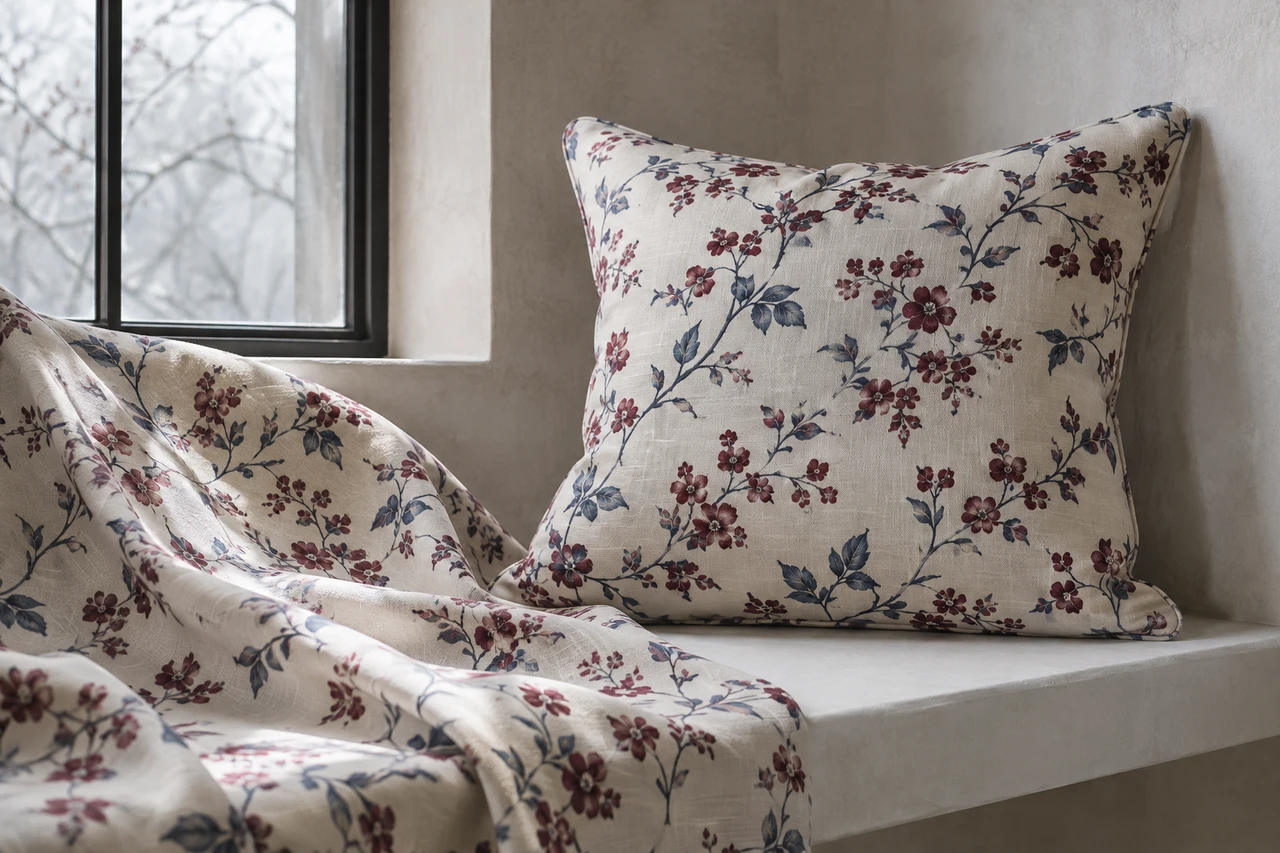
Use the FY floral collection and a specific design reference such as FR-01 to establish which direction the buyer is reviewing. Do not assume that a website thumbnail is an actual-size repeat or a verified fabric specification. The sample-book project needs its own artwork identification, material confirmation and measured physical sample before it can serve as a procurement reference.
Give the complete field and actual-size detail different jobs
Never let a reduced overview masquerade as fabric scale
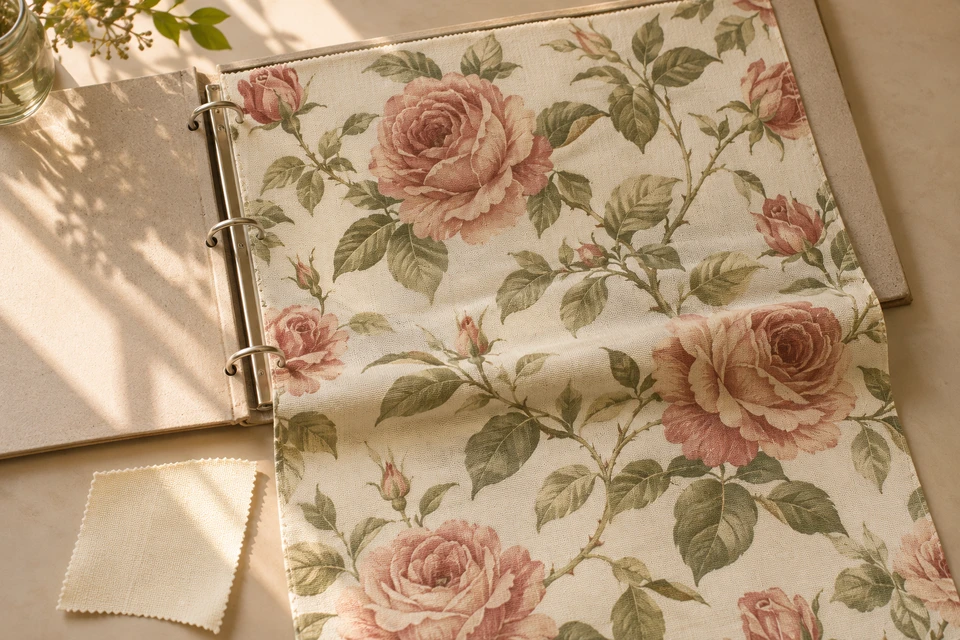
A full-pattern overview helps a buyer see spacing, direction and the relationship between motifs. A physical swatch shows the real material and actual printed detail at its supplied scale. If the overview has been reduced to fit the page, identify that fact in the eventual book artwork. The viewer should not need to infer the real flower size from the size of a printed flower on a small paper page.
Where a fold-out fabric leaf is practical, show how far it must open to reveal the intended field. Keep the attachment position clear of the most important motif and check whether the fold hides a critical part of the design. A large piece that cannot be opened easily in a showroom may be less useful than a smaller physical swatch paired with a well-explained overview and a separate larger review sample.
Set the crop for the physical swatch
A random cut can give buyers different impressions
Choose whether every book should contain the same identifiable crop or whether crops may vary within an agreed rule. A controlled crop makes distributor comparisons easier but can affect cutting yield. If variation is allowed, define what each leaf must still show, such as one recognisable bloom, a section of ground and a representative leaf. Do not promise identical samples if the production plan deliberately uses different parts of the repeat.
Check a small pilot group of assembled books side by side. Look for books dominated by dark leaves while others show mostly pale ground, or a flower centre hidden beneath the mounting strip. These differences can change the apparent colour story without any change in the source fabric. Resolve the sampling rule before making the full distributor quantity rather than asking sales teams to explain inconsistent leaves after delivery.
Make the book work at a real buying meeting
Attachment and handling must not obstruct inspection
Ask a buyer or sales colleague to locate the design, open the overview and lift the physical swatch using only the book itself. Observe whether rings, mounting strips or adjacent leaves prevent the fabric from being seen or touched. Test the proposed book on an ordinary meeting table and a narrow showroom counter. The useful format is the one that makes the material and pattern understandable in those settings.
If the swatch is removable, define how its identity stays with it after removal and how it returns to the correct page. If it is fixed, ensure the buyer has a route to request a larger evaluation sample. Keep the book's demonstration role separate from a final production approval. A frequently handled showroom swatch is not automatically a clean, current reference for accepting a later bulk shipment.
Quote the sample-book assembly as its own deliverable
Count leaves, overviews and replacement needs
Prepare a book specification listing the designs included, physical swatch dimensions, crop rule, overview method, attachment and outer format. Ask for the number of completed books rather than an ambiguous quantity of samples. Clarify whether replacement leaves are required and whether the chosen format permits a design to be removed without rebuilding the entire book. These decisions affect both the initial assembly and later collection edits.
Discuss the intended distributor audience and sample-book layout with FY Bedding through the project enquiry. Include the floral references and explain which decisions buyers should be able to make from the book. Confirm materials, sampling quantities and timing before ordering. An effective book can support selection and communication, but finished bedding approval still requires the relevant physical samples and project-specific evidence.
Every design needs an honest complete-pattern view and an identifiable actual-material sample. Test the crop, fold-out and attachment on a pilot book before approving the full distributor quantity.