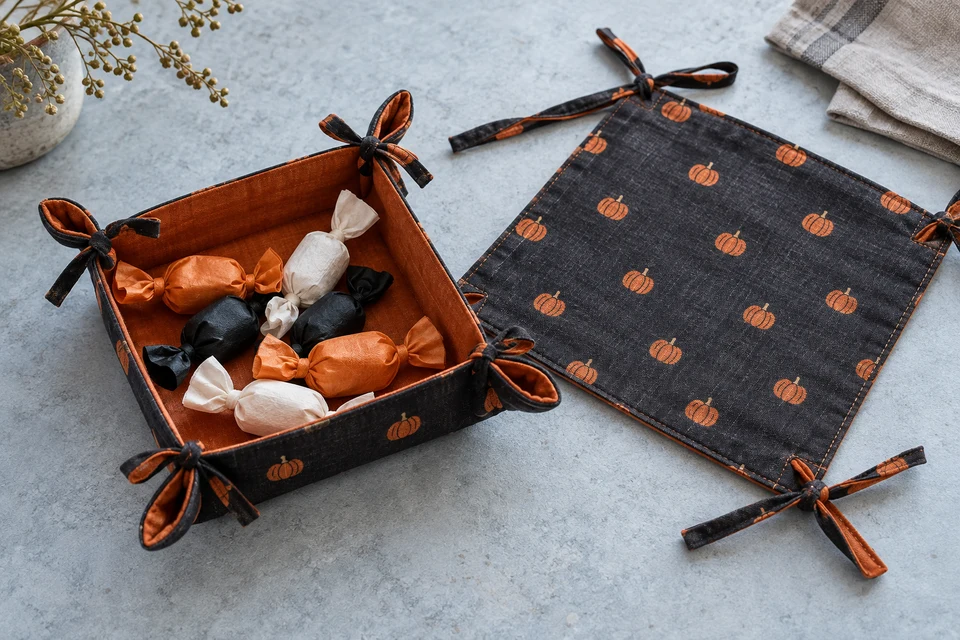
A flat fabric square becomes a shallow tray only when its corners are assembled. That transformation is the central buying issue: a larger flat square does not automatically provide the same increase in usable interior space. For a Halloween display tray, approve the flat pattern, tied configuration and intended contents together. Keep decorative display scope separate from any claim about carrying weight, food contact or protective performance.
Specify two sets of dimensions
Flat size and usable base are not interchangeable
Request the finished flat dimensions and the interior base dimensions after the corners are tied as intended. Define the side height and note how much fabric is consumed by the folded corners. Compare the actual intended display items with that base rather than calculating capacity from the outer square. A deep corner fold can make a visually large textile surprisingly small inside.
The size-set approval process helps when the retailer plans several tray sizes. Build and inspect each size using the same tying method. Keep the example contents separate from the supplied textile description, and make clear whether any demonstrator items in a photograph are included. This is not a substitute for a defined use brief.
- Record flat dimensions and assembled interior dimensions.
- Use the intended corner method for every size comparison.
Choose which face is visible after folding
Reversibility needs more than two attractive prints
Map the internal base, outer sides and folded corner faces on the assembled sample. A pumpkin print that looks upright when the square lies flat may turn sideways on two walls. Decide whether that is part of the design or whether directional motifs need a different layout. A small non-directional repeat may solve a different brief from an engineered front-facing image.
Use reversible-face approval to frame the discussion about labels and exposed seams. Check the binding or turned edge on both faces and note where the care information will sit. Do not call the tray reversible if the agreed fastening or label placement makes the second face unsuitable for the intended presentation.
- Inspect motif orientation on all four assembled walls.
- Approve label and edge appearance in both configurations.
Make the ties part of the pattern
Loose length and attachment position matter
Show the tie positions before assembly and the intended knot or bow after assembly. Ask the sample maker to demonstrate the sequence without pulling the corners into an unrealistic shape. Compare the two diagonal corners for symmetry, then untie and rebuild the tray. If the second assembly looks different, identify whether the cause is the instructions, the tie length or the fabric behavior.
The tie-end and contact review supports examination of exposed ends and attachment seams. Do not infer strength or child suitability from a decorative bow. Confirm the intended users and retail context, and obtain appropriate evidence for any proposed claims rather than adding them to the pack as generic promotional language.
- Photograph the flat tie positions and the completed corner.
- Repeat assembly using only the proposed customer instructions.
Review the supported display use
A tray-shaped textile is not automatically a carrier
Place the assembled sample on the actual supporting surface and add the planned display items. Observe base flatness, wall lean and whether the corners remain in position. If the buyer intends to move the tray while loaded, that is a separate requirement that needs an agreed construction and evaluation plan; it should not be inferred from the word tray.
For a candy display, distinguish individually packaged items from direct contact with unpackaged food. The claim substantiation matrix is useful for recording what has and has not been demonstrated. A decorative lining or generated illustration does not establish food-contact suitability, waterproofness or a safe carrying load. Keep the public description within the supported scope.
- Approve the actual supported display arrangement.
- Record separately any intended carrying or direct-contact use.
Compare flat-packed and preassembled offers
Include the work expected at the destination
Flat packing can change carton volume, but it also transfers assembly work to a retailer or customer. Ask for both the packaging dimensions and the proposed assembly instructions before comparing offers. Check whether the tie ends arrive tangled or pressed into the visible face. Open a packed sample and rebuild it without styling assistance, then compare it with the approved display reference.
The pack-dimension review can organize this check. Specify pieces per pack, print mix, label position and whether the tray arrives tied or flat. Confirm component minimums and sampling terms for the chosen reversible fabrics. Agree the feasible dispatch plan only after the customer-facing assembly and pack have been approved.
- Include assembly state and pieces per pack on the purchase line.
- Retain the flat and assembled references with one revision number.
Provide FY Bedding with the intended display contents, usable base size and preferred flat or assembled pack. Request a reversible sample that can be tied, untied and rebuilt using the proposed instructions.