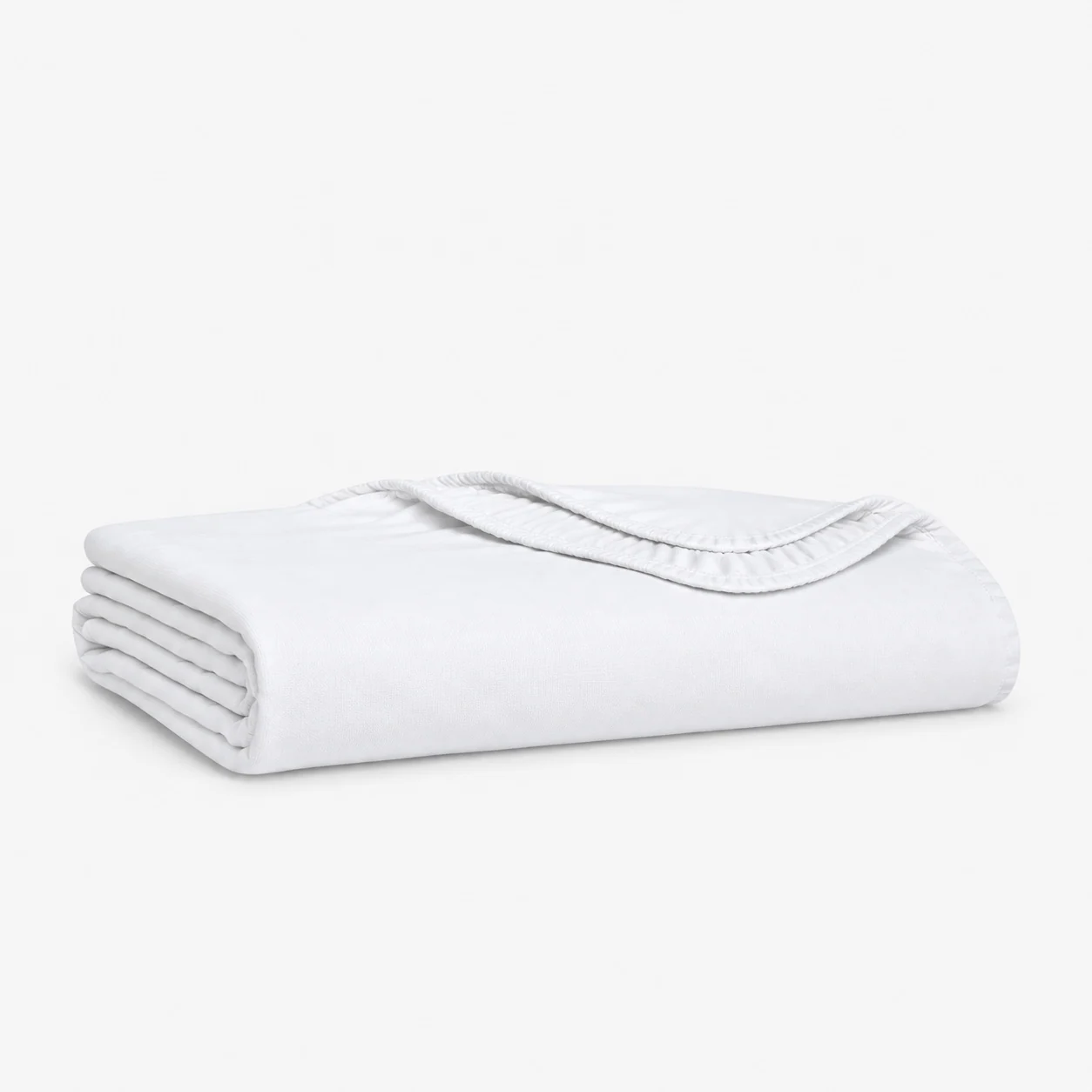
The cut end of a bedding strap can be visually minor but still affect the finished product through loose yarns, bulk or an exposed contact edge. Buyers should specify the finished webbing end rather than assume that a material description explains how it will be contained. This guide addresses end finish and contact on an identified bedding assembly. It does not prescribe heat-setting equipment, cutting techniques or a universal attachment strength, and it does not replace the strap's fit and retention review.
Map the exposed end
Identify where the finished edge can be touched
Show every webbing end in the product construction, including ends concealed inside a seam and those remaining accessible after assembly. Identify which surfaces can contact bedding, a mattress or the user during the intended handling route. The bill of materials should distinguish the strap material and end construction from a general notation such as elastic included. A hidden end and an exposed end may need different observable acceptance fields.
Record the strap's function separately from the end-finish question. For a topper, the anchor-strap fit review addresses the mattress interface and retention arrangement. A tidy cut end does not prove that the strap fits or performs its intended role. Likewise, an assembly that fits the bed can still have an unapproved exposed end that needs a construction decision before bulk release.
- Identify each end and its exposure.
- Record likely contact surfaces.
- Distinguish end finish from strap function.
- Keep concealed and exposed ends separately specified.
Define a production-intent finish
Request a construction reference rather than an improvised treatment
Ask the supplier to propose an end construction appropriate to the identified webbing and product. Record any fold, seam enclosure or other approved containment in the technical pack. The buyer's record should describe the finished result and the approved reference. Competent production personnel should determine safe and suitable manufacturing methods; procurement should not invent a heat or cutting process from the appearance of a sample.
Identify the material reference and relevant finish information supplied by its manufacturer. A different fiber composition or construction may require another technical assessment even when the webbing looks similar. Keep any proposed change visible rather than accepting it as a minor trim substitution. Where the supplier cannot explain how the end construction will be reproduced, retain that as a development question instead of releasing an attractive hand-finished sample as a bulk instruction.
- Record the proposed finished construction.
- Identify the webbing material reference.
- Leave manufacturing methods to competent personnel.
- Resolve repeatability questions before bulk approval.
Examine appearance and contact
Use the complete assembly in ordinary handling states
Review the finished end for accessible loose yarns, irregular edges, excess bulk or a contact condition outside the approved reference. Use consistent lighting and an identified sample. Do not apply an unrecorded force or abrade the edge informally and call the result a standardized performance test. The surface-damage framework can help separate observations about contact from assumptions about broader material durability.
Check the end in the product's assembled and normal handling states, not only laid flat on a table. A folded strap may expose an edge that is concealed in a front-view photograph. Record any interference with the adjoining seam, cover or attachment. Keep tactile observations scoped to the actual sample and reviewer; a comfortable appearance does not establish a universal skin-safety claim or approve use conditions that have not been assessed.
- Inspect the actual finished end.
- Record loose material and accessible edges.
- Include assembled and normal handling states.
- Separate observations from performance claims.
Compare post-care condition
Trace changes back to the identified construction
Where the product follows a care route, assess the relevant end-finish condition afterward using the project's agreed technical plan. Connect the evidence to the finished-product testing record. Record changes in containment, seam condition, edge presentation or adjacent textile damage without prescribing a universal number of cycles. The end finish is one part of the assembly and cannot independently approve all of its care requirements.
If a revised end is proposed, compare it with the former construction and identify the specific issue it addresses. A longer fold may change bulk or effective strap length, so recheck affected dimensions instead of considering the finish in isolation. Preserve the earlier sample and the reason for rejection. This makes the purchasing choice explainable and prevents a later supplier from returning to an unapproved construction under the same general material name.
- Use the agreed care and evidence plan.
- Record changes at the end and adjoining seam.
- Recheck dimensions affected by revisions.
- Preserve the reason for changing construction.
Release observable inspection fields
Keep the finished edge controlled through reorders
Define the inspection fields that can be checked against the accepted reference: presence of the specified containment, end position, accessible loose yarns and the agreed appearance criteria. Technical performance requirements should retain their own methods and evidence. The final inspection record should not turn a visual check into proof of strap strength or assume that an invisible end has the correct internal construction without supporting evidence.
Retain the approved sample and material reference for repeat orders, and require a controlled review when the webbing or end construction changes. Include the strap's purpose, exposure and intended care arrangement in the sample brief sent to the sourcing team. Those inputs let a supplier propose a reproducible assembly while keeping the buyer's acceptance focused on real product needs rather than a vague request for a cleaner cut or stronger-looking edge.
- Define checkable end-finish fields.
- Keep technical tests separately identified.
- Preserve material and construction references.
- Reopen the relevant review for substitutions.
Specify and approve the finished webbing end on the actual bedding assembly, preserving separate evidence for fit, attachment and care; do not improvise manufacturing treatments or infer performance from appearance alone.