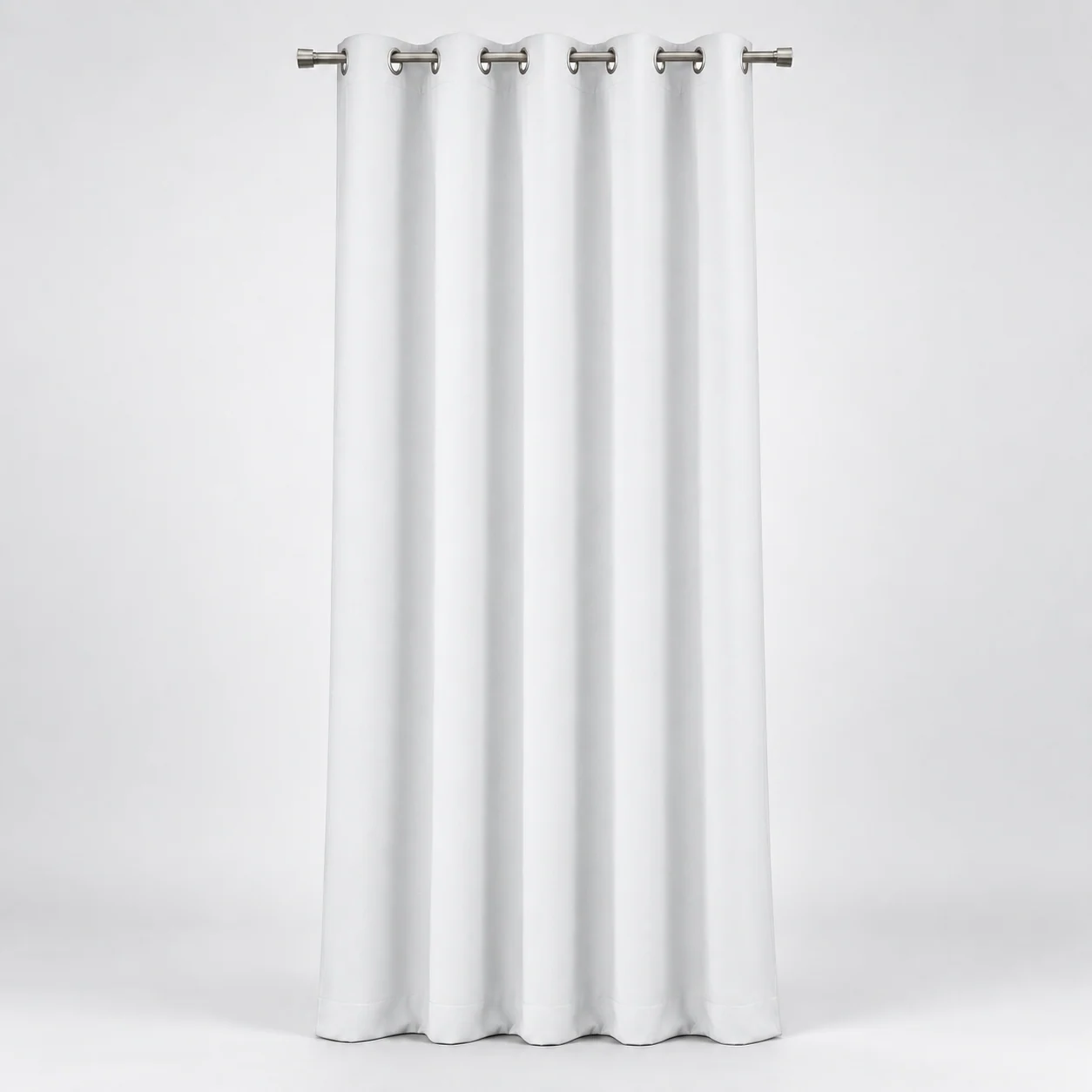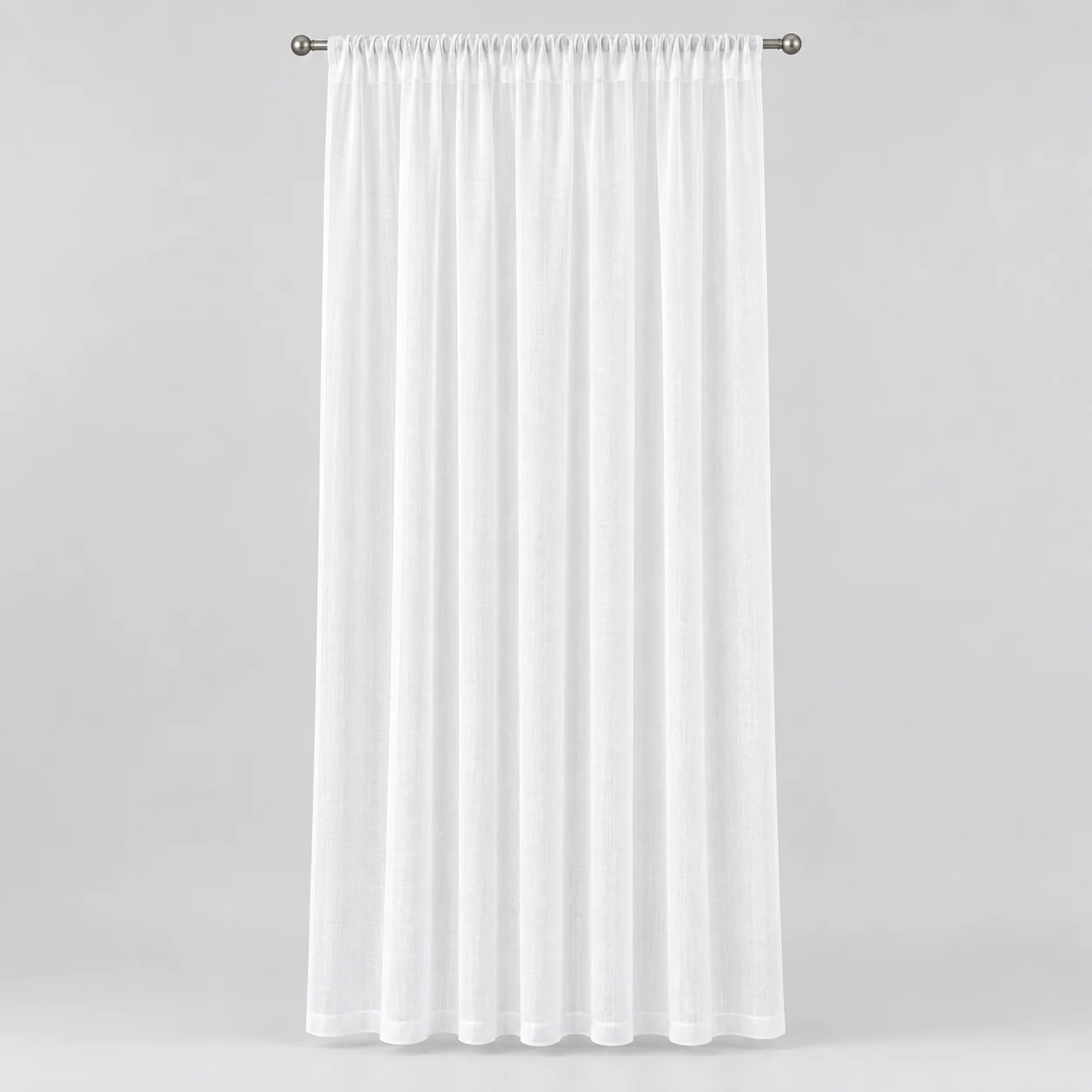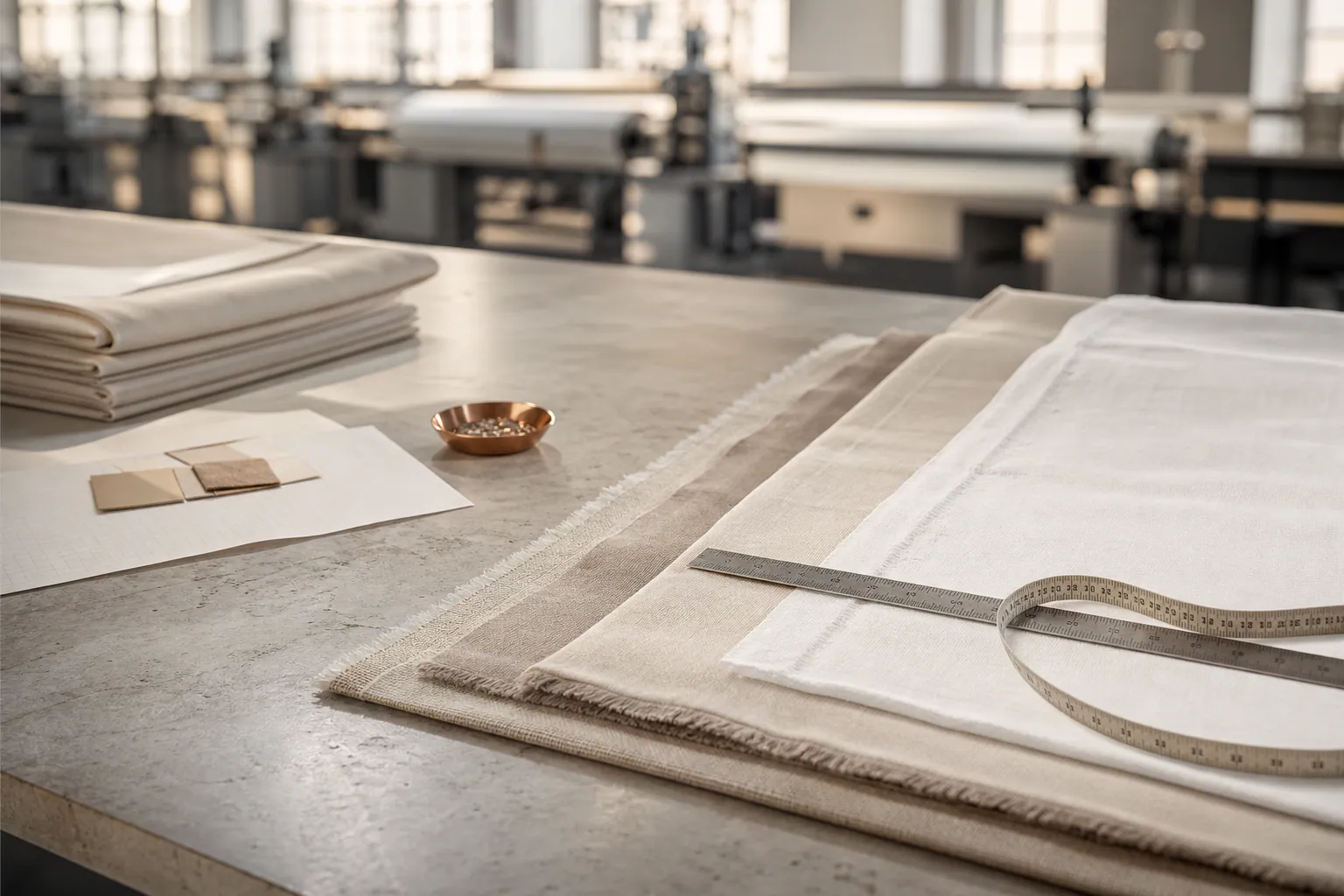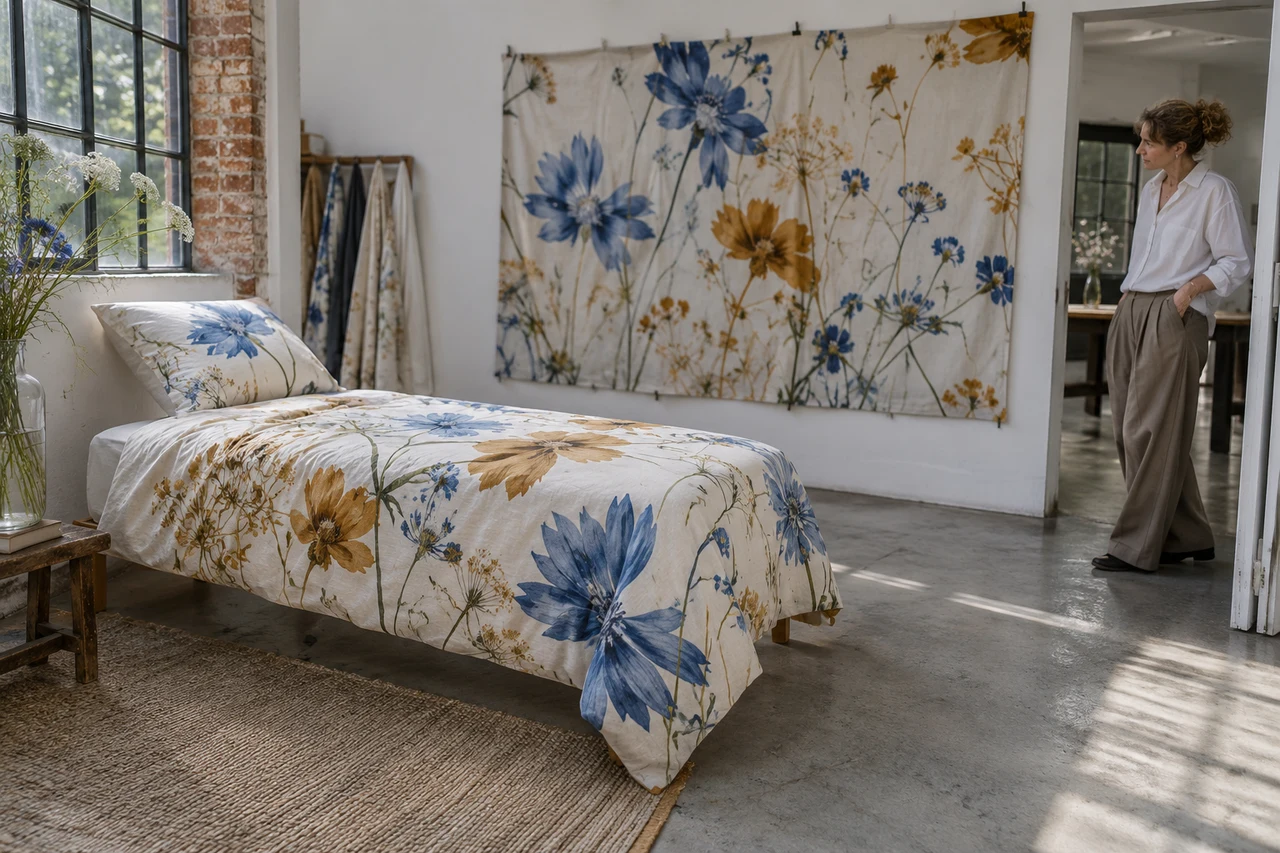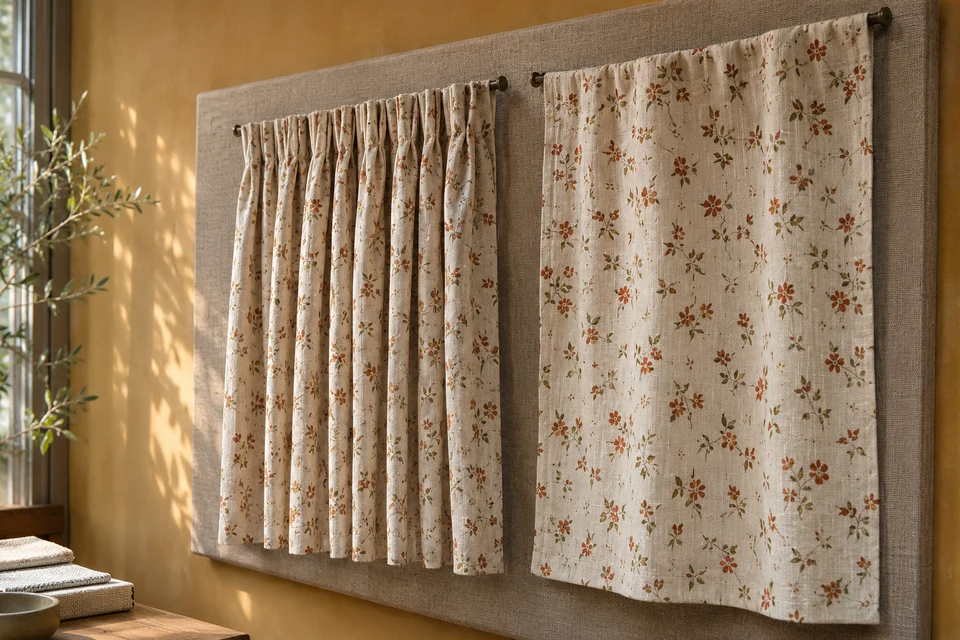
The buyer likes the flowers on a flat swatch. Once the fabric hangs from a rail, a fold can take a whole row of blossoms out of sight. Buying more fullness does not necessarily give a richer floral effect: at some viewing angles it buys deeper shadow and fewer visible petals. Compare two samples on the same span before deciding how much fabric to order. Treat a FY floral reference as artwork direction for a custom discussion, not a statement that the pictured bedding is already available as drapery.
Fix the covered width
Vary one part of the comparison
Give the workroom a rail span to cover, a heading construction and a reference for the printed face. Ask for two sample panels that cover the same span but use different amounts of flat fabric. For example, covering a one-metre sample span with 1.5 metres of finished flat width is a different trial from covering it with two metres. These are illustration values, not recommended fullness ratios. Define whether returns, overlaps, hems and heading allowances are included before comparing any quoted widths.
Use the same print scale, orientation and base fabric for both samples. If one is a heavy lined panel and the other is an unlined lightweight panel, the apparent difference cannot be attributed to fullness alone. Short drops can be useful for a first screen, but do not assume a small header sample predicts the fall of a full-height curtain. Mark the sample's purpose on the review: judging motif visibility, not approving every aspect of the final hanging hardware or drape.
Look at the parts of the repeat that disappear
Read the panel from three positions
Stand directly in front of each sample with both panels drawn to the same span. Count visible complete flower clusters across a fixed central area and note any strong line where stems converge. Then step to one side, as a guest would when entering a room. A row that looked balanced head-on can collapse into a dark stripe at an angle. The number is a discussion aid rather than a universal quality limit. The buyer may actually prefer a quieter, more broken-up floral.
Photograph each view from the same height, distance and exposure. Open the panels partway, then bring them back to the agreed closed position without dressing every fold by hand. If the decorative effect depends on a stylist concealing a conspicuous gap, say so before the design is offered to a hotel or a retailer. Repeated, natural closure is a different expectation from one permanently dressed showroom window.
Decide how a pair should meet
Investigate the leading edges
A full-width fabric swatch cannot show how two panels read where they meet. Hang a pair, or bring two sample leading edges together at the center. Decide whether a broken blossom at that junction matters. A scattered design might tolerate random meeting edges. A conspicuous row of bouquets might need a defined cut start, or an intentionally plain interval rather than an attempted match that is always slightly off. Mark the preferred treatment directly on the working drawing.
Ask what happens when a size change adds a seam or shifts the first pleat. A change in repeat placement affects material take-up as well as appearance. Request a layout for the widest intended panel before applying a narrow-panel price to a whole room program. If the buyer has selected the visual language of Soft Garden Roses reference FR-01, identify it in the brief alongside the intended curtain use; drape, lining, light transmission and care are decisions for the proposed construction.
Compare cost at the window, not by the metre
Sign off the actual coverage
Seek a price per completed pair for the same rail span, drop and leading-edge treatment. Include the fabric used inside folds and any cut loss attributable to matching. Ask separately about minimums for a new printed ground or a change in scale. A lower price per metre may still produce a higher total cost when more fabric is needed to deliver the agreed view. Conversely, the fuller option may be worth buying if it suppresses visual clutter in the actual room.
Send FY Bedding the reference, rail and drop measurements, heading preference and photographs of both fullness trials. State whether the room owner expects a repeatable closed view, a decorative stationary panel or a curtain used repeatedly during the day. Approve the chosen amount of gather with the sample hanging; a photograph of the print on a cutting table is a useful color reference but cannot record that decision.
Compare the same rail span, face fabric and heading. Keep the flat width and covered width with the approved photographs so the workroom can reproduce the selected effect.