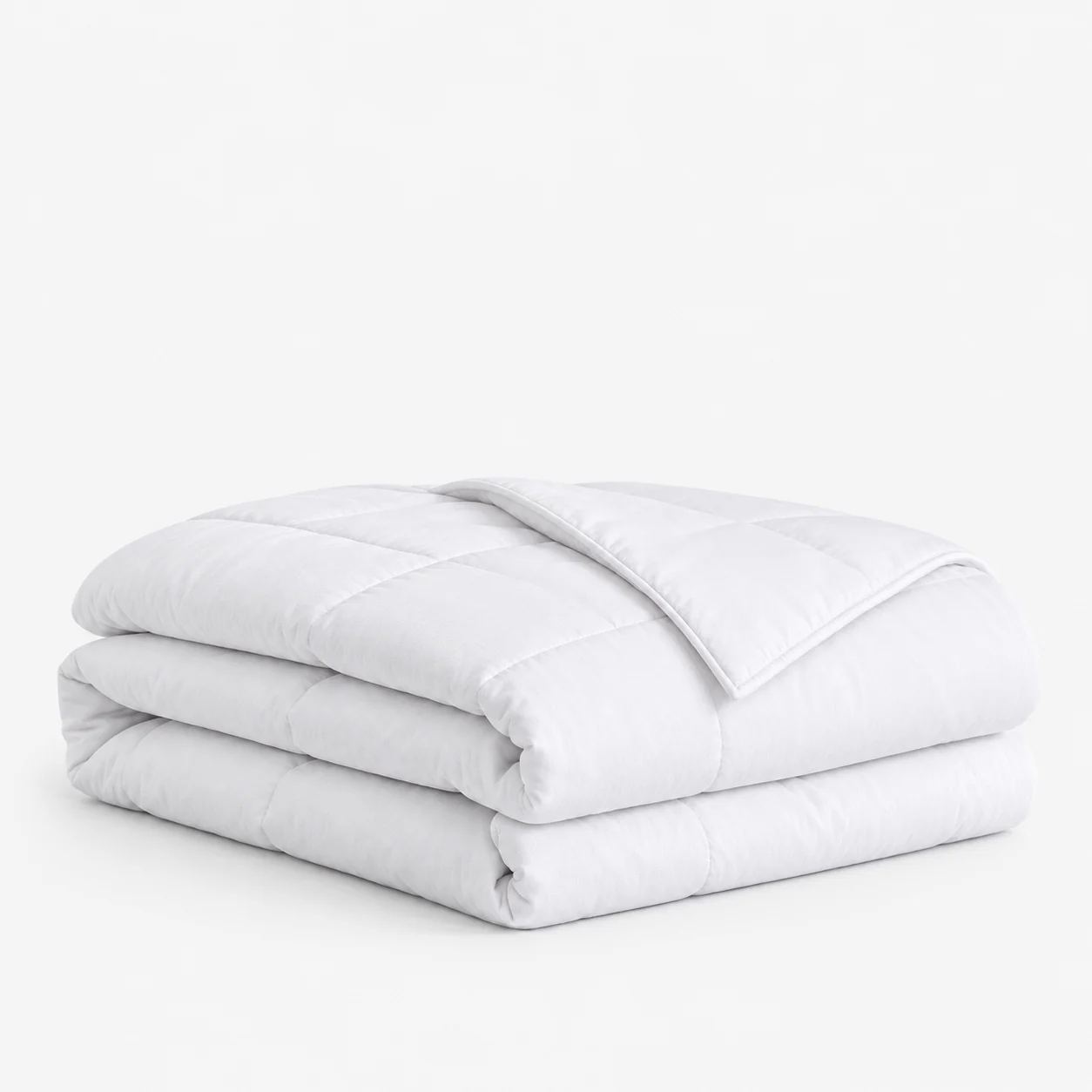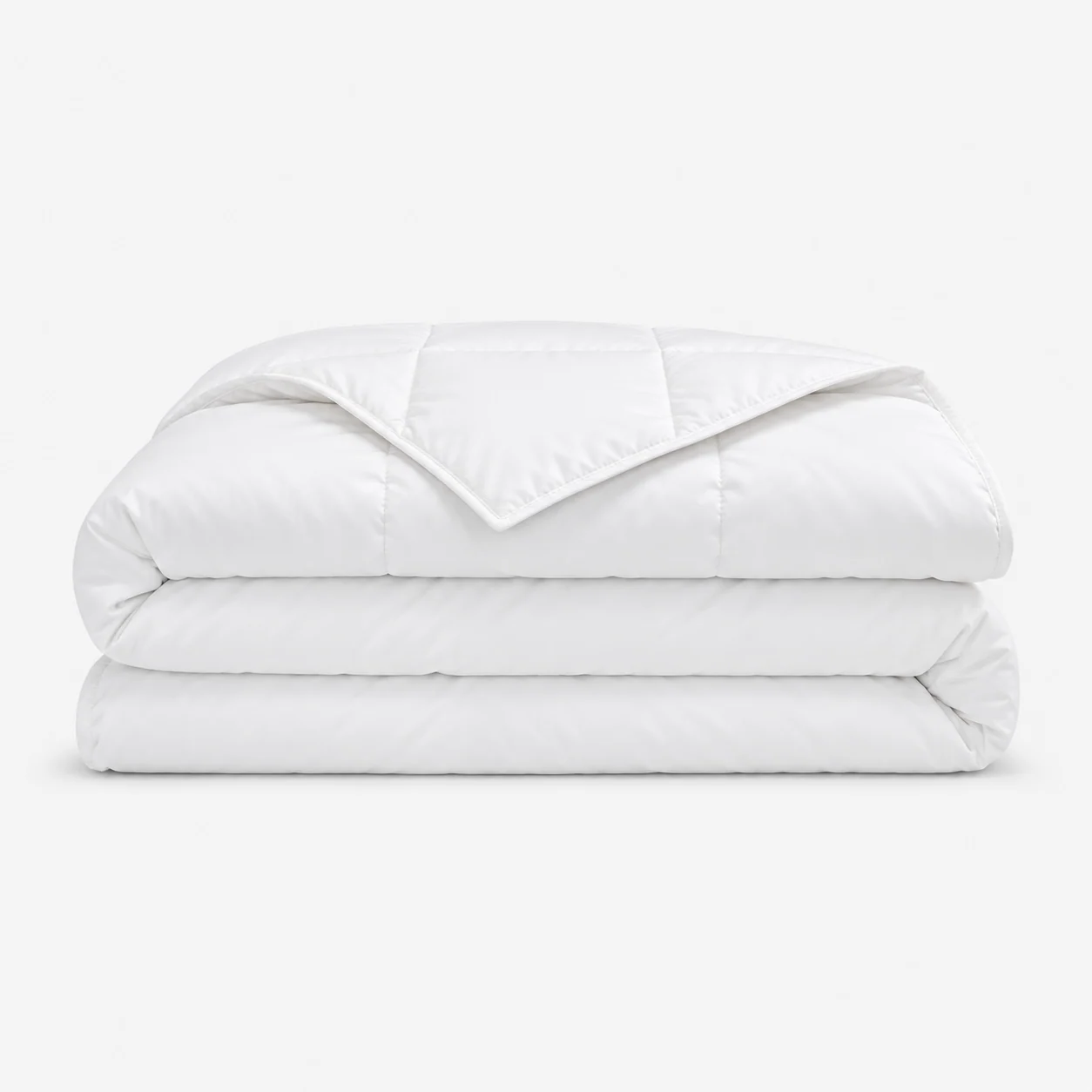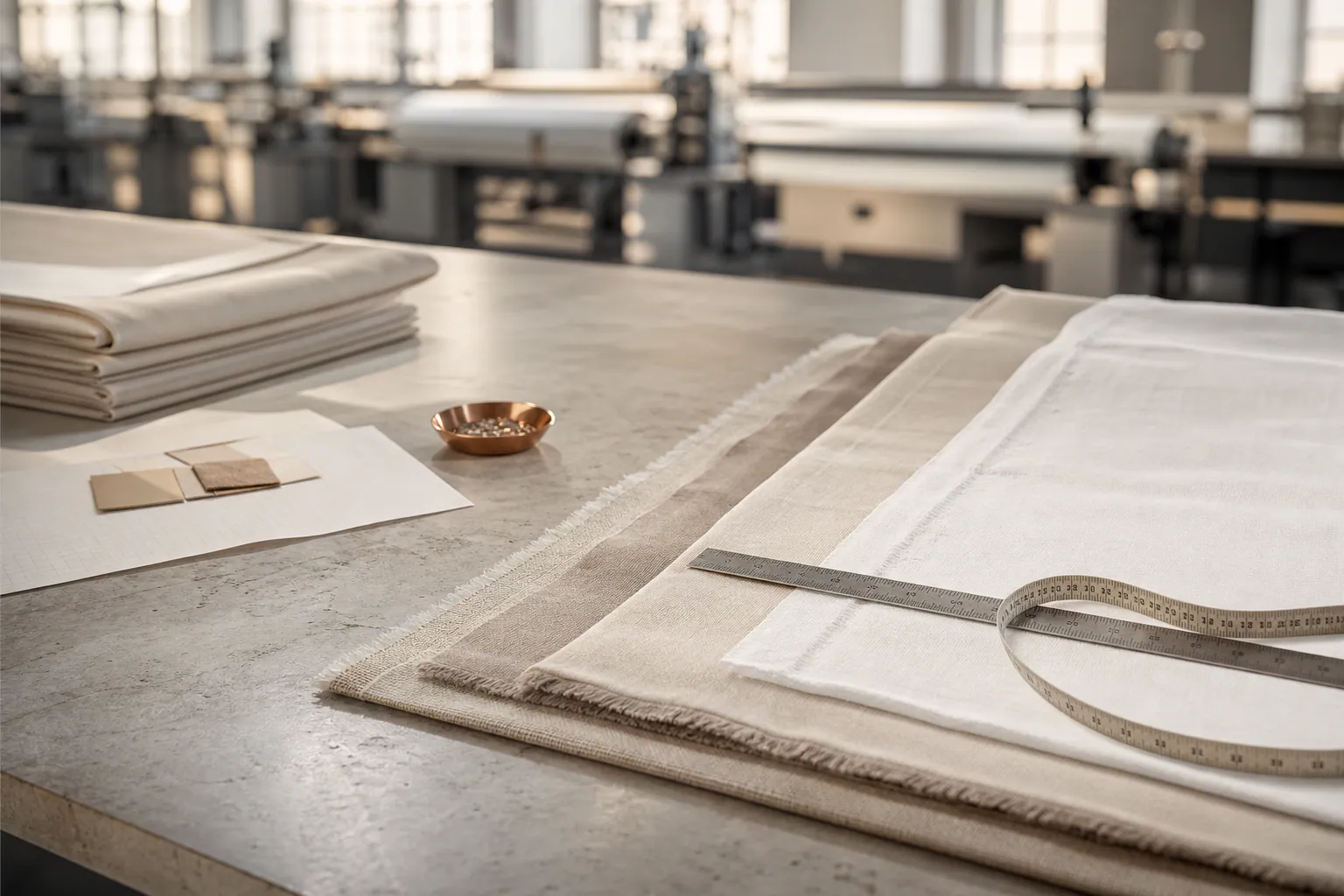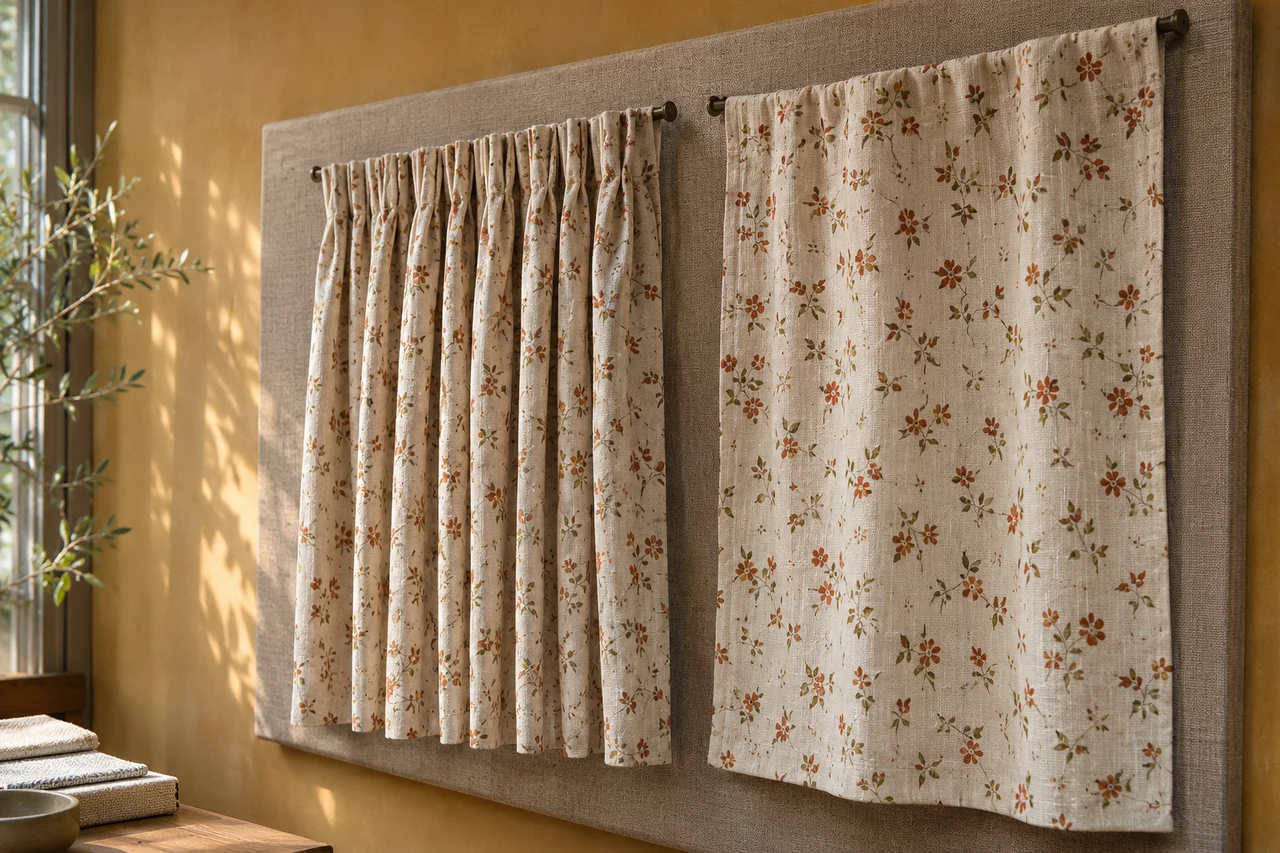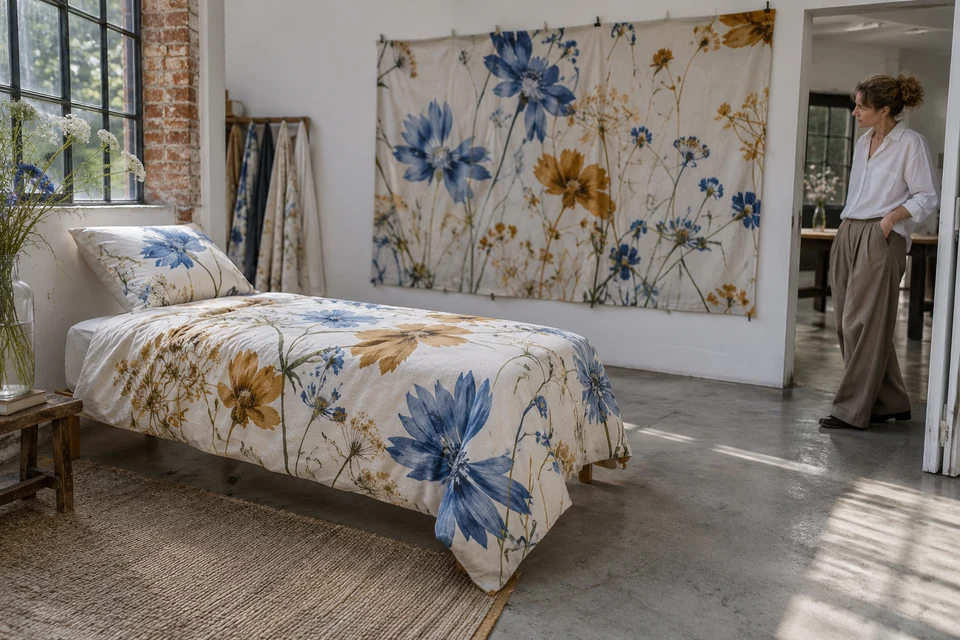
A large bouquet can fill the top of a twin bed and disappear over both edges of a king if the cutting plan changes. The word king does not define the image area; neither does a photograph of one neatly dressed sample. Use the floral collection to discuss the kind of flowers and spacing the buyer likes. Then turn that preference into a decision about what someone standing at the foot of each bed must be able to see.
Define three windows on each finished cover
Draw top, drop and turnback
Ask for finished cover dimensions for the intended market, the insert to be used for photography and the mattress width in each display. Draw the whole cover, then a second rectangle for the part expected to lie on top. Add the planned fold at the head. A seller may photograph the bed with a deep turnback that removes the largest bouquet from view, even though the printing and cutting match the flat drawing precisely. Mark the intended head and foot explicitly.
Use tracing paper over a scaled print layout for a first comparison. Do not enlarge the art just because the bed gets wider. First slide the twin and king windows over the same repeat at the same scale. Mark complete flower heads, cropped heads, strong stems and open background separately. A buyer who cares about preserving a single central spray has a different specification from one who wants a comparable balance of color across the two beds.
Decide what may vary
Separate random cutting from a placement commitment
With a repeating all-over print, two covers of the same size can be cut at different positions in the repeat. That may be an acceptable feature if the design is evenly distributed. It can become an expensive mismatch if the retailer sells from a photograph showing a specific centered bouquet. Compare at least two plausible cut starts per size before selecting that route. Ask the artwork owner for a repeat layout that can be used for development; a product thumbnail does not define print dimensions.
An engineered placement can offer more control, but the supplier needs the target point, orientation and allowable movement relative to the finished seams. Ask how that decision changes cutting yield, fabric consumption and the number of size-specific setups. Seek separate pricing if the king needs a different arrangement rather than a larger copy of the twin. Do not present either cutting method as the method of an existing floral reference unless project evidence actually says so.
Dress both beds at the agreed scale
Check the difficult sightline
If two furniture sizes are not available in the sample room, lay out both full-size top rectangles and raise the edges over a support to simulate the drop. Keep that mock-up identified as a placement trial rather than a substitute for a filled-cover sample. Photograph the surface from the foot and at a side angle; the side angle reveals where complete flowers become half blooms. Where the duvet wraps over a rounded insert, a flat drawing is a poor guide to the exact visible boundary.
If the buyer selects a pattern direction using the Soft Garden Roses reference FR-01, include the FR identifier and an annotated copy of the preferred visual in the private brief. The proposed construction, repeat and dimensions still need confirmation. A generated editorial illustration or an image on a collection page cannot verify how an individual cover will be cut. Agree what discrepancy demands a new sample: a missing central bloom might matter more than a partial leaf at a side seam.
Connect the placement approval to the assortment
Give e-commerce the right image
A buyer may approve varied crops but still need a product photograph representative of that range. Give the retail team both size views and identify which one is the hero for each listing. If flower positions vary from piece to piece, do not lead the merchandising team to expect a replica of one photograph. For a fixed placement, keep the approved window drawing and the measured anchor points together with the cutting revision.
When seeking a custom quote from FY Bedding, send finished sizes, preferred flower scale, top-width windows, intended turnback and the quantity in each size. Ask for alternative costing only where the visual tolerance permits it. The most useful approval sentence is specific: which flower group must remain on the visible top, which edges may lose detail, and whether variation within a size is intentional.
Keep a pair of buyer-approved views labeled by bed size, not just one flat print swatch. Reopen the placement check if the print scale, finished width or styling fold changes.