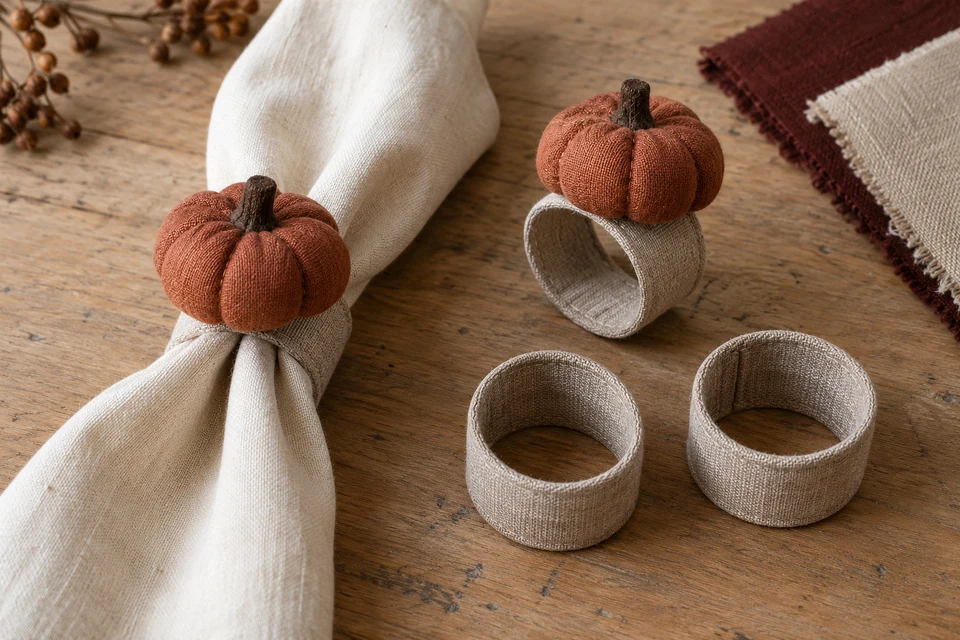
A fabric pumpkin napkin ring combines two products in one small assembly: the band that receives the napkin and the decoration that gives the setting its Halloween character. A large pumpkin may photograph well by itself but dominate a place setting or turn away when the napkin is moved. Approve the whole assembly with the intended napkin, then decide how it will be counted, packed and replaced as part of a retail set.
Separate the band from the pumpkin
One overall dimension cannot describe both parts
Record the finished band opening and width independently from the pumpkin height and widest profile. Identify whether the band is rigid, flexible or adjustable and what it is covered with. For the pumpkin, specify the number and appearance of lobes, the stem construction and the visible attachment area. A hollow decorative form and a filled soft form may look similar in one image but require different quotation and inspection descriptions.
Add these components to the bill of materials. If a supplier offers an existing band with a newly developed pumpkin, record which component is standard and which needs sampling. This distinction helps explain minimum quantities and avoids treating every color change as the same development job.
- Measure the usable band opening, not the ornament outline.
- Identify the stem, fill and attachment components separately.
Judge the decoration on a complete setting
A pleasing loose sample can be too large in use
Prepare the actual napkin fold and plate arrangement intended for the range. View the pumpkin from the seated guest position and from the side, then lift and replace the napkin as it would be handled. Observe whether the decoration turns, hides the stem or obscures too much of the cloth. The purpose is to choose a coherent seasonal presentation, not to derive an attachment-strength claim from casual handling.
Keep the napkin identity with the ring sample. The existing napkin-ring contact review addresses the effect on the cloth; this approval addresses the fabric ornament's scale and orientation. Photograph both together so a later supplier does not reduce the band while retaining a large decoration that no longer sits as intended.
- Approve a front and side setting view.
- Record the napkin fold used to judge the ornament.
Make the seasonal color family intentional
Matching does not require every component to be identical
Compare a muted orange pumpkin, neutral band and contrasting stem under the lighting relevant to the intended retail setting. Ask whether the colors are meant to match a table runner exactly or merely coordinate. A pumpkin made from a textured woven cloth will not necessarily present like a smooth printed napkin. Agree the relationship rather than demanding an undefined visual match across unlike materials.
Use the color and material board to retain the actual combination. Include alternate colors as named options with their own component references. If the buyer consolidates quantities across several pumpkin colors, ask the supplier which fabric, fill, band and assembly minimums can actually be shared; do not infer a combined minimum from a single sample.
- Name exact-match and coordinating-color expectations separately.
- Keep swatches of every visible component with the approved assembly.
Inspect a complete multipiece pack
Set consistency is visible at the table
Lay every ring from a proposed retail pack on the same surface and compare the pumpkin profiles, stem directions and band shapes. Then set them around the table. Small differences that are unobtrusive in a basket of loose accessories may look distracting in a repeated place-setting arrangement. Define the permitted variation using physical examples, particularly if hand-shaped lobes or stems are part of the design.
The set-completeness checklist can document the promised count and color assortment. Review whether ornaments press against one another in the pack and whether the receiving team can count them without dismantling a presentation tray. If replacement singles will be offered, agree how their color and shape references will be maintained.
- Compare one full selling set, not a selected single ring.
- Confirm pack count and any mixed-color assortment.
Write the offer without adding unsupported functions
A decorative accessory needs a clear boundary
Describe the item as the approved decorative napkin-ring assembly, listing the supplied quantity and excluding the napkins or plates if they are not included. Do not call it a toy, washable item or food-contact accessory merely because it appears on a dining table. Intended users, cleaning advice and any relevant safety assessment must be resolved for the actual construction and destination before sales copy is released.
Use the claim substantiation matrix to prevent a seasonal photograph from expanding the product's purpose. Request a quotation with component identity, sampling stages, pack count and confirmed timing. A simple pumpkin decoration can be a useful collection accent, but its commercial unit should be as clear as that of the larger textiles beside it.
- Check the scope of care and intended-use statements.
- Keep delivery expectations conditional on the confirmed order plan.
Review one full set with the intended napkin, not just a single attractive pumpkin. Send FY Bedding the band, ornament, color and pack requirements so sampling and quotation can be scoped around the complete accessory.