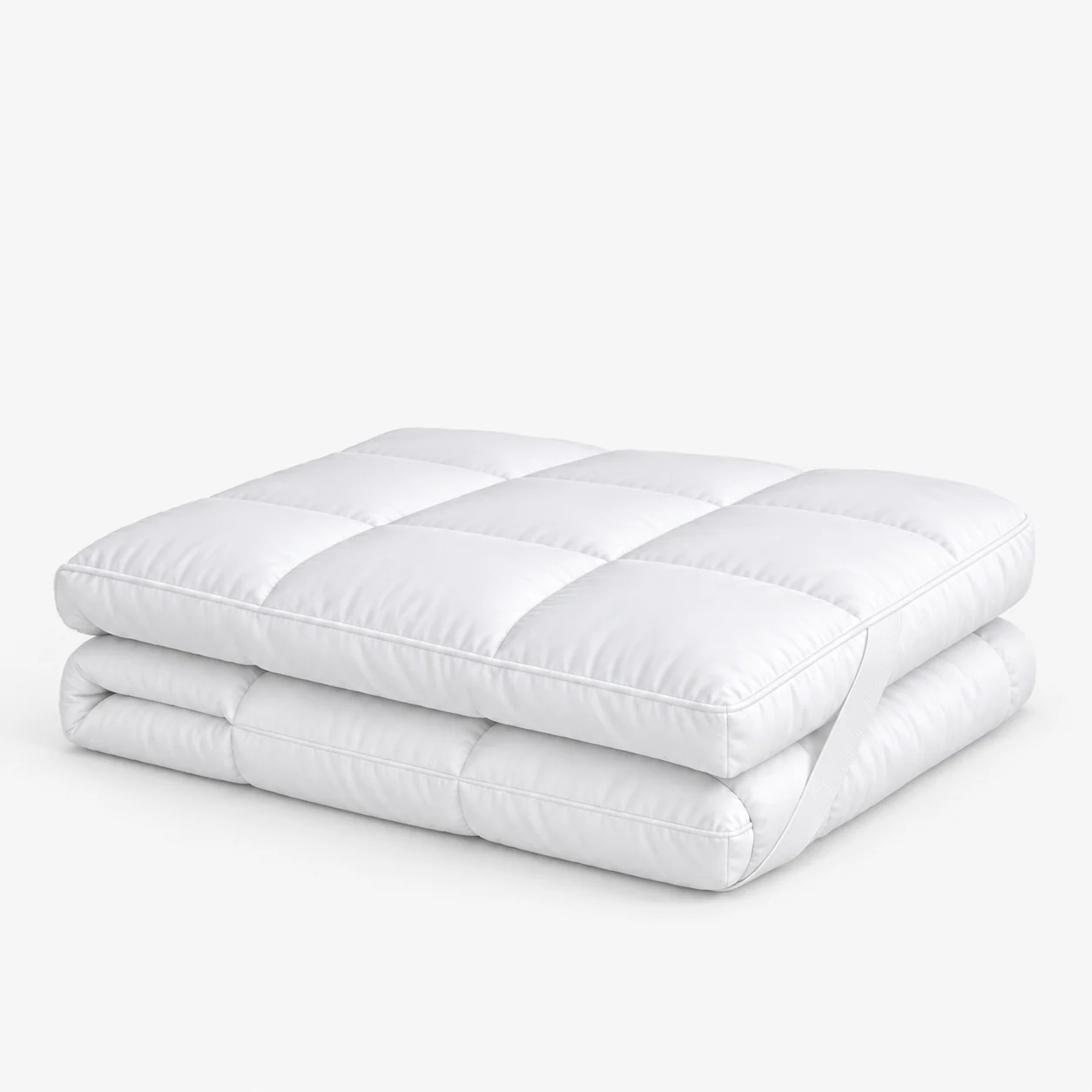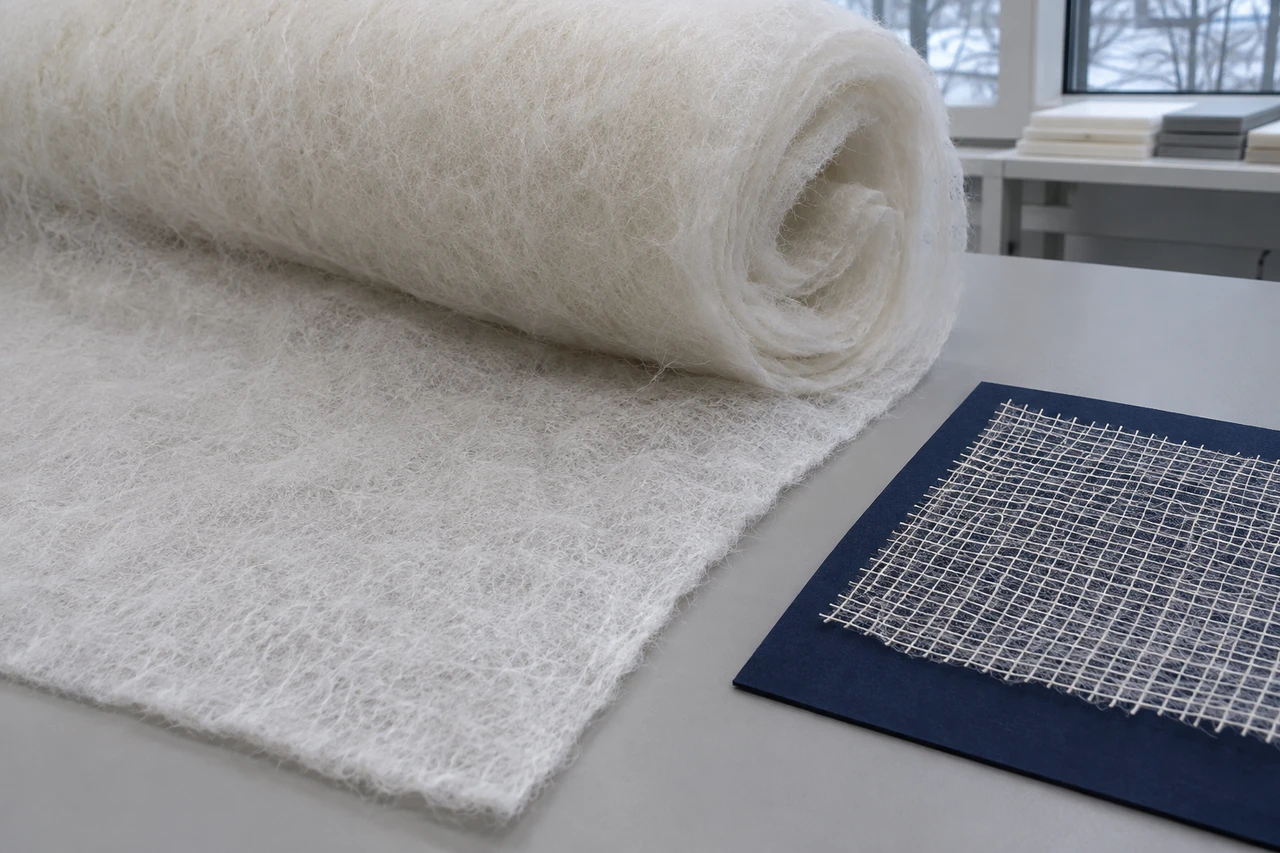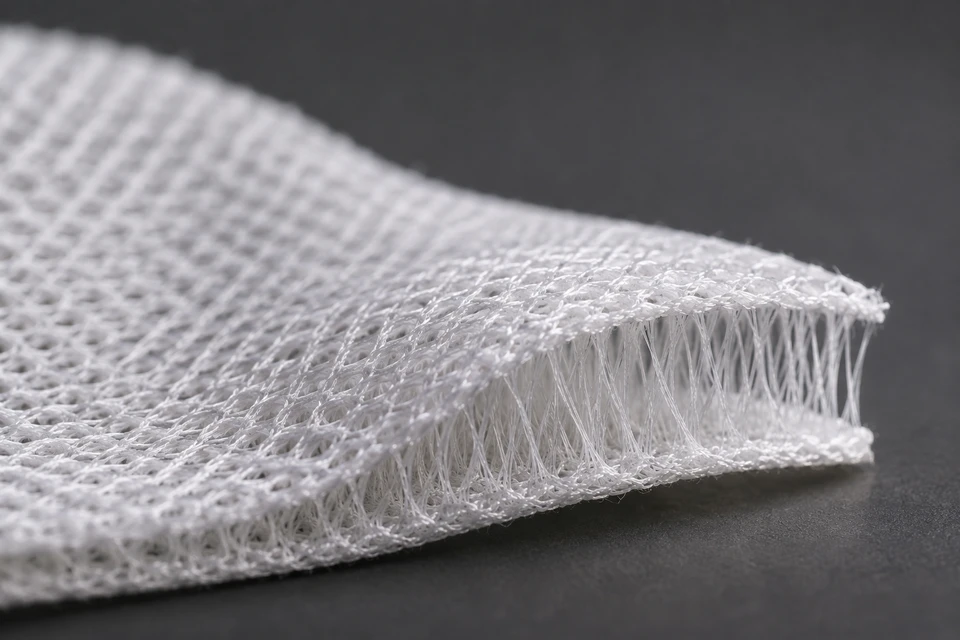
Mesh is an appearance description, not a complete specification for a mattress spacer component. A buyer needs to know whether the offered textile has two separate faces held apart by a connecting structure, how that structure is described and where it will sit in the finished assembly. Start with those construction questions before comparing thickness figures or accepting claims about airflow, cooling or support.
- 1. Identify the three-dimensional structure
- 2. Describe each layer without assuming a shared material
- 3. Compare thickness under a defined condition
- 4. Put the sample into the intended mattress assembly
- 5. Separate construction approval from functional claims
- 6. Make repeat supply comparable to the approved sample
Identify the three-dimensional structure
Two faces alone do not establish a spacer layer
Published research on knitted spacer fabrics describes two cover surfaces held at a distance by connecting spacer threads. Use that structural distinction when reviewing a proposed mattress component. Ask for a sample showing both faces and an unobstructed edge or cross-section. A mesh photograph taken from above may reveal the surface openings while hiding the construction beneath them. A double-faced textile without the intended spacing structure is not automatically the same proposal.
Have the supplier identify the top face, lower face and connecting layer in its construction description. If a laminate, foam or other component is included, show it separately rather than letting the word spacer cover the entire assembly. The purchasing drawing should make clear which part is being quoted. This prevents a stand-alone textile price from being compared with an assembled composite without recognising that the supplied scope is different.
Describe each layer without assuming a shared material
The connecting yarn deserves its own line
Request the proposed material description for each face and for the connecting yarn system. Do not infer that every component has the same composition because the surface looks uniform. Record the supplier's construction code and the sample identifier alongside that information. If a specification leaves a component open for development, mark it as unresolved rather than filling the gap with a likely material based on a generic product example.
The buyer should also understand whether the faces have different structures or intended orientations. A supplier may propose one face toward a cover and another toward the underlying assembly. Ask for that orientation to be shown in the sample pack and installation brief. Do not rely on colour alone to distinguish the faces, particularly if the final product is white or both surfaces appear similar. Use a documented identification method that survives the handoff between development and assembly teams.
Compare thickness under a defined condition
A free-standing measurement can mislead
A compressible textile can present differently when measured, handled or placed under another layer. Ask the responsible technical party to define how the quoted thickness is measured and what sample condition applies. Record the method, loading condition where relevant and any preparation used. The purpose is not to impose a universal test from an unrelated article; it is to make the two offers being compared refer to a sufficiently consistent basis.
Research on spacer textiles also shows why test setup and sample preparation matter when interpreting mechanical measurements. Treat published studies as context, not as test results for the supplier's product. If an offer includes a thickness or compression figure, request the associated sample identity and method. A number without its conditions should remain an unresolved comparison point. Never convert a study's result for a particular experimental structure into a performance claim for an untested FY component.
Put the sample into the intended mattress assembly
Seams and surrounding layers change the context
Ask for a representative assembly sample using the proposed adjacent materials and attachment route. Observe how the spacer sits at edges, joins and any compressed zones created by construction. A loose sheet on a bench does not show all of those relationships. Keep the article's intended dimensions and placement clear so a supplier can distinguish the textile component from the finished mattress cover or other assembly it may become part of.
Discuss any change that reduces the intended gap or alters the edge presentation with the design and technical teams. The remedy should be proposed and reviewed for the actual assembly rather than improvised by purchasing. If bonding, stitching or another attachment method changes, update the construction record and determine what needs re-evaluation. Approval of the unassembled textile should not automatically approve every later way of incorporating it into a product.
Separate construction approval from functional claims
Visible space is not measured cooling
The presence of openings and a connecting layer does not establish a particular airflow, temperature or comfort result. Define which functions the project actually needs and ask a competent testing party to help specify appropriate evaluation of the relevant component or finished assembly. Keep the distinction between a textile test and a whole-product test explicit. Results obtained on one construction or configuration should not be extended to another without a justified basis.
Review proposed marketing language against the evidence available. Claims about cooling, pressure relief, breathability, hygiene or safety may require different support and careful scope. Do not use this construction checklist as a certification or a claim substantiation document. If the project has destination-specific requirements, resolve them with the appropriate specialist before release. The procurement record should show what has been established, what was tested and which statements remain unapproved.
Make repeat supply comparable to the approved sample
A similar mesh face is not enough
Retain a reference that shows both faces and the connecting layer, together with the construction code, component descriptions and agreed measurement conditions. Ask the supplier how changes in connecting yarn, face structure or assembly route will be declared. A later sample may look similar from above while differing in the structure that created the spacing. Use the full component record to decide whether it is equivalent or needs renewed approval.
For a project enquiry with FY Bedding, describe the intended use, component placement, dimensions, quantity, proposed adjacent layers and evidence needs. Ask whether the requested textile or assembly can be developed and what information is required for a meaningful quotation. Do not assume an existing photograph confirms availability or a particular performance. Proceed when the supplied scope, three-dimensional construction and project-specific validation plan are sufficiently clear for both parties to work from the same specification.
Identify both faces, the connecting layer and the supplied assembly scope. Compare thickness only with its measurement conditions, and keep all airflow, cooling or comfort claims separate from visual construction approval.
Method references: Applied Composite Materials: research on knitted spacer structure and measurement context.