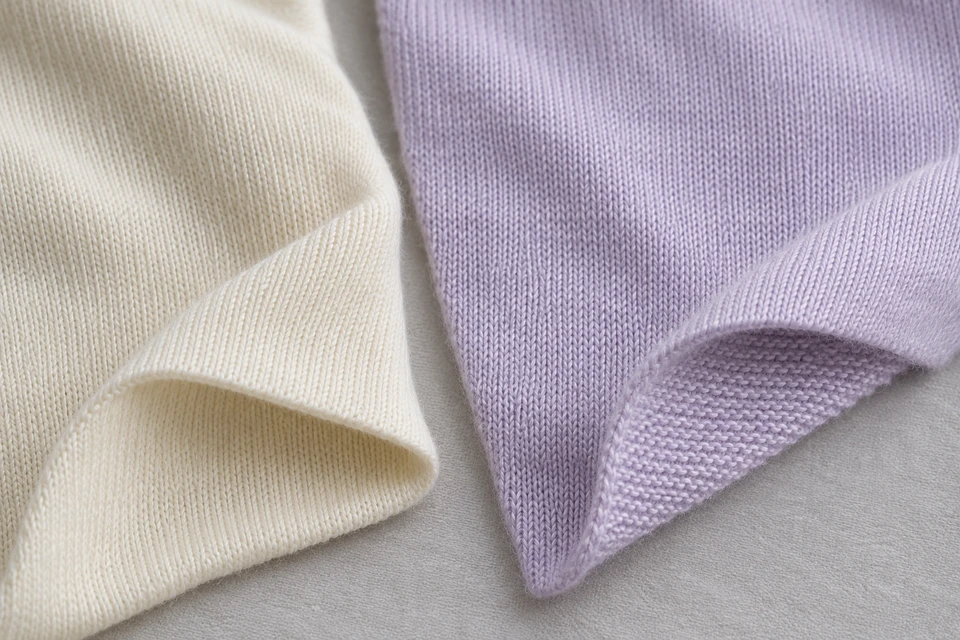
A smooth cotton knit photographed from one side can leave the buyer uncertain whether the offer is interlock, single jersey or another construction. That uncertainty should be resolved before a product team builds its size and sampling assumptions around the fabric name. Request a two-face material reference and the supplier's construction declaration. The aim is not to diagnose every knit from a photograph, but to prevent an ambiguous selling description from becoming an uncontrolled purchasing specification.
Ask for the precise knit construction
The word jersey may be used too broadly
Begin with the exact construction proposed for the bedding component, alongside fibre content and the supplier's fabric reference. Ask whether jersey is being used specifically for single jersey or loosely for knitted fabric in general. The distinction matters when comparing offers. A buyer who requests interlock should not receive an unspecified smooth knit simply because its photograph resembles the reference. Equally, do not assume that every supplier uses the same shorthand in a sales catalogue; resolve the term in the project record.
CottonWorks identifies interlock within double knits and explains its interlocking rib structure. This is a knitted construction, not two separately produced cloths glued together. Its guide also notes the similar appearance of interlock's two faces. Those principles support the questions to ask, but they do not verify an unlabelled sample. A material image, including the illustrative image in this guide, is not a laboratory identification. Keep the supplier declaration and the actual sample connected before making a commercial decision about the offered fabric.
Request both faces of the same specimen
Avoid comparing unrelated front and back photographs
Ask for a physical cutting large enough to turn over and examine without losing its identity. Where photographs are needed first, request the full specimen, a turned corner and close views of each face from that same piece. Keep lighting and magnification consistent. A face image from one roll and a reverse image from another cannot establish the structure of either. Record the sample reference on the working documents rather than relying on an attractive background or a familiar colour to keep the photographs identifiable.
Basic single jersey commonly presents visibly different knit and purl appearances on its two faces, while interlock can look similar on both. Use that difference as a prompt for closer examination, not an absolute identification rule for every textured, printed, brushed or heavily finished fabric. If the visible structure is obscured, ask the supplier for a suitable unprinted or less obscured construction reference and explain how it relates to the offered material. Do not ask a photographer to sharpen the image until an uncertain structure merely looks more convincing.
Resolve uncertainty before choosing a product pattern
Get a technical description when the image is insufficient
If the sample and declaration do not agree, pause the construction approval and request clarification from the knitting or fabric supplier. Ask for the relevant construction description and, when necessary, competent material examination. A purchasing team should not need to invent a machine specification from a phone photograph. Keep any unresolved point visible in the sample record. The decision may be straightforward once the correct supplier reference is provided; the important control is that uncertainty is not silently converted into an approved fabric identity.
Avoid using weight alone to decide between the names. Different yarns, gauges and finishes can change the weight and feel of the offered options. Likewise, a simple edge-curl observation should not be treated as a universal certification test. Record what is observed, the sample condition and the supplier explanation. The buyer's objective is to select an accurately described material for development. Once that identity is established, practical fit and post-care behaviour can be evaluated through their own project-specific tests rather than used as substitutes for construction identification.
Compare the complete fabric options honestly
Do not attribute every difference to the knit family
Prepare a comparison sheet listing the declared construction, fibre composition, fabric weight, width, finish and sample condition for each option. If the two proposals differ in several variables, describe them as complete commercial alternatives. That can still be a useful purchasing comparison, but it cannot isolate the effect of interlock versus single jersey. Ask which variables can be held consistent for a more controlled development trial if the construction choice itself remains important to the design brief.
Evaluate the hand, opacity and drape required by the intended component on the actual samples. A fitted sheet, pillowcase and decorative cover need not share the same priorities. Do not declare all interlock bedding warmer, softer or more durable than all single-jersey bedding without suitable evidence. The selected fabric should satisfy the specific brief and proposed care route. Keep observations concrete, such as visibility of the underlying insert in the assessed sample, rather than converting a material-category preference into an unsupported performance promise.
Carry the confirmed identity into garment sampling
Construction approval is not size approval
Once the material is identified, link it to the first sewn sample and all subsequent revisions. Record the fabric reference used for each prototype so that a fit comparison does not unknowingly combine different knits. Size, stretch behaviour, seam position and laundering response belong in the finished-product development plan. They should be assessed with agreed methods and conditions appropriate to the article. An accurate interlock declaration does not automatically establish the right relaxed dimensions or the ability of a particular sheet to fit the intended mattress.
If the supplier changes the fabric during development, determine which earlier conclusions need to be checked again. A prototype made in a substitute knit can help explore a construction idea, but it should not inherit bulk approval for the intended material without the required confirmation. Keep pattern revisions separate from material revisions in the record. This makes it easier to explain whether a change in fit followed a cut adjustment, a different fabric or both, and avoids approving a combination that was never actually sampled together.
Release an unambiguous fabric description
Keep the reorder reference usable
The final procurement record should identify the selected knit, supplier fabric reference, relevant material details and approved physical sample. State any agreed substitution restrictions or review points in the purchase specification. Do not rely only on an image caption such as soft jersey bedding. A future buyer or receiving team needs enough information to distinguish a deliberate alternative from an accidental substitution. Retain two-face photographs as useful supporting records while recognising that the actual reference and technical declaration carry different information.
When asking FY Bedding to assess a knitted bedding project, include the intended component, mattress or insert context where relevant, and the two-face fabric reference you wish to discuss. Ask for confirmation of the proposed construction before moving into detailed size trials. No availability, minimum quantity or performance result is implied by this guide. The useful first decision is simply whether both parties mean the same fabric; after that, sampling can address how that identified material works in the intended finished product.
Confirm the precise knit name, obtain both faces of one identified sample, resolve obscured structure with the supplier and carry the same fabric reference into fit, care and reorder decisions without treating photographs as conclusive proof.
Method references: CottonWorks: single and double knit construction.