Goldwork can describe an embroidery tradition, while gold can describe a colour or a material. Those meanings must not be allowed to merge in a Christmas cushion quotation. A buyer needs to know what the decorative threads actually are, how they create the effect and what evidence supports any proposed composition statement. A sparkling photograph cannot settle those questions.
Divide the description into three decisions
Technique, appearance and material are not synonyms
Write separate fields for the proposed decorative technique, the intended colour and the stated thread composition. A warm gold-coloured effect can be achieved with different materials and constructions. Do not convert the word goldwork into a claim about precious-metal content. If a supplier uses it loosely for a metallic-looking machine embroidery, request a more precise description and retain the alternative under its own reference.
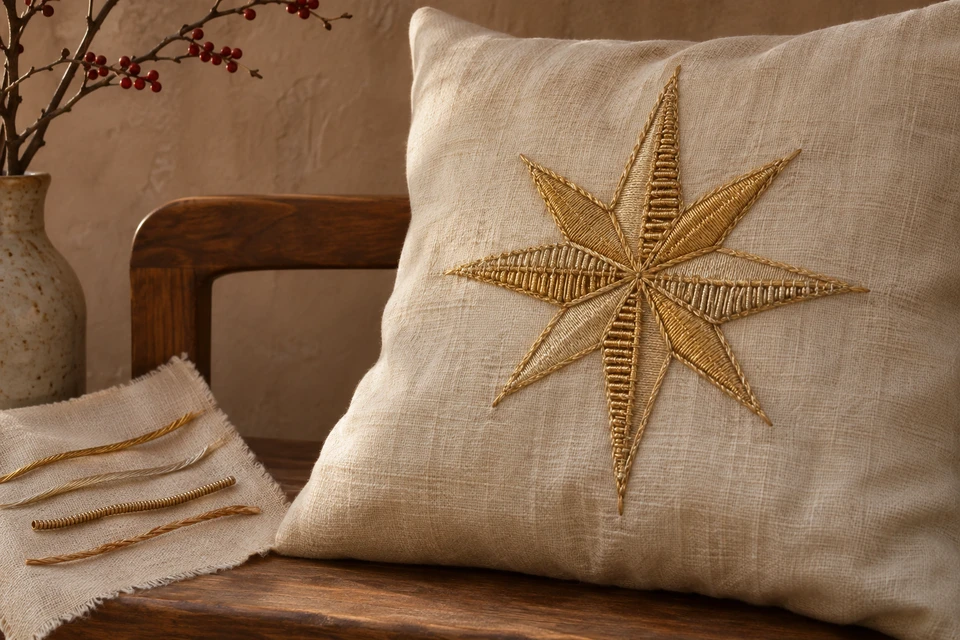
The Royal School of Needlework's Stitch Bank describes several metal-thread forms associated with goldwork, including wrapped threads and hollow coiled forms. That shows why a generic metallic thread entry can be inadequate. It does not prescribe the thread for this cushion or certify any supplier's materials. Ask the proposed maker to identify the actual components and provide samples that correspond to the quotation.
Make a component key for the motif
Similar colours can hide different structures
On the Christmas star, ornament or other original motif, identify each visibly different area. An outline may use a wrapped strand while another section uses short coil-like pieces or a different decorative thread. Assign a component reference to each area and keep a physical sample with the key. The buyer should be able to say which material belongs where without depending on a close-up photograph's lighting.
Record the base textile, attachment thread and any supporting construction separately. These may be less conspicuous than the gold-coloured decoration but are still parts of the finished cover. Ask whether the quoted sample includes them in the intended production form. Do not infer material identity from weight, shine or the sound a loose piece makes; request appropriate supplier documentation and specialist verification where the proposed claim requires it.
Compare the effect under realistic light
Brightness should not erase the design
View the cushion in the type of light expected in its retail or hospitality setting. Rotate it gradually and note whether sections become excessively bright, disappear into shadow or seem to change colour relative to one another. Photograph the whole motif and representative close details under recorded conditions. These are appearance references, not measurements of a universal metallic shade or proof of a material's chemistry.
Decide whether variation among thread types is intentional. A design may rely on contrast between a smooth outline and a softer textured fill. Replacing every component with a uniformly shiny thread could remove that distinction even if the replacement looks more luxurious in isolation. Keep a record of which contrasts matter and which are incidental to the initial sample, so later sourcing does not optimise the wrong feature.
Review the decorated face as part of a cushion
Raised details meet real handling
Inspect the sample with its intended insert and on the reverse where accessible. Note exposed ends, local bulk, attachment appearance and areas that might contact neighbouring textiles. Return technical concerns to the maker rather than trimming, bending or pulling decorative components during a buying meeting. A neat first appearance does not establish resistance to snagging, wear or repeated use.
Clarify the intended role of the cushion. A display-oriented seasonal accent and a frequently handled hospitality item can raise different review questions. Ask the technical owner to define relevant assessment methods for the actual product and users. Do not make broad safety or durability claims from the word goldwork. Where a raised material or construction does not suit the intended use, consider a clearly identified alternative instead of describing it as equivalent without review.
Tie care proposals to the actual materials
A general embroidery instruction is insufficient
Request the care proposal for the full combination of ground, decoration, attachment and internal construction. Ask what evidence supports it and arrange an agreed sample assessment before release. Record changes in appearance, position, neighbouring textile condition and any other defined requirement after the documented procedure. Keep observations factual; an attractive after-care photograph is not a substitute for the complete evidence plan.
If the supplier changes a decorative thread, revisit the affected care and contact questions even when the colour remains close. A different surface or internal construction may make the previous reference incomplete. Retain the old component key and the replacement proposal together. This helps purchasing distinguish an approved substitution from a visually similar material that has not been evaluated in the same assembly.
Quote a defined article and publish a supported description
Do not let marketing fill the evidence gap
Ask the quotation to identify the decoration route, component references, cover size, supplied insert status and quantity by variant. Separate development work from the accepted production article, and identify any material minimums or unresolved supply questions. Confirm a seasonal delivery plan with the actual project participants; neither an embroidery sample nor a thread stock card establishes a finished-goods arrival date.
Share the motif key, lighting references and intended use with FY Bedding to discuss a production-intent sample. For the public description, use terms supported by the proposed construction and evidence, and leave precious-metal claims out unless they have been properly established and approved. The final purchasing record should explain both the visual effect being sought and the components accepted to create it. That is more useful than an unqualified promise of luxury embroidery.
Separate the gold-coloured effect from the technique name and material composition. Approve an identified component map, complete cushion sample and scoped evidence before releasing the quotation or public description.
Method references: Royal School of Needlework Stitch Bank: forms of goldwork thread.