A loose woven wool sample and a finished milled blanket can belong to the same development route without representing the same purchasing reference. Milling changes the cloth's structure through controlled finishing. Buyers should therefore decide which stage they are comparing before accepting dimensions, handle or a quotation. The finished blanket, not an attractive intermediate cloth, must anchor the order.
Identify the finishing stage in the offer
Loom-state and finished cloth answer different questions
Woolmark's woollen-finishing guidance describes milling as a controlled consolidation of the fabric structure. This limited process explanation helps frame a buying question; it does not establish that a proposed blanket is Woolmark certified or that FY Bedding uses any particular finishing equipment. Ask the actual supplier to describe the route offered for the nominated material and to identify the stage of each submitted sample.
Distinguish loom-state cloth, an intermediate finished sample and the completed blanket. A supplier may present an unfinished piece to explain weaving or colour, but it cannot approve the eventual finished dimensions and surface. Label the stage in the sample record and keep any uncompleted work visible. If a quotation concerns cloth rather than finished blankets, state who will perform the remaining operations and whose reference controls the final result.
Separate consolidation from surface raising
Soft appearance does not identify the whole route
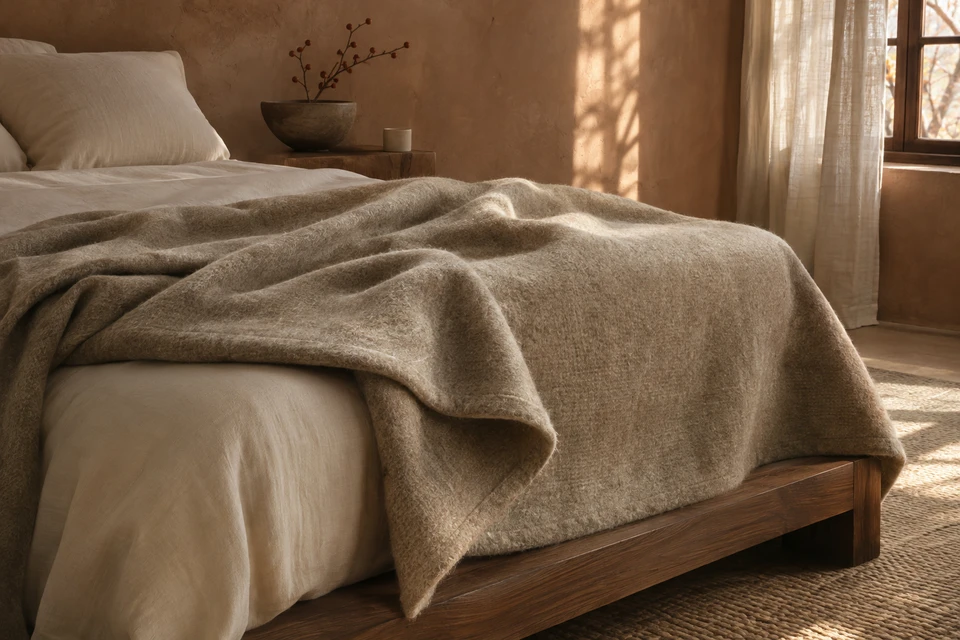
Ask whether the proposal includes milling, raising or other finishing steps and how the supplier describes their respective purposes. A brushed or raised surface is not, by itself, proof of the same underlying consolidation. Conversely, a compact finished cloth need not have an exaggerated fluffy appearance. Avoid using one photograph's softness as a substitute for the supplier's actual process and material description.
Keep fibre composition and yarn information attached to that description. Wool content cannot be established from a warm handle or an oatmeal colour. Request the evidence appropriate to the intended material statement and identify any blend components. Do not transfer a process expectation from another wool fabric to the proposed construction without technical confirmation. The purchasing brief should describe this article rather than a generic idea of premium wool.
Compare samples in the same completed state
An unfinished allowance is not a finished tolerance
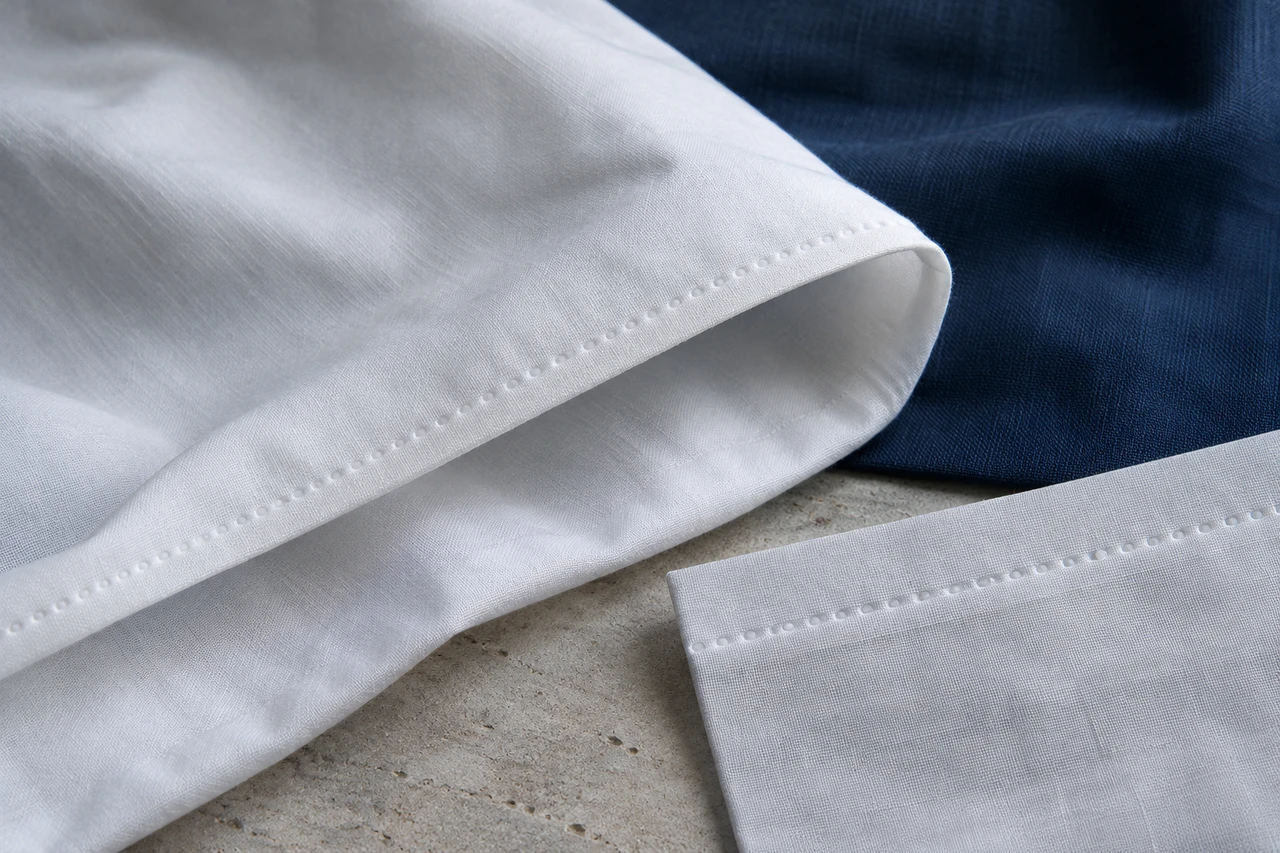
Measure the sample only after the agreed production-intent finishing and preparation steps, using a recorded method. Identify the finished boundaries, edge construction and any fringe treatment included in the stated size. If the supplier provides earlier-stage dimensions to explain its process, keep them in separate fields. They may inform production planning but should not be confused with the dimensions the buyer will receive.
Ask the supplier how it proposes to achieve the agreed finished size and which development work is still required. Do not prescribe a universal milling shrinkage allowance or assume that every cloth will consolidate by the same amount. Keep a representative finished sample as the comparison reference and record the agreed tolerances for the actual project. A preliminary estimate should remain visibly preliminary until the relevant trial has been completed.
Judge the structure in the intended product
Look beyond a folded showroom stack
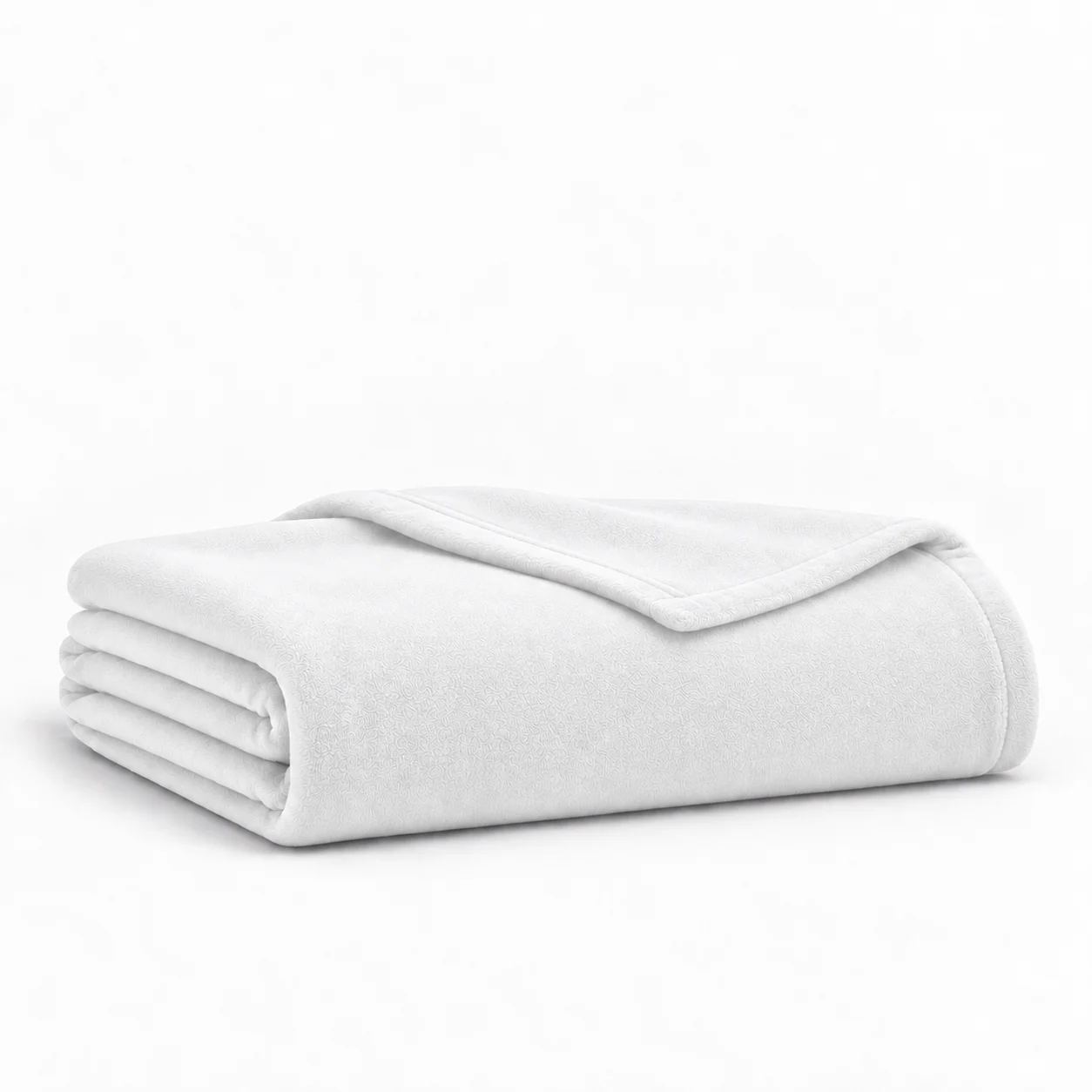
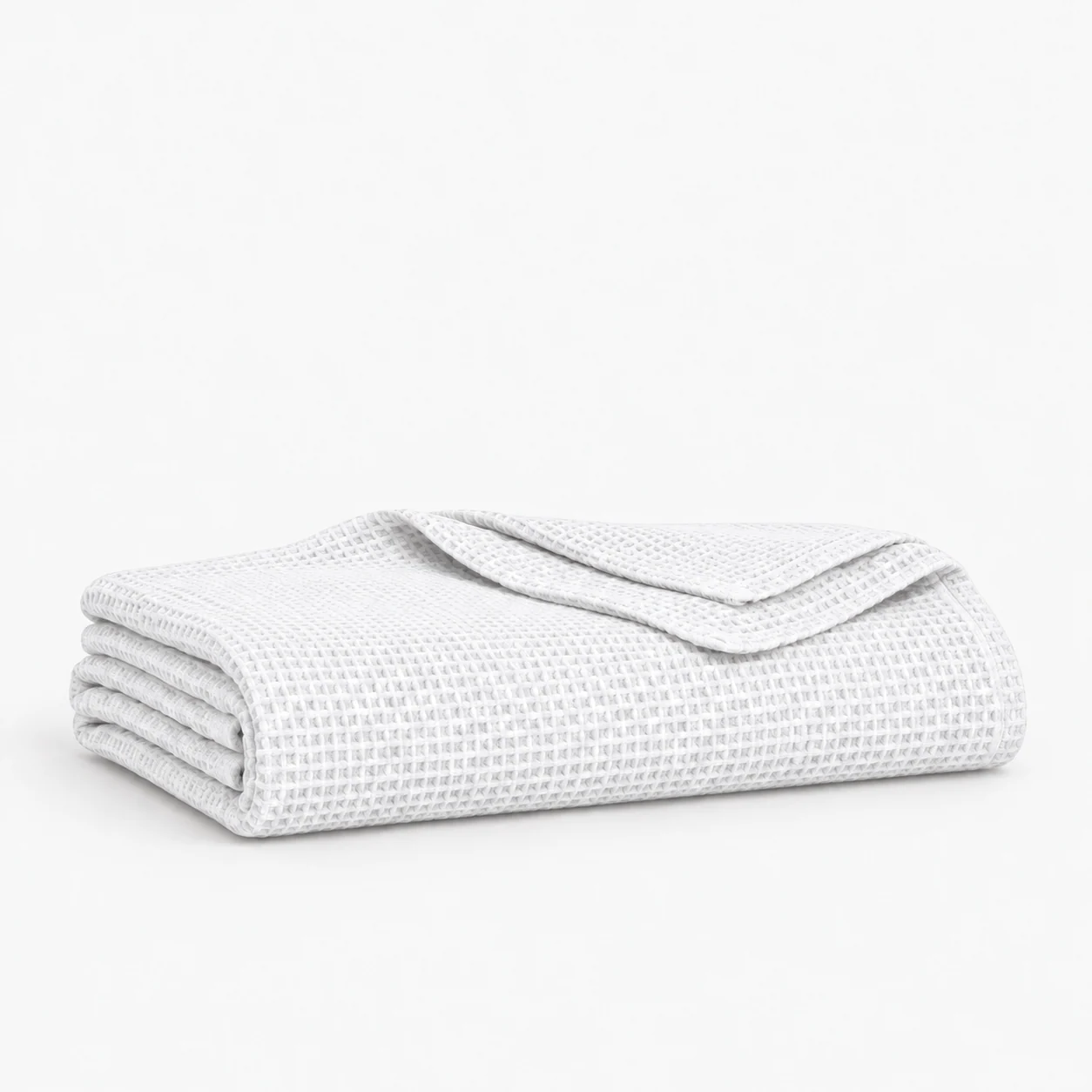
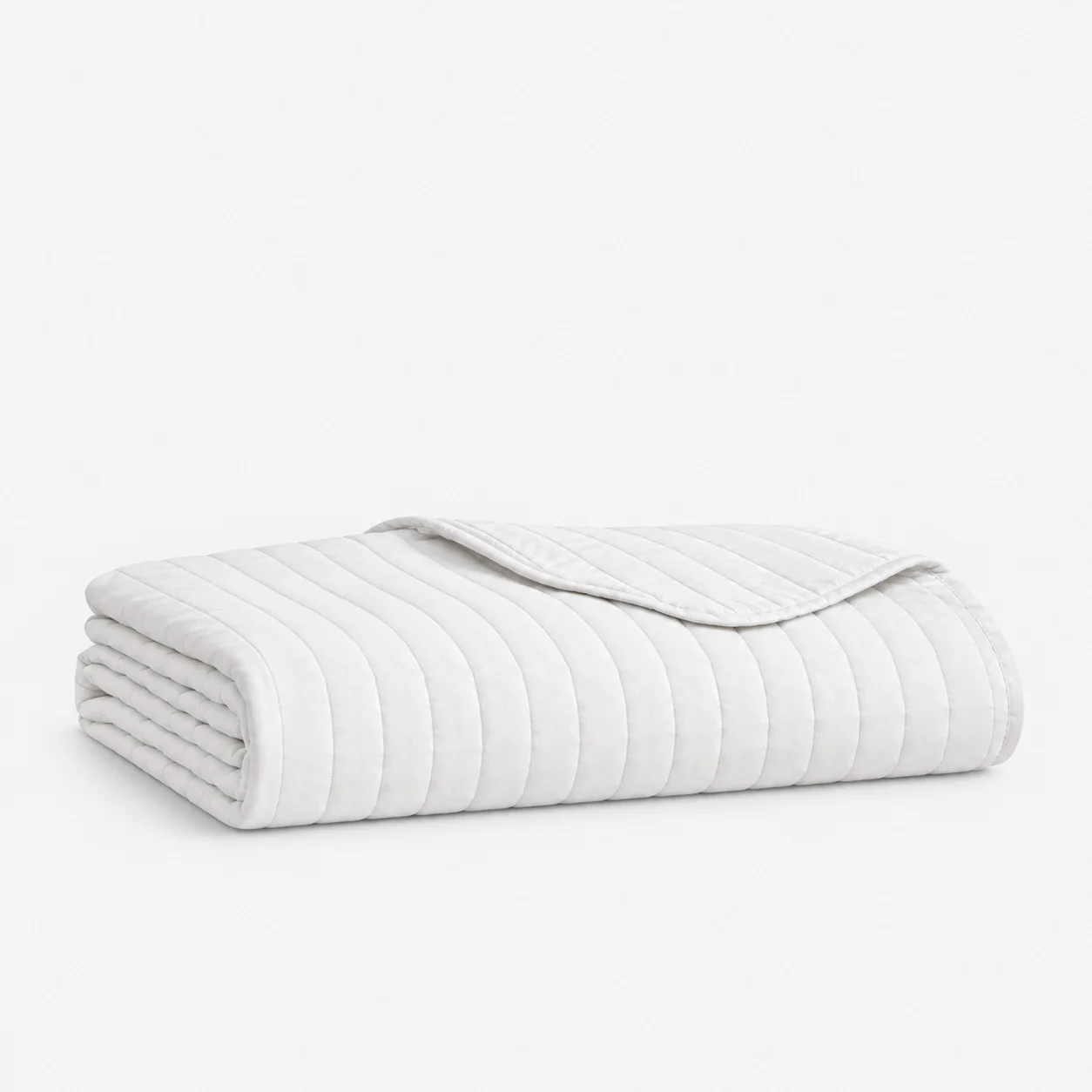
Open the blanket, drape it in its intended setting and examine representative areas across the field. Record the visible structure, surface character, edge behaviour and any local inconsistency against the agreed reference. Use consistent light and handling for comparisons. A thick-looking fold can exaggerate apparent substance, while a close photograph can hide how the full article hangs or occupies a bed.
Discuss whether the buyer wants a more open or more consolidated appearance, and ask the technical owner to explain feasible alternatives. Keep those proposals separate rather than ranking every denser sample as better. Any claims about warmth, resistance to wear, pilling or other performance require suitable evidence for the completed article. Visual compactness alone cannot establish those outcomes or replace the relevant assessment plan.
Keep manufacturing finish separate from consumer care
Controlled milling is not permission to wash freely
A material's deliberate production finishing does not automatically establish stability under any later laundry process. Request a care proposal for the complete blanket and evidence appropriate to the intended use. For hospitality, identify the real proposed service route before accepting a general washable description. For retail, ensure that the agreed care information corresponds to the actual materials and construction being supplied.
Compare an identified finished reference before and after the agreed assessment, documenting the procedure and observed results. Review dimensions, surface and edges as separate observations. Do not claim that a milled blanket cannot change further in care, or that one satisfactory sample establishes every future colourway and blend. Where a component or finishing route changes, ask which parts of the evidence need to be repeated.
Release a finished reference and a scoped quotation
Preserve the material-stage boundary at reorder
The order pack should identify the nominated material, construction, finishing route, finished size, edge details and accepted physical sample. State whether packaging compresses or folds the blanket and how it should be prepared for receiving inspection. Make the supplied stage unambiguous in the quotation, including any remaining work expected from the buyer. This prevents a cloth-only offer from being compared directly with a completed blanket programme.
Send the intended use, size range, quantity structure and finished reference expectations to FY Bedding for a scoped discussion. Ask for the actual sampling and evidence proposal rather than assuming a finishing capability from a descriptive article. At reorder, reconcile changes in material or process against the accepted sample. The objective is a traceable finished blanket specification, with production history used to explain the article rather than to imply unsupported certification or performance.
Compare milled wool blankets at the same finished stage. Keep consolidation, surface raising, material identity and later care evidence as separate decisions, and retain the completed article as the order reference.
Method references: Woolmark: woollen finishing and milling.