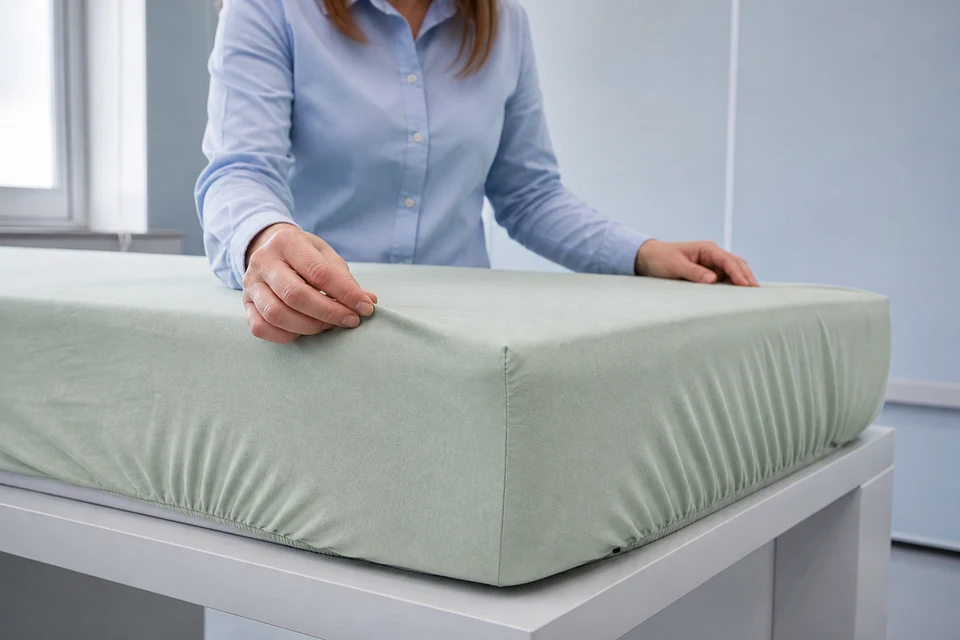
A jersey fitted sheet can feel soft and stretch easily when new yet rotate around the mattress after laundering. The corner seam moves, one side becomes harder to tuck and the elastic begins doing work that the fabric shape should have done. This is a different buying problem from selecting pocket depth alone. A useful trial examines the knitted body, sewn assembly and elastic as interacting components, while keeping their measurements separate. The aim is not to promise that every knit will remain perfectly still, but to agree an acceptable post-care fit and a repeatable way to judge it before a bulk order is released.
Map the finished sheet and the reference mattress
Record relaxed geometry before stretching
Identify the knit construction, material declaration, fabric weight, finished body dimensions, pocket design and elastic route. Do not accept a size label as a substitute for measurements. Mark the intended head, foot and side positions on the trial record and photograph each corner before washing. The mattress-fit guide establishes the mattress geometry; add the knitted sheet's relaxed dimensions so a tight fit is not mistaken for good recovery.
Use a representative mattress or dimensional platform and state whether a protector or topper is included. Fit the sheet with a consistent sequence, then note seam locations without forcing them back into an attractive position. A sheet that only looks correct after repeated manual twisting has already revealed an operational issue. Keep the unwashed comparison sample away from the wash batch so it remains available to distinguish a construction difference from a change caused by the trial.
- Record relaxed dimensions and pocket design.
- Identify the complete mattress stack.
- Photograph seam positions before care.
- Retain an unwashed comparison sample.
Separate seam rotation, size change and recovery
One overall pass mark can hide different causes
After the agreed wash and dry route, allow the samples to reach the agreed evaluation condition before measuring. Record body length and width separately from any rotation of seams or marked knit directions. A fabric can change dimensions without rotating, and rotation can make a sheet awkward even when the nominal size remains within the buyer's range. Consult the sample-conditioning guide to keep handling and timing consistent across candidates.
For recovery, describe the extension applied, duration, release condition and observation interval instead of asking whether the material is stretchy. Inspect the elastic channel and joining area independently. If the elastic retracts but the knitted body remains distorted, simply using stronger elastic may mask rather than solve the problem. The elastic specification guide can support component selection, while the finished-sheet trial determines whether the complete construction works on the intended bed.
- Measure dimensional change separately.
- Record seam or marked-direction rotation.
- Define extension and recovery conditions.
- Inspect the elastic join and channel.
Control laundering and specimen handling
Comparable treatment matters more than a large sample pile
Agree the relevant laundering procedure with the buyer and laundry provider, including the stated drying route and how items are removed and stored before assessment. Do not iron one candidate into shape while leaving another untreated. Where a recognised spirality method is requested, ask the laboratory which part and specimen type apply; a fabric test and a finished-product trial need not answer the same question. Record the method edition rather than relying on a shorthand test name.
Track each sheet through the trial using identifiers that do not alter its behaviour. Samples from several lots should remain distinguishable. If one item becomes entangled or is handled differently, record the event rather than averaging it silently into the others. The dimensional-stability testing guide helps structure the care record, but the acceptance decision should include visible seam position and practical bed-making as well as numerical size change.
- Agree the actual wash and drying route.
- Identify the relevant method and specimen.
- Keep lots and individual samples traceable.
- Record handling exceptions explicitly.
Judge fit after care without concealing distortion
Housekeeping effort belongs in the approval record
Refit each conditioned sheet to the same mattress stack using the original sequence. Observe how far the corner seams have moved, whether the side panels hang evenly and whether the sheet lifts at corners during ordinary bed-making movements. Use an agreed photographic view so a camera angle cannot make one candidate look better. The bed-making trial guide adds useful operational observations without turning a brief demonstration into a universal labour-saving claim.
Ask the trial team to distinguish a cosmetic concern from a functional one. Slight seam movement might be acceptable in one private-label range but conflict with a hotel's visible presentation standard. A corner that repeatedly releases is a different defect from a seam that merely sits off-centre. Define the buyer's boundary before the final review and keep comments tied to specific samples. Otherwise a discussion about softness can distract the group from the actual post-wash fit problem.
- Use the original fitting sequence.
- Compare consistent photographic views.
- Separate appearance from corner retention.
- Agree the acceptable presentation boundary.
Approve the construction that passed, not just the fabric
Keep the knit, cut and elastic route connected
If the trial leads to a pattern, elastic or fabric change, issue a revised sample identity and repeat the affected checks. Do not combine the best observations from different prototypes into one approval. Use the size-set approval route to decide which sizes need confirmation, particularly where the amount of stretch required differs across mattress dimensions. The smallest convenient sample does not automatically represent the most demanding fit.
Release the approved body dimensions, material details, elastic specification, care conditions and fit photographs as one package. Production inspection should check those controlled inputs and sample the post-care behaviour at the agreed stage. A jersey bedding brief sent to FY Bedding should include the mattress range, care route and current fit complaint so the discussion can address the right variables rather than simply increasing pocket depth or elastic tension.
- Re-identify every changed prototype.
- Confirm the relevant mattress-size range.
- Release care and fit evidence together.
- Plan a production-stage verification point.
After the agreed care route, does the sheet recover and fit without twisting the body or forcing the seams into position?
Method references: BSI overview of the ISO 16322 spirality series.