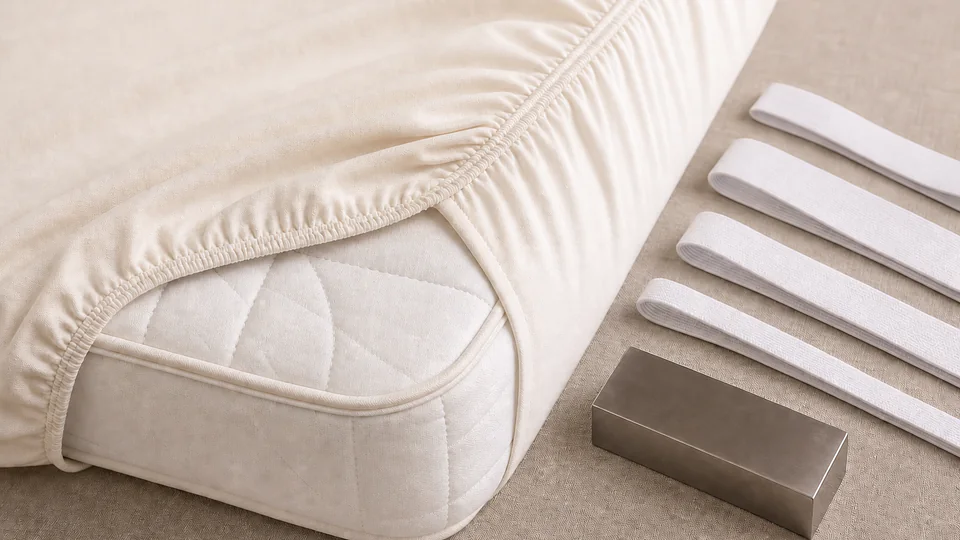
Fitted-sheet fit depends on more than pocket depth. Elastic material, width, extension, recovery, attachment and corner geometry determine whether the product grips the mattress after repeated laundering. Buyers should approve the elastic as a controlled component and test it within the finished sheet.
Define the elastic instead of using a generic name
Record material composition, construction, nominal width, thickness, color and supplier reference. State whether elastic runs around the full perimeter, only at corners or along selected edges. If the design uses different lengths or tensions by zone, show each segment on the technical drawing.
Ask for the component specification and applicable restricted-substance evidence. A visually similar substitution can have different extension, recovery, heat resistance or chemical durability. Put the approved elastic reference into the home-textile tech pack and bill of materials.
Set extension, recovery and relaxation measurements
Agree how elastic length is measured relaxed, how far it is extended during application and how recovery is assessed after a defined hold. Record conditioning time because elastic can recover gradually. Useful limits should reflect the component and finished product, not a one-time hand pull.
Compare incoming rolls and production samples against an approved reference using the same gauge length and method. If recovery changes after heat or chemicals, test the relevant care exposure. Document measurement uncertainty and rounding so factory and inspection teams interpret the limits consistently.
Control attachment, joining and corner geometry
Specify stitch type, seam allowance, attachment position, stitch density and acceptable elastic exposure. Define the overlap or joining method and keep bulky joins away from pressure points where possible. Check for skipped stitches, cutting damage, tunneling and unequal tension along the perimeter.
Connect elastic application with mattress width, length, depth, corner radius and sheet shrinkage. The seam and stitch guide can align construction checkpoints, but the completed sheet still needs a fit trial because correct sewing does not guarantee correct tension.
Test fit before and after the intended care cycles
Fit production-representative sheets on minimum and maximum approved mattress conditions. Observe installation effort, corner security, surface tension, side-wall coverage and removal. Articulate the bed where relevant and check that elastic does not pull the sheet free or interfere with the equipment.
Launder and dry samples repeatedly under the intended process, allow the agreed relaxation period and repeat the fit evaluation. Measure both fabric dimensions and elastic behavior. Use the dimension and shrinkage plan to separate fabric change from component failure.
Approve incoming lots and control component changes
Define incoming checks for width, appearance, roll identification, extension and recovery. Set sampling based on risk and supplier performance. Trace finished lots to the elastic lot where practical, especially during launches or after a material change.
Require notification before changing supplier, formulation, construction or manufacturing site. Revalidate the affected care and fit tests through the supplier change-control process. Keep retained component and finished-sheet samples so a later complaint can be compared with the approved state.
Approve a named elastic component inside a cared-for fitted sheet on the real mattress range. Control material, width, extension, attachment, lot traceability and substitutions.