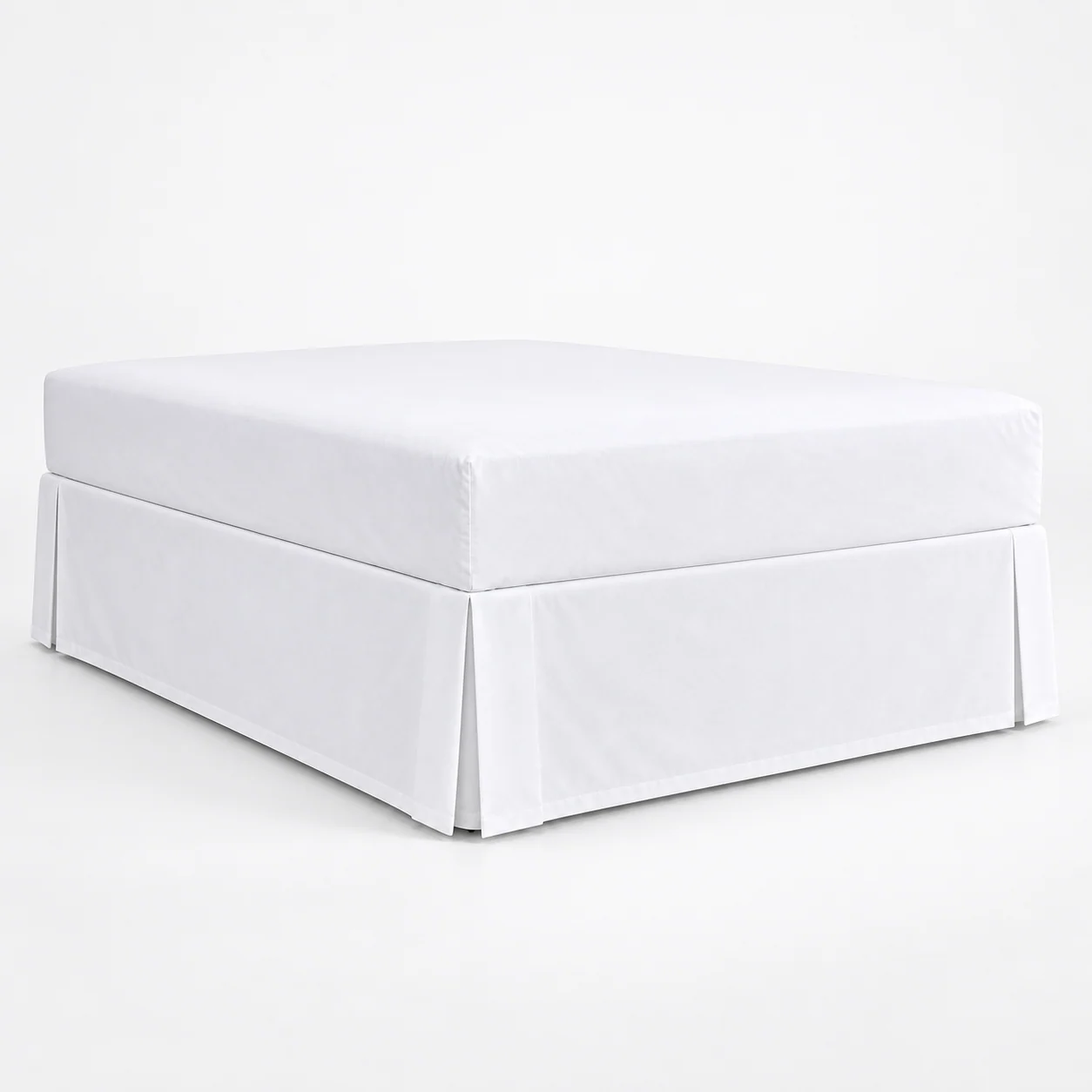
Pocket depth printed on a package does not guarantee a fitted sheet will stay on a real mattress. Fit depends on top dimensions, corner geometry, mattress thickness, toppers, shrinkage, elastic extension and how much fabric returns under the mattress. A reliable program combines flat measurements with fitting trials on defined mattress profiles before and after care.
Define the complete mattress envelope
Record mattress length, width, nominal thickness, corner radius and allowed manufacturing variation. Add topper, protector or pad thickness when these items will be used together. For hospitality, include the real bed-base access and housekeeping method. A sheet designed around a clean catalog dimension may be difficult to fit in a tightly framed room installation.
Create minimum, nominal and maximum fitting profiles instead of relying on one mattress. Decide which combinations the product must cover and which are outside scope. Connect these profiles to the finished-size plan in the dimensional tolerance specification, including the expected after-wash condition.
Specify pocket geometry and return-under depth
Define how pocket depth is measured on the finished sheet: from the top seam or corner reference to the elastic edge, with the fabric relaxed. Also specify the intended return-under depth after the sheet is fitted. Two products with the same flat pocket measurement can grip very differently because their corner shape and elastic path differ.
Include top-panel dimensions, side and end drop, corner seam angle, seam allowance and any identification labels used by housekeeping. For fully elasticized styles, state whether elastic is sewn into a casing, overlocked to the edge or attached by another method. Each construction needs its own measurement and workmanship checkpoints.
Control elastic length, extension and attachment
Specify elastic material, width, relaxed cut length, joining method and target extension behavior. Check the circumference or segment length without stretching, then evaluate recovery after controlled extension. Uneven feeding during sewing can create tight corners and loose sides even when the total elastic length is correct.
Inspect skipped stitches, exposed elastic, joining bulk and local fabric puckering. Mark reference points around the hem during development to confirm distribution. If an alternate elastic supplier is proposed, treat it as a functional material change and repeat fit and care testing through the change-control route.
Run repeatable mattress fitting trials
Fit the sheet in a defined sequence on each required profile. Record the number of operators, any excessive force, corner seating, edge return and visible tension lines. Measure how far the elastic sits under the mattress at specified positions. Photograph all four corners and the long and short sides using the same views.
Then simulate expected movement by adjusting the bed, applying surface loads or conducting a buyer-approved use check. Inspect corner pop-off, edge creep and top-panel distortion. A pass should require both successful installation and retention. Ask representative housekeeping staff to participate when speed and ease of bed making are commercial requirements.
Repeat fit checks after laundering and in bulk
Wash and dry production-representative samples using the approved care route. Recondition, remeasure and refit them on the same profiles. Track top-panel shrinkage, pocket depth, elastic recovery and seam distortion separately. Do not compensate for excessive fabric shrinkage by using unusually loose elastic; both components need stable performance.
In bulk production, measure across fabric lots, sizes, lines and shifts, then perform fitting checks at a defined frequency. Keep dedicated control mattresses or dimensioned fixtures where practical. Final inspectors should verify SKU identification and pack claims against the approved fit range so buyers receive a product whose label, measurement and real-world performance agree.
Approve minimum, nominal and maximum mattress profiles, flat measurement points, return-under depth, elastic requirements, fitting sequence and post-wash acceptance rules before bulk cutting.